Written for the Hall Marks project by Diane Brown.
A photograph album, ‘Thought to have been purchased in a Westcountry bookshop’ according to its archival history, provides a unique insight into Victorian life at Bixley Hall, one of Norfolk’s lost country houses. It is believed to have belonged to the Martin family who made Bixley Hall their home for almost 50 years.
This is the first of three blogs that will be published about Bixley Hall. It describes the early history and ownership of the hall. The second blog will concentrate on the Martin family. The third and final blog will consider life for the Martins after they left Bixley Hall, and the fate of the hall itself.
Part 1 – Bixley Hall in Scottish hands
Bixley is located just three miles out of the city centre, southeast of Norwich on the Bungay Road near Arminghall. It was never more than a handful of cottages, the hall and the church. Now there is practically nothing left. It is one of Norfolk’s deserted villages.
The hall was built in the early 18th century by Sir Edward Ward to replace the Ward family’s original 16th century hall.[i] A description of the hall’s location in particulars from 1821 describe the site as ‘commanding a picturesque view over a finely wooded scene, amidst which appear the Castle, the Cathedral Spire, and part of the City of Norwich’.[ii]
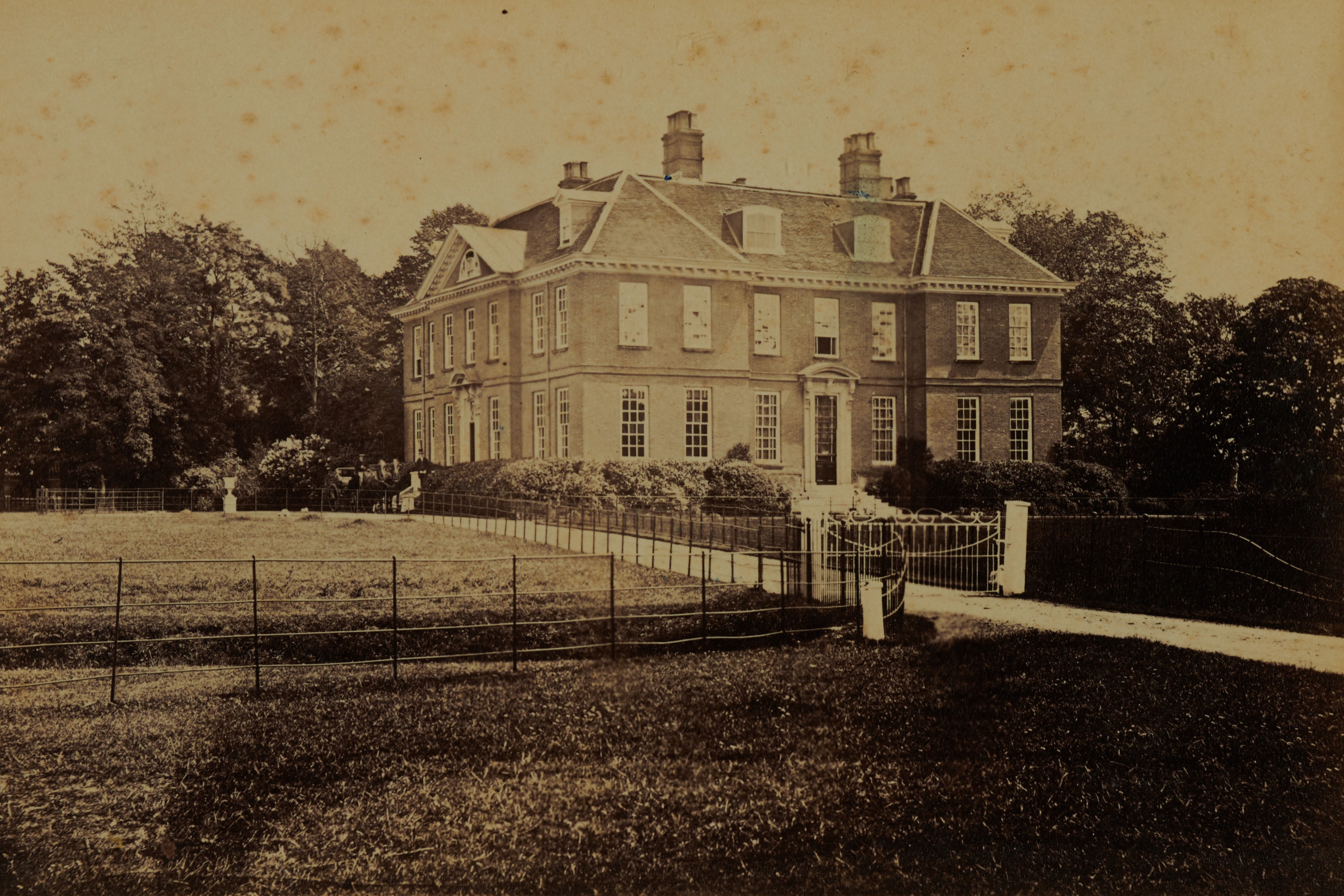
Figure 1. ‘Bixley Hall. The Front from drive.’ Photograph from the Bixley Hall photograph album. (NRO ACC 2019/194).
The Hall was designed by John Buxton, an amateur ‘gentleman architect’, who was also responsible for Earsham Hall and Shadwell Lodge.[iii] It had a square, symmetrical design with seven windows across both its the north and west faces (Figure 1). There was probably a moat or water feature around the original 16th century hall, but in the 19th century this consisted of a large, straight-sided canal on the south side, and a narrow curving ditch across the north and west sides (Figure 2 and Figure 3).
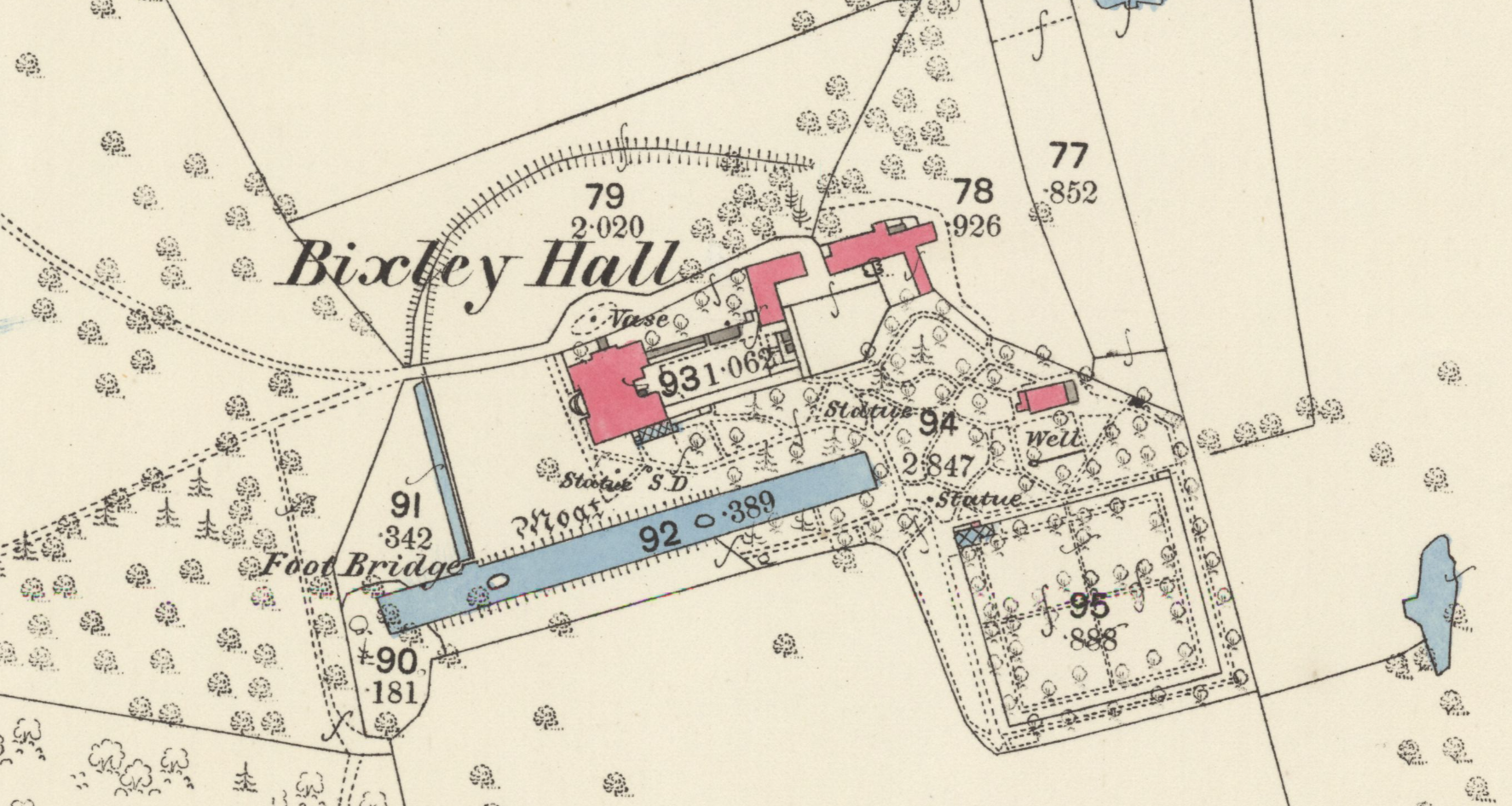
Figure 2. Extract from Ordnance Survey Map, Norfolk LXXV.8, 25 inches to 1 mile. Surveyed: 1881, Published: 1882. (Reproduced with the permission of the National Library of Scotland).
Descriptions of the interior from advertisements to let the hall in 1823 and 1837 tell us that it had a kitchen and offices in the basement, an entrance hall, housekeeper’s room, breakfast room, dining room, drawing room and library on the ground floor. On the first floor there were nine bedrooms and dressing rooms. The attic floor had a further nine rooms. Extensive outbuildings included a coach house, stables, offices, and a separate gardener’s cottage.[iv],[v]
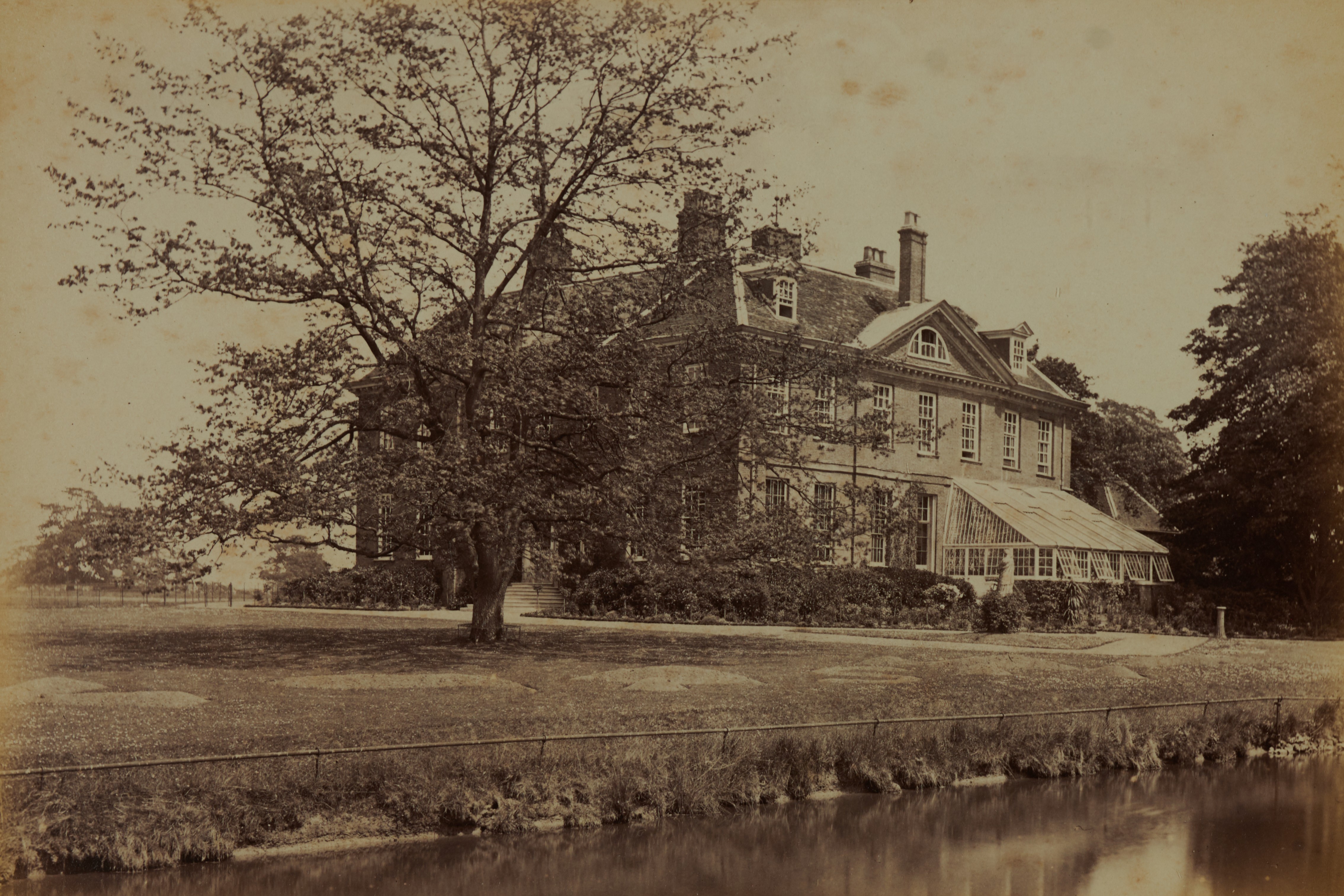
[Figure 3. ‘Bixley Hall. S.W. Front.’ Photograph from the Bixley Hall photograph album. (NRO ACC 2019/194).
The Ward family lived at Bixley Hall until the death of Randall Ward in 1762. Having no male heirs, the estate passed to his sister Susan Primrose, wife of Neil Primrose, the 3rd Earl of Rosebery. This couple left no heirs, so the Primrose family took possession.
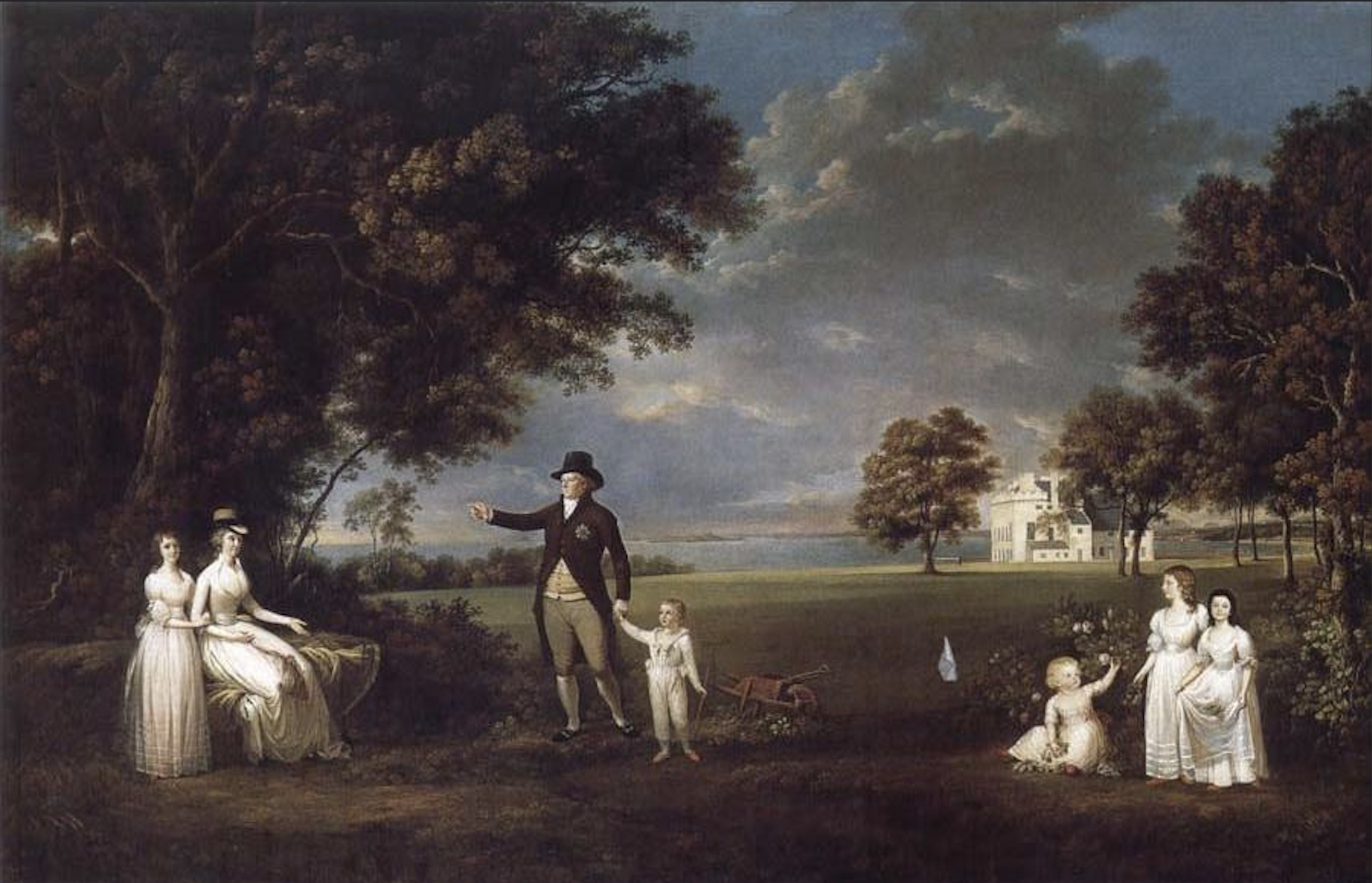
Figure 4. The Primrose family in Scotland, the 3rd Earl of Rosebery with his family outside of Barnbougle Castle. (Alexander Nasmyth, Public domain, via Wikimedia Commons).
The Earls of Rosebery had a very fine residence outside Edinburgh, on the shore of the Firth of Forth (Figure 4). They presumably had little inclination to live at Bixley Hall in Norfolk (Figure 5). Archibald, the 4th Earl, may have viewed it as an incumbrance, because a few years after he inherited the estate in 1814, he tried to auction off the hall and farmland,[vi] apparently without success. He later advertised a few fields to let, and shooting rights to purchase. Surely he could extract some money from that little estate in Norfolk![vii],[viii]
Figure 5. Bixley Hall, from Armstrong’s History and Antiquities of the County of Norfolk, 1781. (Picture Norfolk, BRN 1138314).
Archibald did have other things on his mind. He was recently divorced, after his wife had a scandalous affair with her widowed brother-in-law.[ix] In 1819 Archibald remarried and had a second family with Anne Anson[x]. Coincidently, this marriage created another connection to Norfolk. Anne was the daughter of Lady Anne Margaret Coke of Holkham, where the marriage between Archibald and Anne took place (Figure 6).[xi] Perhaps Archibald dropped in on Bixley while he was in the county?
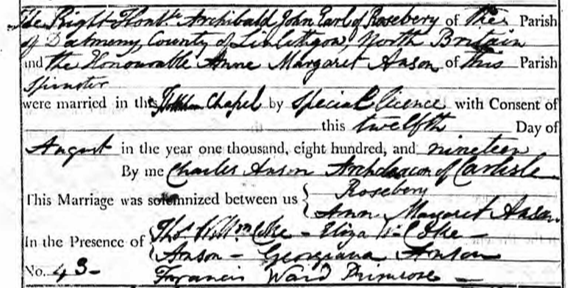
Figure 6. Archibald and Anne marriage at Holkham, 12 August 1819.
For most of the 1820s, Bixley Hall appears to have been unoccupied. The only evidence of a tenant is Francis Ward Primrose, Archibald’s younger brother. He made Bixley Hall his base while briefly serving as an MP (1819-1820). Whilst not exactly convenient for Westminster, it was at least closer than Stirling, which was his Parliamentary seat. He is listed in the House of Commons archives as ‘Primrose, Hon Francis Ward of Bixley Hall, Norfolk.’[xii]
One wonders whether the Bixley Hall estate conveniently gave Francis some gravitas, considering he was the ‘spare’ and not the ‘heir’ and therefore without an estate of his own? But Francis was plagued by gambling debts. His year in Parliament would have given him immunity from arrest for civil debt. To escape his debts, he moved to Canada,[xiii] and in 1823 he sold all his household furniture and wine collection from Bixley Hall[xiv].
Archibald used his political influence to secure a seat on the Canadian bench for Francis[xv], where he later settled and had a very respectable career. (Incidentally, gambling seems to have been in the family genes. Archibald’s grandson, the 5th Earl, was the UK Prime Minister between 1894-5 and passionate about horse racing and gambling. While a student at Oxford, he was told by the University authorities he had to choose between his studies or his racehorse. He chose his racehorse, which later went on to win the Derby).[xvi]
The 1830s, like the 1820s, were another decade of instability for the hall. The next tenant, Mrs Hamond, lived in the house in the early 1830s, but by 1832 Bixley Hall was advertised to let for one or more years as the family were going abroad.[xvii] By 1834 Mrs Hamond had sold off all the furniture[xviii] and Bixley Hall was advertised to let yet again ‘for a term of years’ in 1837.[xix]
We don’t know if staff were in residence to look after the hall and grounds during the years it was unoccupied, but it was presumably in decent condition for the next tenants, William Martin and his young family from Norwich. They had moved into Bixley Hall by the early 1840s and remained there for almost 50 years, finally bringing some stability to Bixley Hall.
More about Bixley Hall to come, with the Martins in residence, in Part 2.
[i] Williamson, T., Ringwood, I. and Spooner, S. (2015). Lost country houses of Norfolk. The Boydell Press, Woodbridge
[ii] NRO FX 175/3, Photocopy of annotated sale particulars of life-interest in Bixley Hall and 869 acres in Bixley, Framingham Earl, Framingham Pigot, Kirby Bedon, Arminghall, Caistor and East Poringland.
[iii] University of Cambridge Archive Search. Buxton Family of Norfolk. https://archivesearch.lib.cam.ac.uk/agents/families/55
[iv] Bixley Hall, near Norwich. Norfolk Chronicle, 18th January 1823, p.1. https://www.findmypast.co.uk
[v] Norfolk Residence to be let. Morning Herald (London), 25 September 1837, p. 1. https://www.findmypast.co.uk
[vi] Mansion and Estate Abounding with Game, Near the City of Norwich, To be sold by Auction. Norfolk Chronicle, Saturday 3 November 1821, p. 1. https://www.findmypast.co.uk
[vii] To be let, about forty acres of grass land. Norwich Mercury, Saturday 19 May 1827, p.1. https://www.findmypast.co.uk
[viii] To be let, The Right of Shooting at Bixley. Norfolk Chronicle, Saturday 15 August 1829, p.1. https://www.findmypast.co.uk
[ix] Earl of Rosebery v. Countess of Rosebery. National Register (London). 16 April 1815, p. 14. https://www.findmypast.co.uk
[x] Archibald Primrose, 4th Earl of Rosebery. Wikipedia. https://en.wikipedia.org/wiki/Archibald_Primrose,_4th_Earl_of_Rosebery
[xi] England, Select Marriages, 1538-1973
[xii] The History of Parliament: The House of Commons 1790-1820, ed. R. Thorne, 1986
[xiii] Mary Shepherd and the Causal Relation, Jennifer McRobert, University of Lethbridge 2003
[xiv] Bixley Hall, near Norwich to be sold by auction. Norfolk Chronicle, 18th January 1823, p.1. https://www.findmypast.co.uk
[xiv] Highly Valuable and Modern Furniture at Bixley Hall, near Norwich. Norfolk Chronicle, 5 April 1834, p.3. https://www.findmypast.co.uk
[xv]Primrose Family, Earls of Rosebery, West Lothian. The National Register of Archives for Scotland. https://catalogue.nrscotland.gov.uk/nrasregister/details.aspx?reference=NRAS2244&utm
[xvi] Past Prime Ministers, Archibald Primrose, 5th Earl of Rosebery. History of the UK government https://www.gov.uk/government/history/past-prime-ministers/archibald-primrose-5th-earl-of-rosebery?utm
[xvii] Bixley Hall and Manor, three miles from Norwich, to be let. Morning Herald (London) Thursday 29 November 1832, p.1. https://www.findmypast.co.uk
[xviii] Highly Valuable and Modern Furniture at Bixley Hall, near Norwich. Norfolk Chronicle, 5 April 1834, p.3. https://www.findmypast.co.uk
[xix] Norfolk Residence to be let. Morning Herald (London) 25 September 1837, p.1. https://www.findmypast.co.uk