Written for the Hall Marks project by Juliet Bailey.
Ingham Old Hall is not ‘lost’. Part of the original medieval building is incorporated into the present one, but the various additions and alterations over the centuries have altered its appearance significantly. It also has a new purpose. It has been run as a care home since 1953 (Figure 1).
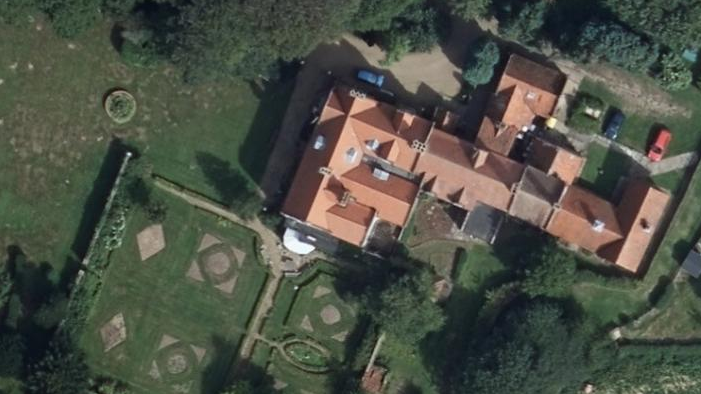
Figure 1. Modern aerial view of Ingham Old Hall. (© Norfolk County Council 2026. © Crown Copyright and Database rights 2026 Ordnance Survey AC00000. © Getmapping Plc and Bluesky International Limited 2026).
Part One of this two-part blog examines the history of Ingham Old Hall and its inhabitants from 1200 to 1600. Part Two (to be published later) examines more recent times.
Part One – (1200-1600)
The Ingham Hall estate was owned by the de Ingham family from around 1200 but passed to the Stapleton family when Joan de Ingham married Sir Miles Stapleton following the death of her first husband in 1349. It was either this couple, or their son, also called Sir Miles, who built Ingham Old Hall. The son died in 1419, fifty-five years after his father.
The building is likely to have had a central hall with an open hearth for heating and cooking (chimneys had not been invented), plus a buttery and pantry at one end and a parlour at the other. It was probably single storey originally, with some upper rooms added later, accessed via a ladder.[i]
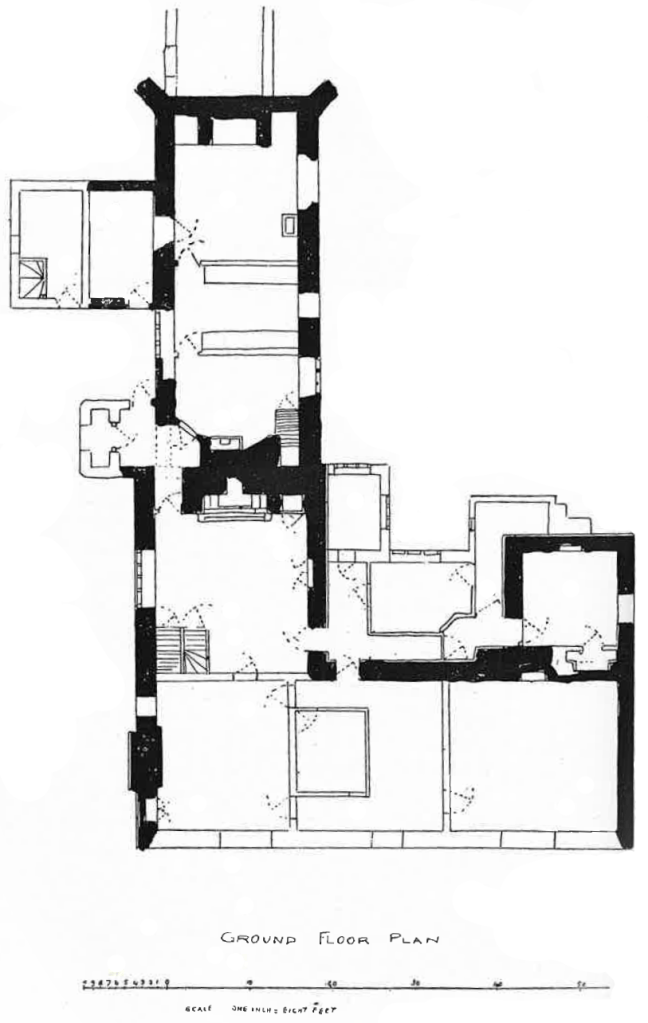
Figure 2. Ground floor plan of Ingham Old Hall before 1904. Dark walls indicate ‘ancient’ parts, white walls indicate later additions. (From L.G. Bolingbroke, Notes on Ingham Old Hall, Norfolk Archaeology (1906), Vol 16, pp.196-205).
In 1466, the estate passed to the Calthorpe family. In 1507 it was owned by Elizabeth Calthorpe and her 3rd husband, Sir John Fortescue. They entertained regularly and their steward – John Glavyn – recorded purchases of salted ling fish and barrels of red and white herrings, as well as malted barley and wheat for beer and bread.[ii]
The hall and estate were sold to Sir Thomas Woodhouse in 1582. He rapidly passed it to Sir Nathaniel Bacon of Stiffkey, who never lived there but managed the lands on behalf of his brother Edward. In Bacon’s accounts for September 1585, one Haylett paid rent of 8 hens and one cock, with a value of 3s 2d.[iii]
The Haylett family were yeomen who had been resident in the nearby village of Lessingham for over 200 years. They had farmed in Ingham since at least 1525 and were part of the local elite. The head of the family, William, died in 1587 and left a will and an inventory, and these reveal much about Ingham Old Hall as it was then.[iv]
Figure 3. Will of William Haylett. (NRO NCC will register Homes 143 (1587).
In his will, William leaves his son ‘my bedstead, featherbeds with the forms, tables and other utensils … now in Ingham Hall wherein I now do lye’ confirming he was renting the hall when he died. His will was written and witnessed by William Bishop, Ingham Hall estate manager, who also helped take the inventory (Figure 3).
An inventory does not list bequeathed items (such as a silver pin and ring left by William to his daughters) or land and goods held elsewhere (such as William’s land in Lessingham) so it’s not a full picture of William’s estate. However, it does list William’s possessions in Ingham, and their value.
The inventory lists a hall, with a chamber at one end, and two chambers over, one of which was described as the men’s chamber, plus a bakehouse, dairy and buttery (Figure 4).
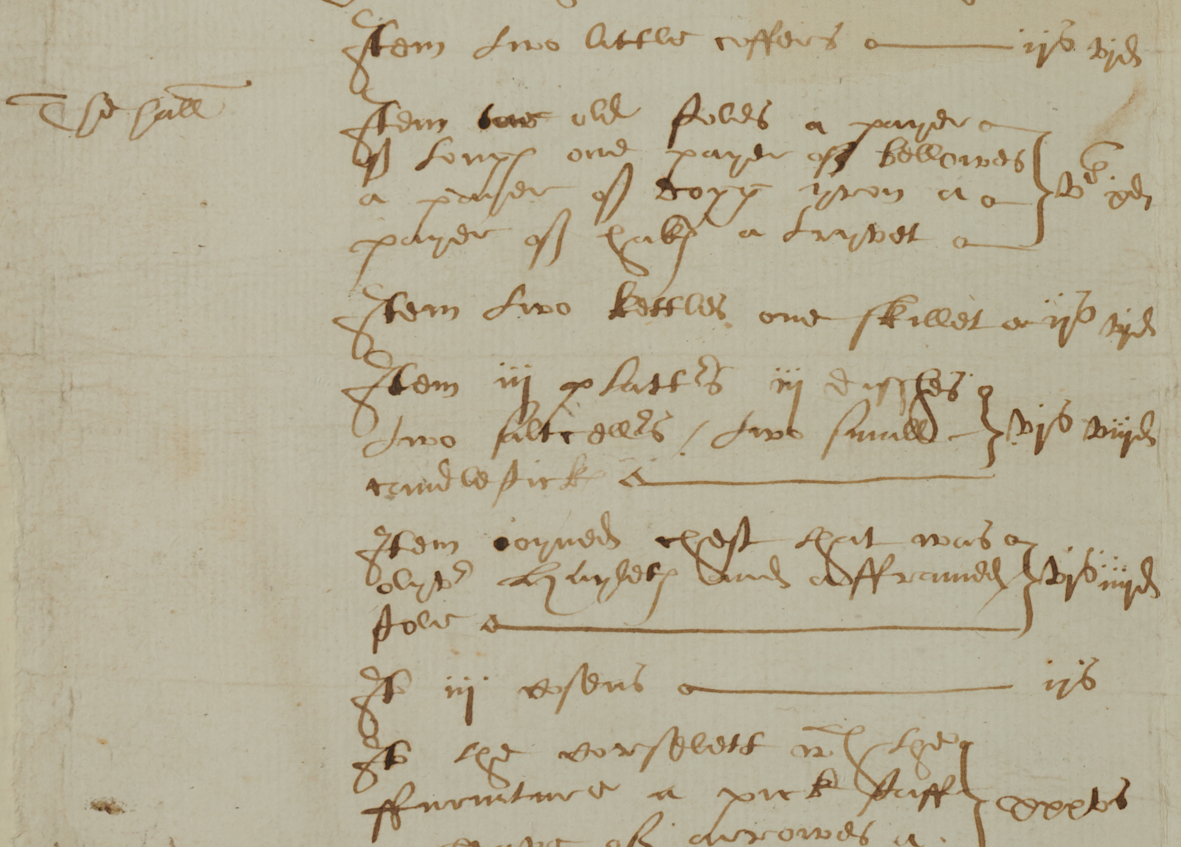
Figure 4. Section of the inventory of William Haylett. (NRO DN/INV 3/81).
As well as identifying the rooms, William’s inventory tells us about the objects he owned. His elite status was demonstrated by his ownership of 26 pewter dishes, 5 chairs, 3 featherbeds and multiple cushions, all of which were expensive items in 1580. William owned a corselet (breastplate) and leg armour together with a pike staff, arrows and a sword and dagger suggesting that he had been a member of the local militia.
At a domestic level, William owned all the equipment needed to make cheese (including cheeses) and butter, along with useful items like candlesticks, pestle and mortar, scales, brass pans and pots, kettles and cooking pans, a spit, bedlinen, tables and benches. The inventory suggests that William’s house was well-equipped for the date. The estimated value for the items in Ingham Hall was almost £25.
William farmed part of the Ingham Hall estate, and the inventory also sheds light on his farm. His crops included 30 acres of corn, plus wheat, rye, barley, peas and oats both in the field and stored, and malt to make beer. He owned a range of animals including geese, pigs, cattle (both adult and calves) and several horses. This pattern of mixed arable and livestock farming was typical for north-east Norfolk where the soils were rich and even a relatively small estate could sustain a good standard of living.[v]
Alongside these crops and animals William had carts, ploughs and harrows, drag rakes, pitch and muck forks, shovels, firewood and furze. The farming items added around another £80 to William’s Ingham holdings and, together with some debts due, the sum given for this part of his estate was some £230, excluding items given in the will. In 1580, this would have paid a skilled tradesman for 4,600 days work or purchased 123 cows. It is equivalent to around £2 million today.[vi]
When William Haylett died, his son-in-law John Darle was charged with bringing up his son, also called William. John was also given responsibility for farming the lands and keeping the houses and premises in good repair so that William could take over when he turned eighteen. Later, William Haylett moved to Bacton. He died there in 1610 leaving around 120 acres of farmland to his sons.
Ingham Hall and its estate were purchased by William Johnson of Catton in the early 17th century.
More about William Johnson and subsequent owners will be found in Part Two of this blog (to be published later).
[i] L.G. Bolingbroke, Notes on Ingham Old Hall, Norfolk Archaeology (1906), Vol 16, pp.196-205.
[ii] Norfolk Record Office, HMN 7/321, 773X8, Notes related to HMN 7/320, date unknown, possible by Anthony Hammond.
[iii] NRO, MC 1156/11, 806X, papers of Nathaniel Bacon of Stiffkey.
[iv] NRO, NCC will register Homes 143 (1587), will of William Haylett; DN/INV 3/81 (1587), inventory of William Haylett.
[v] Susanna Wade Martins and Tom Williamson, Roots of change: farming and the landscape in East Anglia, c.1700-1870 (Oxford, 1999) p.18.
[vi] https://www.nationalarchives.gov.uk/currency-converter; https://measuringworth.com/poundvaluetoday.