
On a cold night on the 28th November 1848, the stillness of the Norfolk countryside was shattered by the sound of gunfire echoing across the fields surrounding Stanfield Hall. By morning, the master of the house, Isaac Jermy and his son lay dead, cut down just steps from their own door. What first appeared to be a brutal act of violence soon revealed something far darker—a web of bitterness, inheritance disputes, and long-buried resentments. At the centre of suspicion was a tenant farmer called: James Blomfield Rush. What happened at Stanfield Hall would grip the Victorians and cast Rush as one of the earliest and most infamous villains of their time.
Early life
Before we delve into the murders themselves and the dramatic trial that followed. Let’s explore further into the early life of James Blomfield Rush. By examining his early years, we may begin to understand whether anything in his upbringing or personal experiences helped shape the man he became and whether those influences contributed to his mindset that ultimately led to Rush to commit such a terrible act.
Read more: The First Victorian Villain’ -The Murders at Stanfield Hall (part 1)James Blomfield Rush (depicted below) was the bastard son of Mary Blomfield. He was baptised in Tacolneston in 1800.
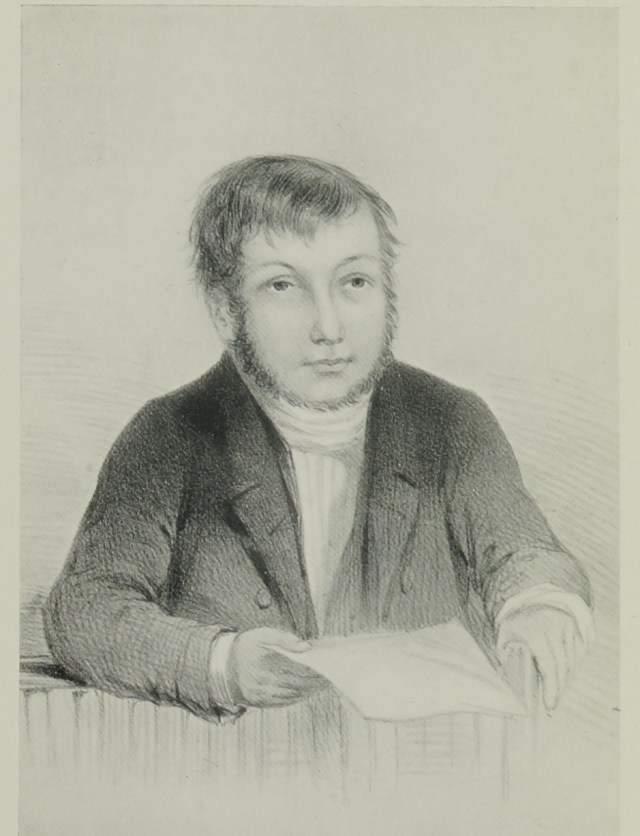
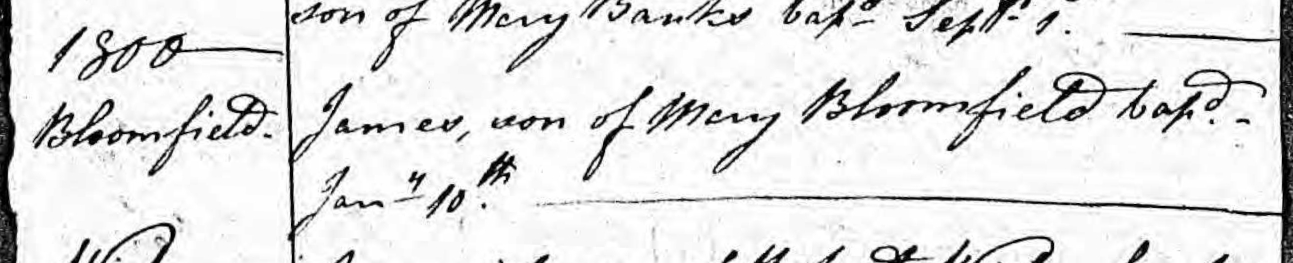
His biological father lived at Tacolneston Hall and was promised to marry Mary but later betrayed her. She later married John Rush a farmer who adopted Rush as his own and even paid for his education. The name ‘Rush’ was later added into the baptism register. Rush later in his life married Susannah Soames and they had 9 children. He followed in his stepfather’s footsteps by going down the farming route and would later in 1836 rent the Stanfield Hall farm from Rev. George Preston who owned Stanfield Hall (depicted below), of whom it is believed he had a good relationship with. Sadly, George Preston later died in 1837, and the hall passed to his son Isaac.
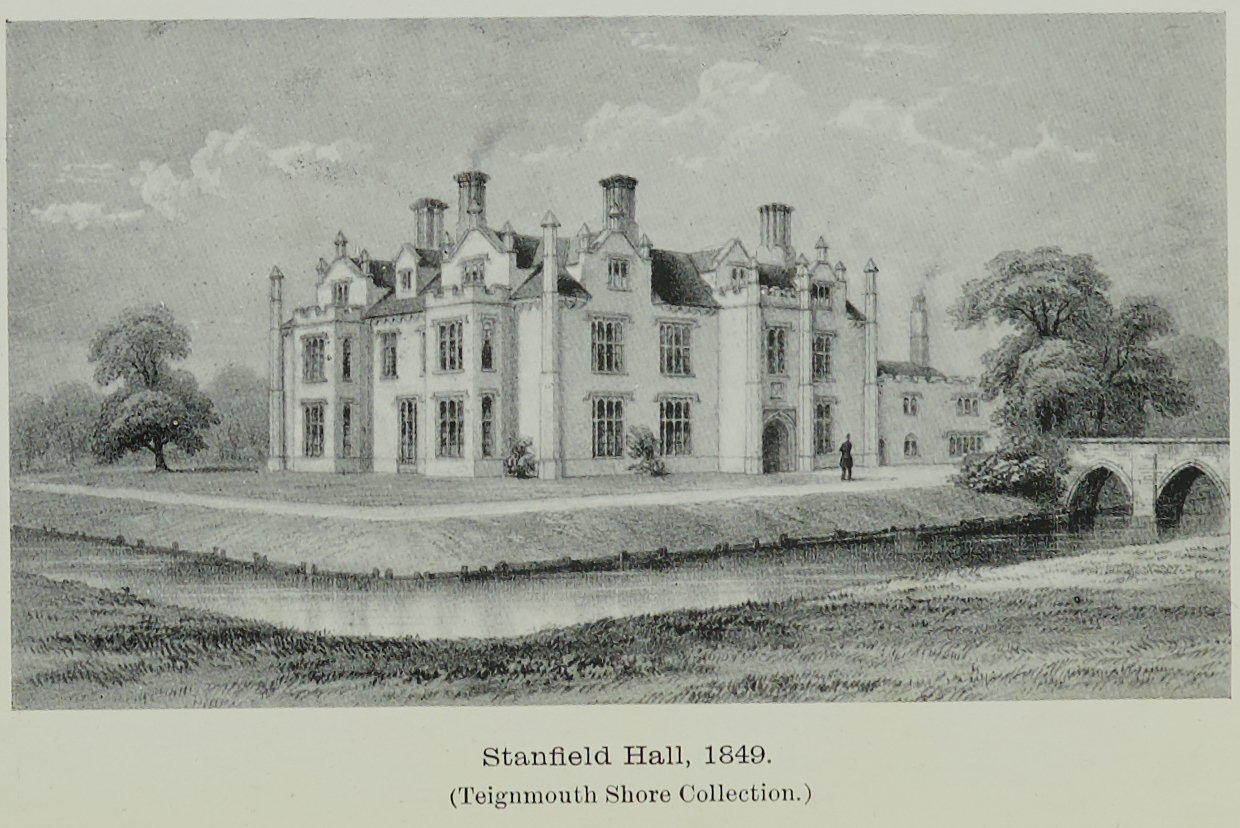
However, there were other claimants to the hall from the Jermy family who claimed the hall belonged rightfully to them. Due to a dispute of inheritance and lineage. Isaac later changed his name to Jermy to help strengthen his claim 1. So far in this brief synopsis of Rush’s life, nothing too untoward had happened in his early life, he appeared to have been looked after well by his new stepfather, which was not always the case for illegitimate children, he married, had a family and had a source of income from the farm he was renting. Perhaps Rush had some resentment towards his true father who abandoned him and his mother, as this potentially denied him a title and a different life free of money troubles.
However, during the 1830s a period of growing unrest spread across the English countryside, as the introduction of farm machinery reduced the need for agricultural labourers, which would have had an impact on his livelihood. It has been recorded that Rush was involved with incendiarism. “A stack on his wood dalling farm was burnt down. After his trial for murder the rumour spread that the insurance company thought he had set fire to the stack himself and refused to pay up” 1. This incident could be the first sign of his desperation and perhaps state of mind at the time. Whether he was driven by financial strain or a determination to protect his livelihood and family, the incident hints at the lengths he may have been willing to go in pursuit of money and security.
This was the start of web that would put into motion and primarily lead up to the events that happened on the 28th November 1848. Rush’s problems were only just beginning, if the farming revolution wasn’t enough, his relationship with the now Isaac Jermy would start to become strained. Rush had agreed with the late Rev. George Preston, an agreed lease/rent fee for the farm. However, since Jermy took over Stanfield Hall he later rescinded and reissued higher rents. Not long after his father’s death, Isaac even sold Stanfield Hall to Rush for as little as £1,000, in hope he would tear it down and sell on the materials. Others suggested he sold the hall because of his weak inheritance claim 1. These events occurred before the name change. But Isaac later bought Stanfield Hall back off Rush after his name change for the same price he had sold it for.
This was not the end of the building tension between the pair. Potash farm which adjoined the Stanfield Hall estate came up for sale and Isaac persuaded Rush to act as his agent and to buy the property. Instead, Rush bought the property for himself and later persuaded Isaac to let him have a mortgage on the property. He then took out 2 further mortgages which now totalled a £5,000 debt, which in today’s valuation is roughly £660,000. Isaac later declared that the £5,000 debt needed to be paid back in full by 30th November 1848 (1). Owing this large amount of money must have put a strain on Rush’s mental state, but why did he take out so many loans in the first place? What did he hope to achieve by this? If he had no means of paying the money back, then maybe the murders were premediated? He perhaps used Isaac for his money to buy the farm but never had any intention of paying the sum back. We have seen previously the lengths Rush would go for financial security.
Many other factors could be considered when examining the motive for the murders. In addition to his financial difficulties, he experienced the deaths of his wife in 1845 and his mother in 1848. These events again further suggest his mental state in the period leading up to the murders.
The murders
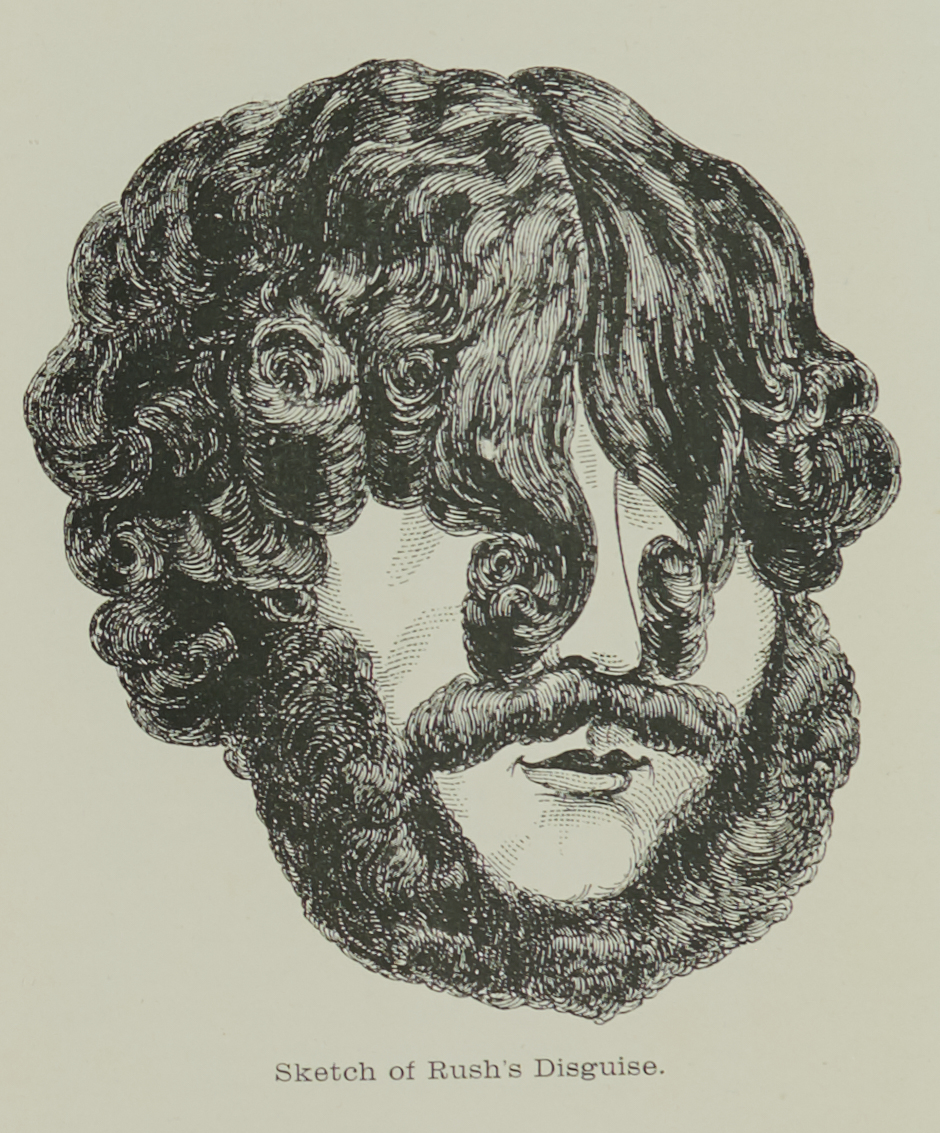
All the prior events have led up to this moment, the day of the murders. Whatever motive Rush had conducted up in his head to justify what he was about to do, didn’t matter, he was going to Stanfield Hall with intent, he was going there to kill. It was Tuesday evening on 28th November 1848, the clock had just struck 8 and the Jermy family were at home, sitting in their drawing room. Mr Isaac Jermy had left the drawing room and proceeded to the front door; he unlocked it and stepped out on to the porch about to relieve himself which was custom at this time of night. He was then approached by a cloaked man in a mask, holding a pistol 1. The picture below is a sketch of Rush’s disguise that was presented to the court.
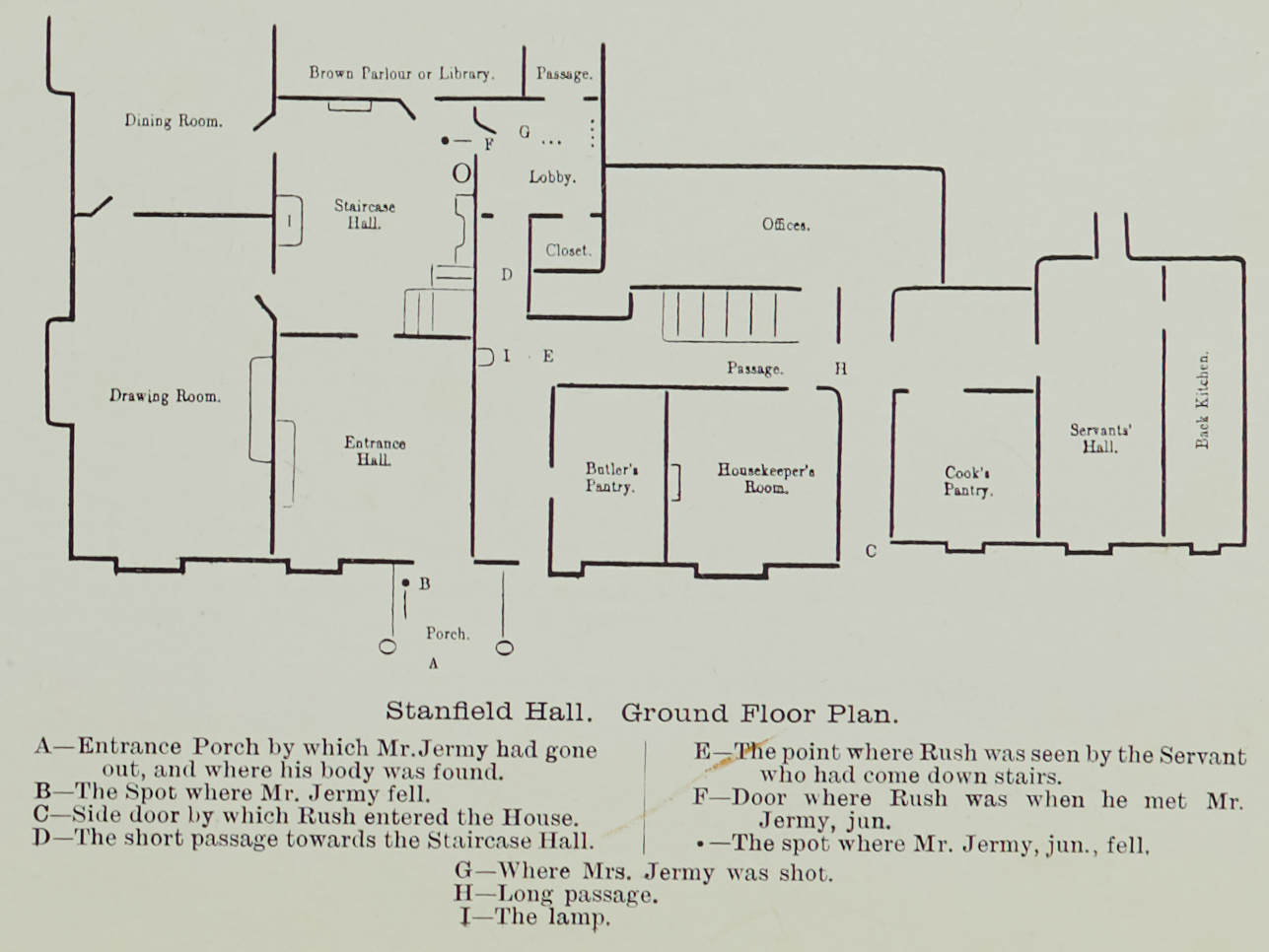
Soon after Jermy left the drawing room a shot was heard from a pistol. Isaac Jermy junior left the drawing room shortly after hearing the pistol to go and investigate, he too was met by a man dressed in a cloak and wearing a mask, the assassin again fired the pistol through his left breast leaving him for dead. At this point the other members of the family and servants were becoming alarmed to the shots of gunfire. Mrs Jermy left the drawing room to when Rush fired at her, luckily, she survived, just severely wounded her. A Miss Jermy ran screaming through the hall, bumping into a servant, again the pistol was fired with the supposed intention of killing Miss Jermy, but wounded the maid in the thigh. The image below shows the layout of the hall and provides a clearer idea on Rush’s movements and where the rooms were situated.
The assassin in the haste of his cruel act, dropped some papers. Rush, after leaving a trail of destruction, left the hall and returned home. The police were sent for from Norwich and found the two lifeless bodies of Mr Isaac Jermy and his son and went to Potash Farm where they took Rush into custody 5. Little is said about how the police immediately knew to go to Rush’s house, perhaps the papers Rush accidentally dropped were what incriminated Rush and pointed the police to his direction or perhaps one of the servants saw through his disguise and recognised him. The police had obviously collected enough evidence to put him of trial.
See part 2 for what happened during and after the trial.
Footnotes:
(1)- Death pay me a visit. Murder and mystery in Victorian Norfolk by Frank Meeres. Norfolk Record Office library
(2) Newspaper article about the trial. Norfolk Record Office, MC 3279/41
Researched and written by Francesca Nelson



Pingback: The First Victorian Villain -The Murders at Stanfield Hall (part 2) | Norfolk Record Office