Continued from part 1
The Trial
The trial of James Blomfield Rush was held at the Norwich Assizes, otherwise known as Norwich Castle, the court room is situated within the Norwich Shirehall which sits on the Norwich Castle complex. Many newspapers which are held at the Norfolk Record Office from the time slandered Rush and one newspaper even went as far as writing some verses from the point of view of Rush, which can be seen in the image below.
Read more: The First Victorian Villain -The Murders at Stanfield Hall (part 2)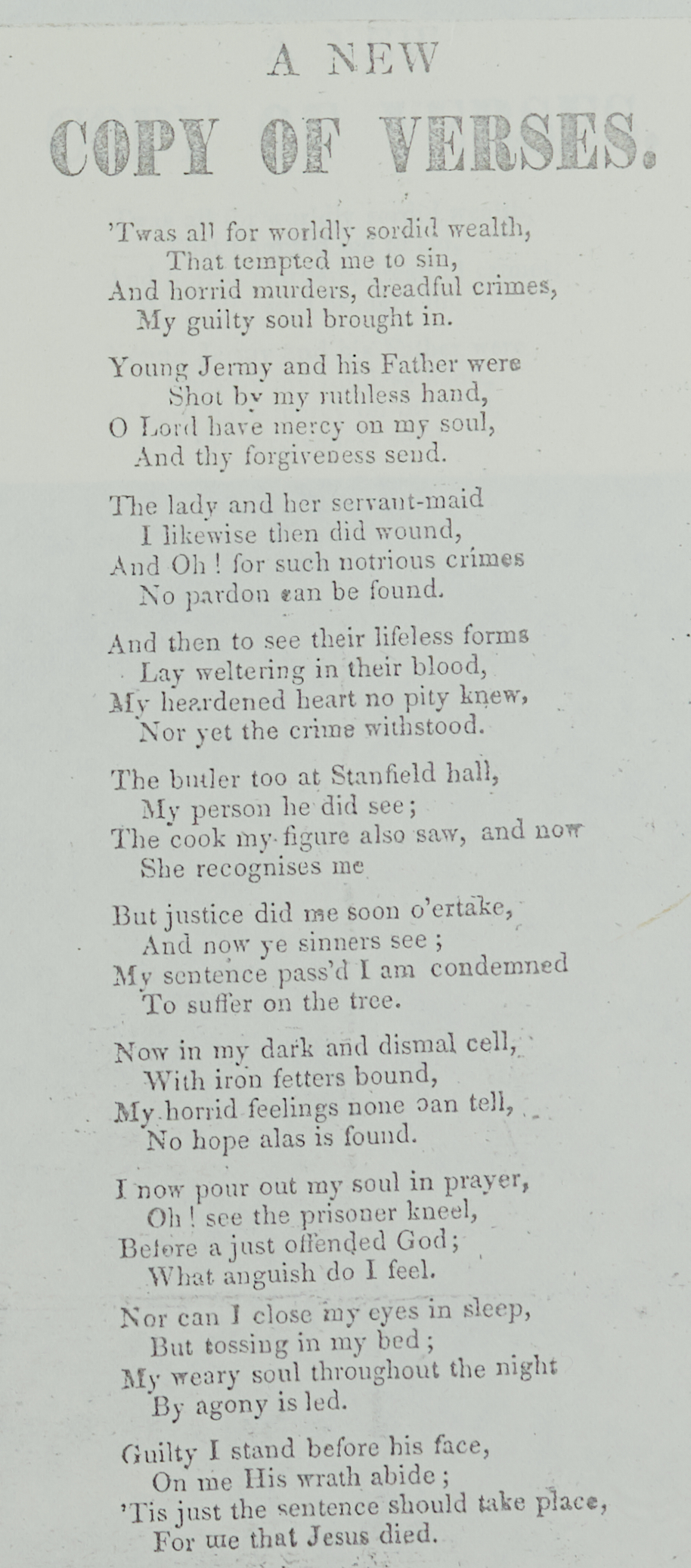
The trial commenced on Wednesday 28th March and concluded on the 4th April 1849. Contemporary accounts allow us to vividly imagine the scene. Vast crowds gathered outside, eager to catch a glimpse of the infamous Victorian murderer. A significant police presence was required—not only to control the public but also to manage the influx of journalists and reporters, all competing to document the unfolding trial. As one report described: “shortly after eight o’clock, the magistrates were admitted, and, on the opening of the door, a regular run and rush for the seats took place, and all, in a few seconds, were occupied”3. This striking image illustrates the extraordinary level of public interest the case generated in Victorian society—every seat was fiercely sought after. Upon entering the trial, it was noted that in front of the judge laid a table covered with drawings and models of Stanfield Hall and Potash Farm. At precisely 9 o’clock, Judge Mr. Baron Rolfe entered the court and called for the prisoner. It has been recorded that Rush was “dressed in black, apparently in good health, and looking well”3.
The charges were then read out against him to which he pleaded “not guilty” and he then asked his Lordship for time to lay his papers out which he felt would help his case, as he conducted his own defence. The evidence was then laid out against Rush and different witnesses were brought forward to give evidence. The prosecution mentioned to a great extent the money that was owed to Mr Jermy and the coincidental date that the money was due (2 days after the murders). It was later summarised that his 4 main motives in carrying out the murders were:
- He was an extremist
- Had to pay his landlord the mortgage on Potash Farm, a sum he could not raise
- He hated Mr Jermy
- He held the forged agreement between Mr Jermy and himself, which would be valueless unless Mr Jermy died within a few days 1
The points summarised the jury’s and the court’s thoughts on the character of Rush. The Judge then went onto to give his verdict and commence sentencing. To which the judge supposedly stated: “you committed the most diabolical crime of murder, upon two un-armed and defenceless persons, and from no other feeling but the desire of possessing the wealth belonging to them.” He continued to state that Rush demonstrated no guilt for his crime and that he had been found guilty and was sentenced to be executed, to be hung by the neck till dead 2.
The image below was taken from a newspaper article showing his execution at the Norwich Castle. This eerie image gives you a glimpse into the past and what the Victorians would have witnessed on the day.
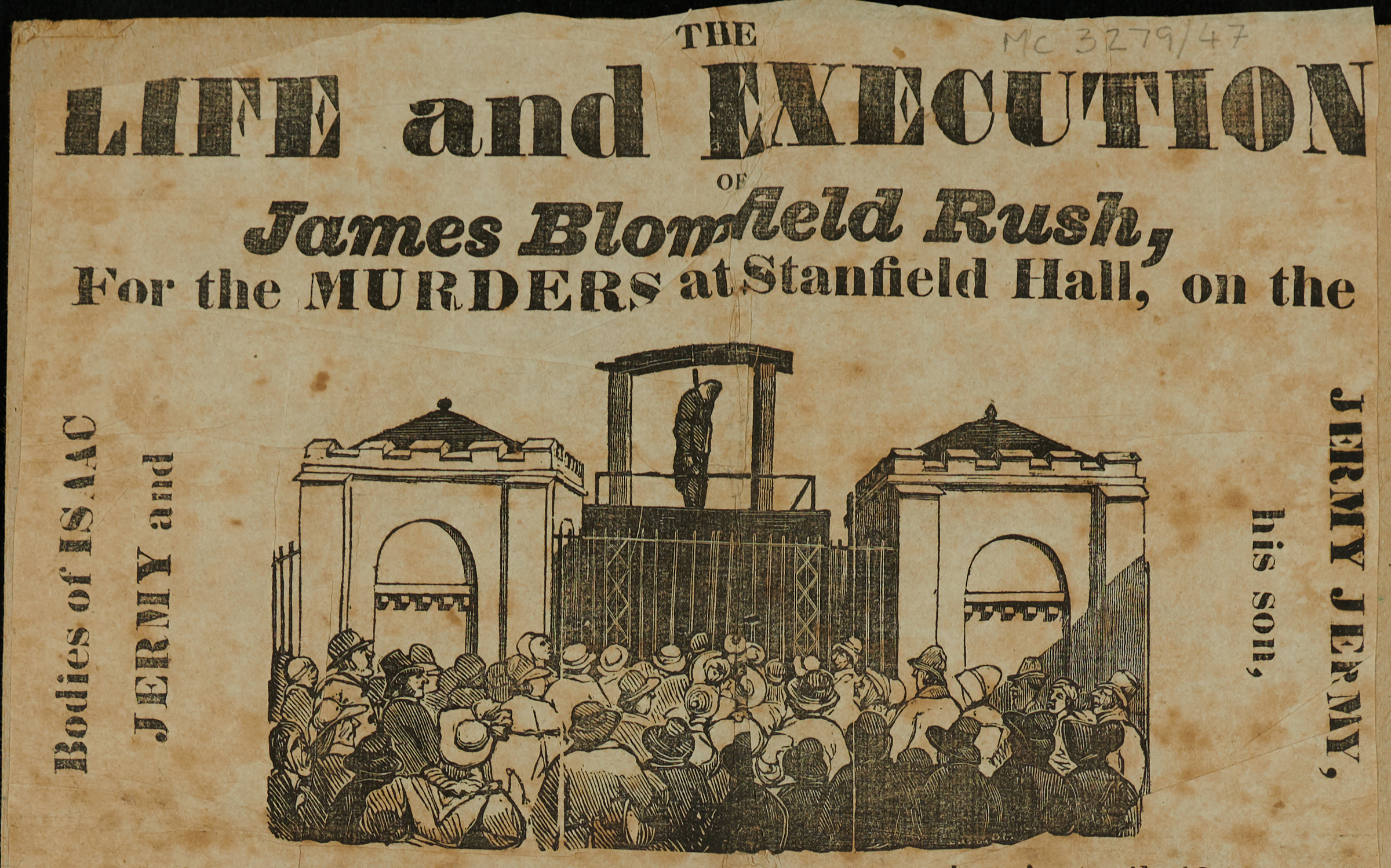
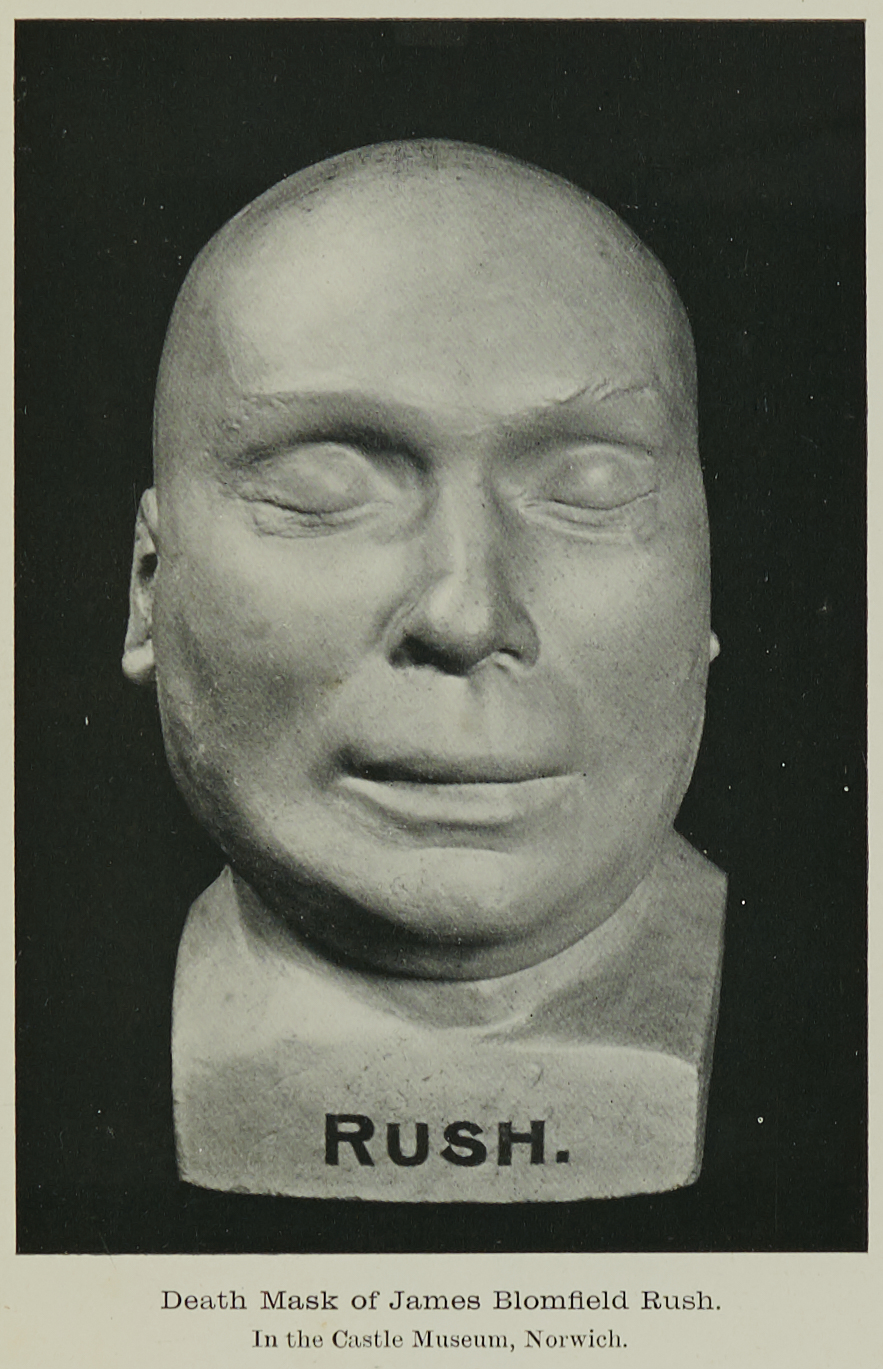
After he was hung, a death mask was taken which can now be seen at the Norwich Castle Museum. An image below shows the morbid mask in all its glory, putting a face to the story and to this blog. After seeing his death mask, I was curious as to his final resting place. A quick search online, provided me with the answer that after he was executed at the castle, he never left. He was placed in an unmarked grave in the castle precinct. If his body remains there until this day is unknown, or the exact location of his burial.
To conclude, the murders at Stanfield Hall have proven to be a fascinating subject to explore, especially as it is a story so close to home. What initially seemed straightforward case revealed far more twists than expected, offering a compelling glimpse into Victorian life and the kinds of events that captured public attention at the time. Personally, I believe Rush committed the murders out of desperation—unable to repay Jermy, he panicked. However, his decision to target other members of the family suggests a deeper, more vengeful motive. Whatever the truth may be, the question remains: did he deserve his fate? That is for each reader to decide. For those interested in learning more, the Norfolk Record Office holds extensive materials on the case, far beyond what this brief blog has covered.
Footnotes:
(1)- Trial of James Blomfield Rush edited by W. Teighnmouth Shore. Norfolk Record Office library
(2)- Photocopy of broadsheet issued following the trial of James Bloomfield Rush for the Stanfield Hall murders. Norfolk Record Office, FX 200/18
Researched and written by Francesca Nelson