Finding trans people in the past can be difficult. This shouldn’t make us give up the search, however. It just means that, as researchers of trans history, we have to get more creative about what to look for. There is undoubtedly a wealth of material in the archives: locating it is the challenge. After many dead-ends in my own research at the Norfolk Record Office, I started to consider traditions of drag, pantomime, and performance, and began to search using terms like ‘dressed as’ or ‘clothed in’. By searching these phrases, I stumbled across a remarkable collection of photographs.
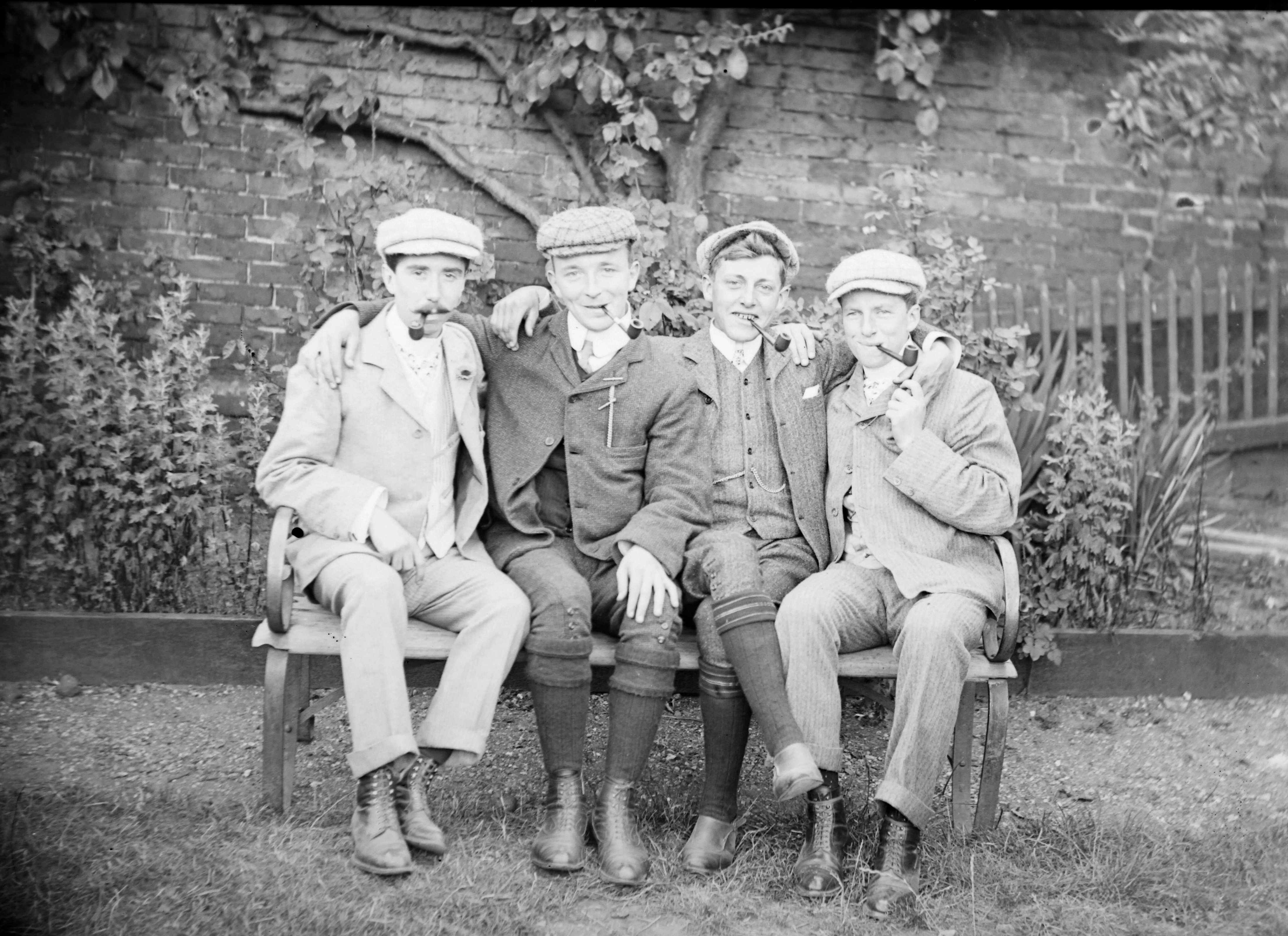
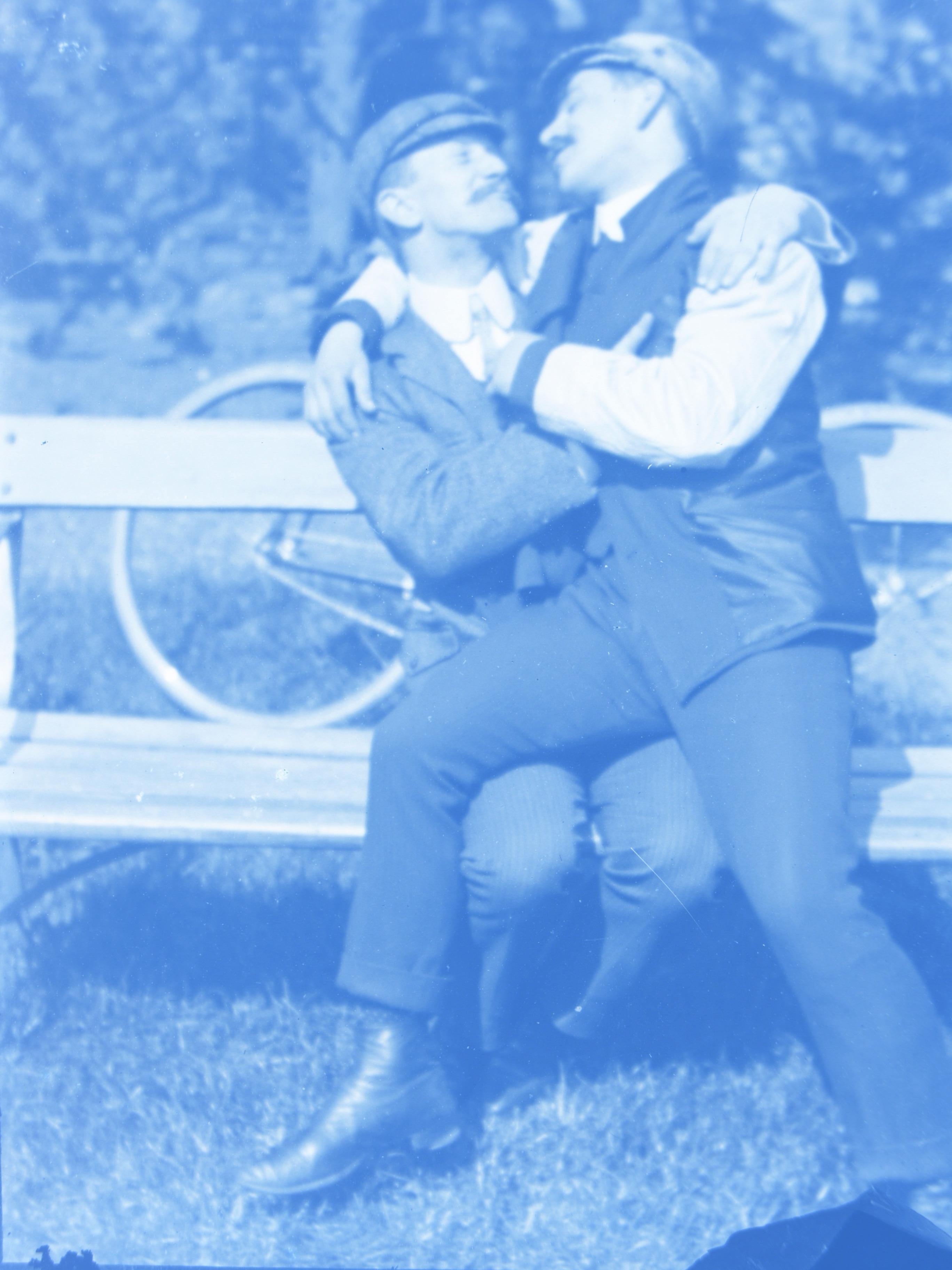
Sydney Denny was an ironmonger by trade, and was a keen photographer. His photos give a vivid view of Harleston and the surrounding areas. Denny photographed families, as well as local events and street scenes. There are several images in the collection of relevance to queer history, not least in those that record varieties of touch between men that would later become discouraged. In one, we see four young men sitting together on a bench in a garden: two of them hold hands. In another, a man takes another man on his lap, posing as lovers in a pose that mimics the popular visual culture of the day.
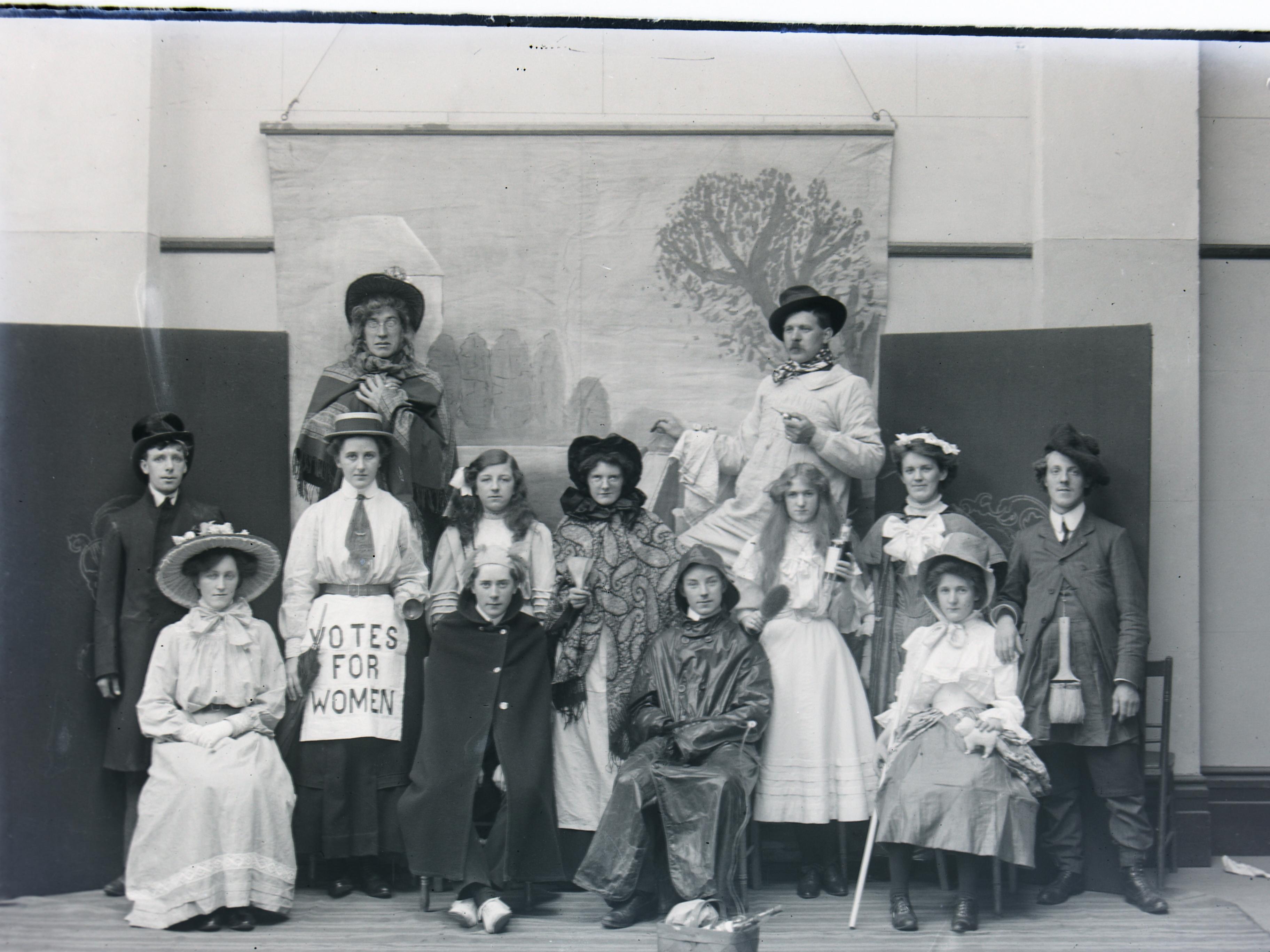
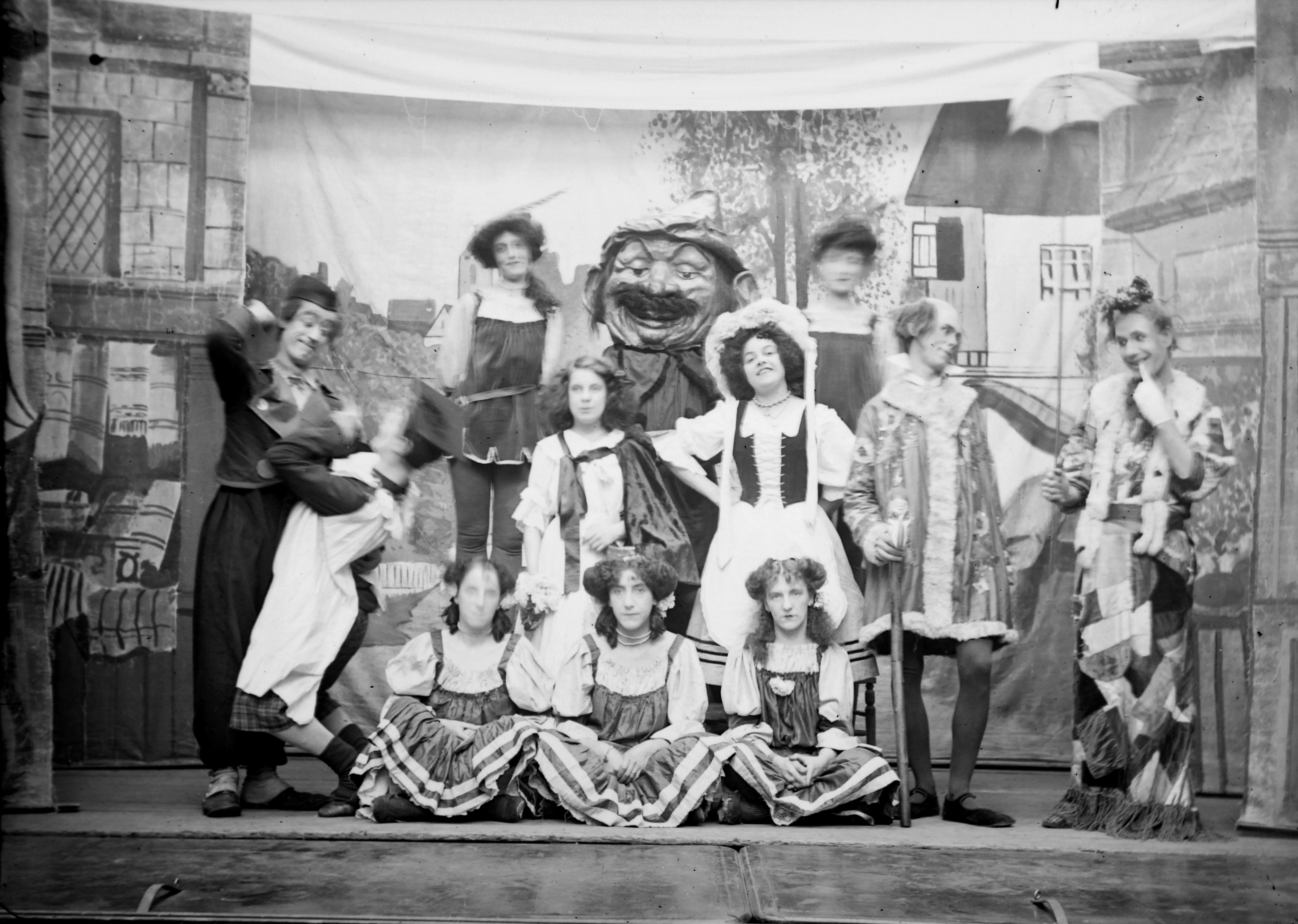
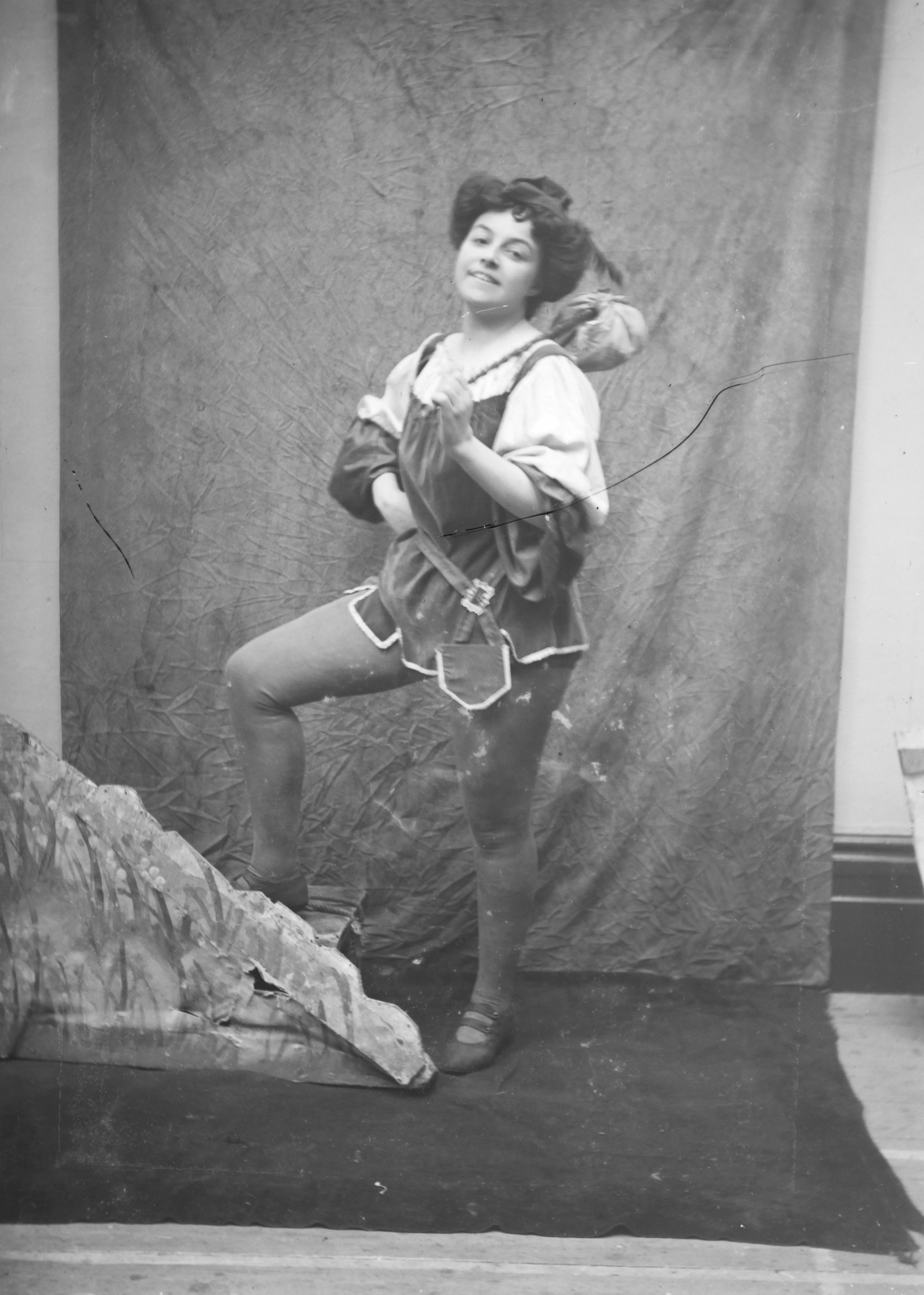
But the collection is arguably of most interest to LGBTQ+ history, specifically trans history, for the kinds of gender play it records. Several images in the collection illustrate traditions of gender crossing in British culture. Some show pantomime dames and another perhaps shows the role of a boy character taken up by a woman.
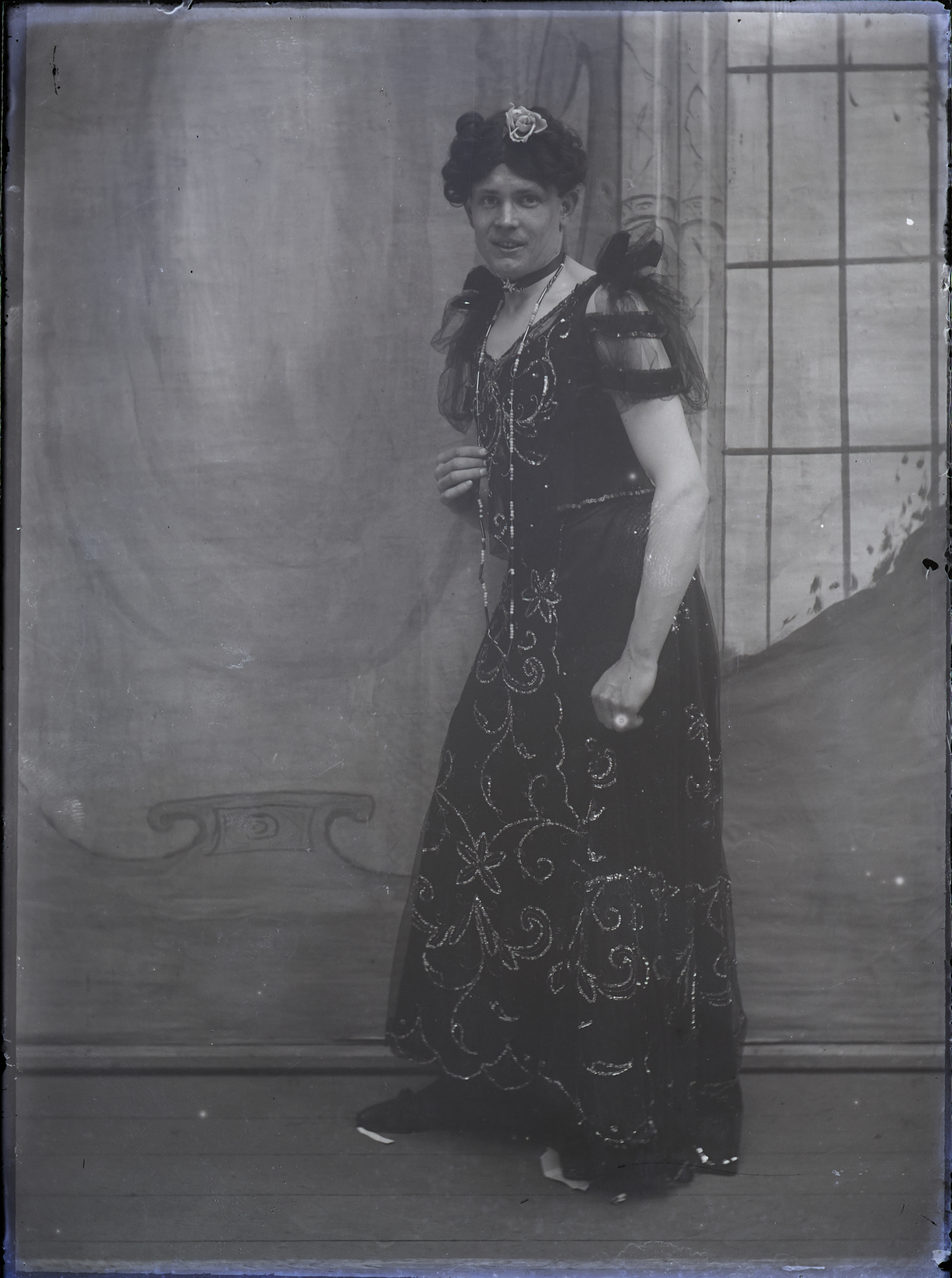
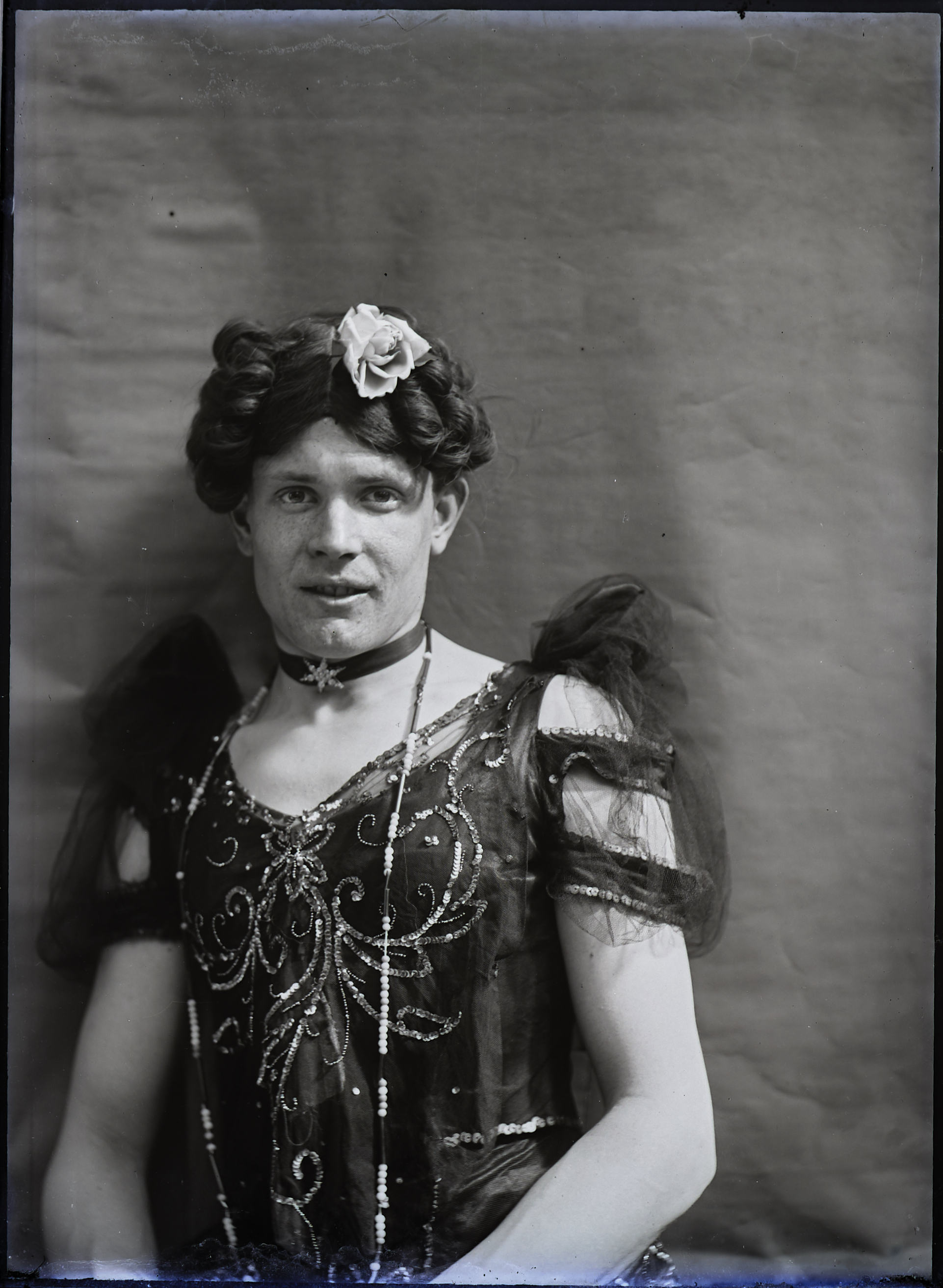
There are other photos in the collection that do not fit as obviously within a recognisable drag tradition. Two fabulous photos show someone in a studio in a glamorous black evening gown with elaborate foliate patterns. They’re wearing an eye-catching choker with a white bejewelled star. We have no context for why these photos were taken, nor do we know what the poser intended. There’s a mystery here, but there’s also a vivid spark of something that needs little explanation: with some imagination, we can let the fabulousness of the photos speak for itself.
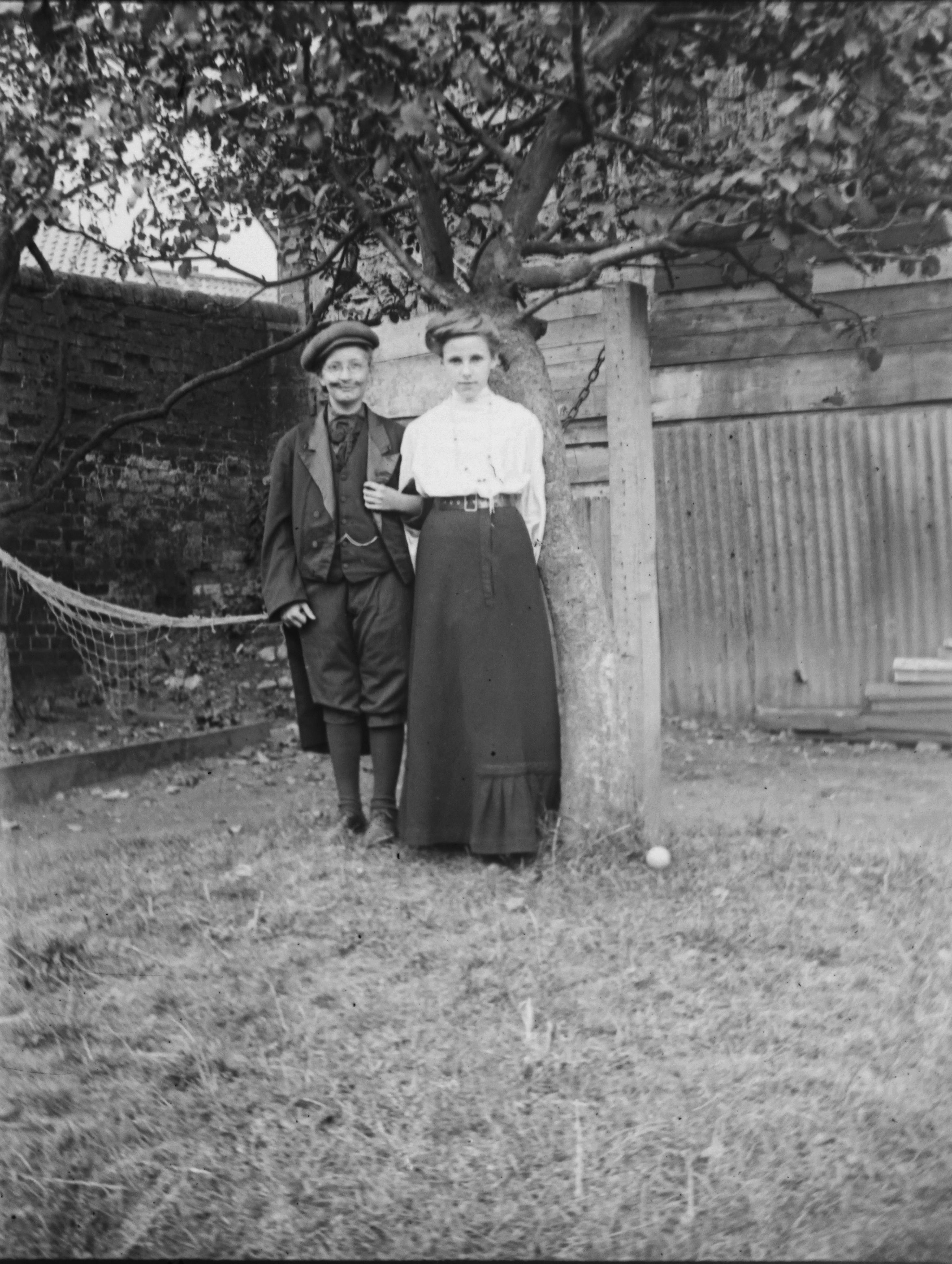
In another photo, a dapper figure holds the arm of a young woman, in what appears to be a garden. They have what could be false whiskers. The occasion or performance, if there was one, is not obvious. In a similar example, we see someone wearing a finely tailored three-piece suit with stiff collar, cane, gloves, and bowler hat.
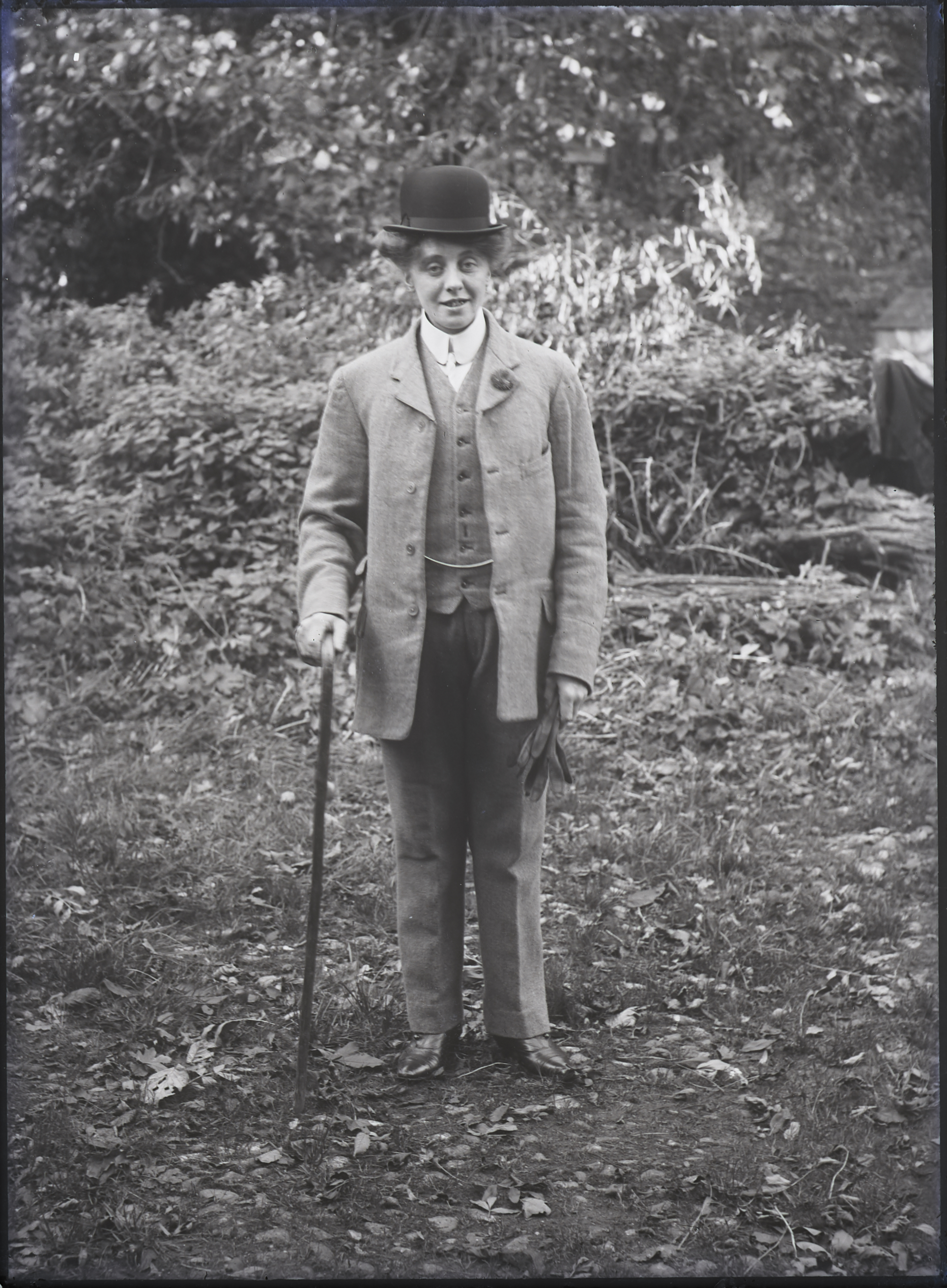
In all of these examples, we can’t know exactly what the person in front of the camera wanted in having their photos taken. Nor, indeed, what Denny’s relationship was to his subjects. But it’s notable that we find images of people who don’t immediately appear to be in a performance, perhaps dressed as they are for more individual reasons that have been lost. But in a way, the fact that these photos jump out to us as in some sense queer makes its own fruitful dialogue between past and present. And from a trans historical perspective, these photos demonstrate that—in a corner of rural Norfolk during the Edwardian period—gender could be played with and crossed.
Researched and written by Piers Haslam