
The needles of a 500-year-old yew tree, a sprig of oak from Sherwood Forest, a piece of seaweed from the seaside resort of St Leonards. These are not typical artefacts you might expect to find in Norfolk Record Office. Yet, these are just a few of over a hundred separate plant fragments sewn into the pages of four unassuming paperbound notebooks held at the NRO’s archives. “George’s Books with Leaves & Flowers from different Places when Travelling” (as one of the notebooks is labelled) is a charming botanical record of one Victorian teenager’s summer travels around the UK.
The boy who collected these plants was George Clayton Eaton (1834-1900). A local boy, George was educated at Norwich Grammar School and later trained as an artist at the prestigious Royal Academy, London, where he studied under British artist and sculptor Alfred Stevens (1818-1875). Throughout his adult life George was active in several Norwich institutions, serving on committees of the Norwich Castle Museum, Norfolk and Norwich Library, East Anglian Art Society and the Norfolk and Norwich Naturalists Society. The Norfolk Record Office houses a large collection of George’s papers, including sketches, watercolours, notebooks and correspondence. They include George’s travel journals, the earliest of which he wrote at the same time he was compiling his plant collection. These journals tell us the context in which George collected his plants, as the plant collection itself contains sparse information.
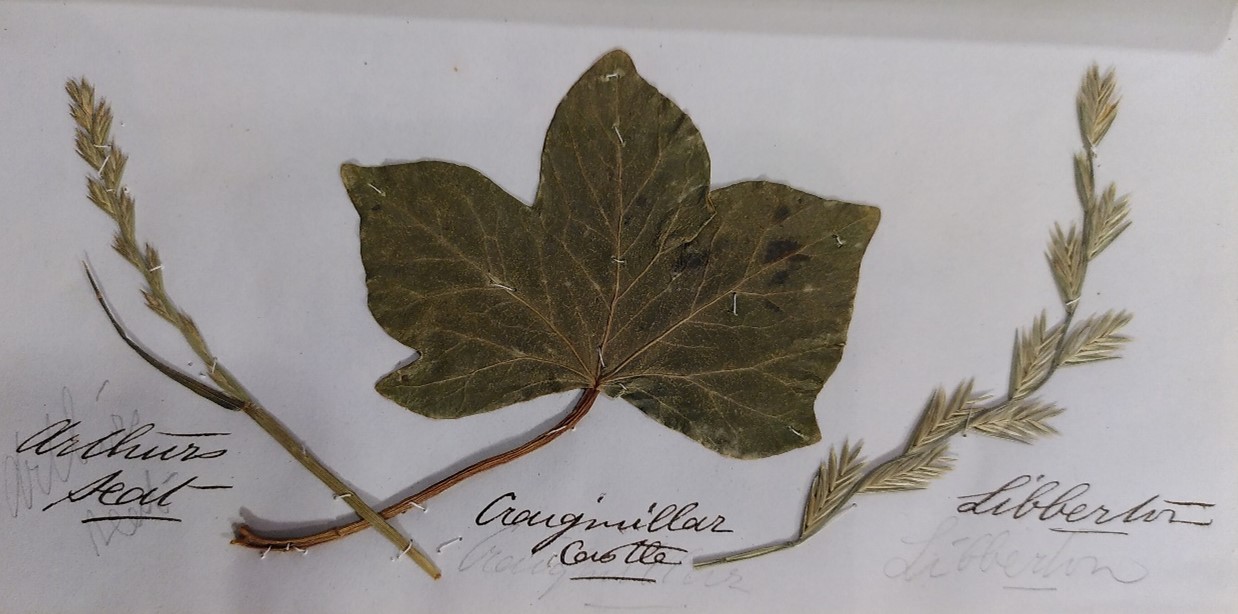
By collecting and preserving plants, George was participating in a popular Victorian pastime. Fragments of plants, collected from gardens or the wild, would be placed between sheets of paper and pressed down using a weight (often a heavy book) for several days until dry. This process stopped the plants from rotting and could even preserve some of their colours. The plants were then affixed to paper with adhesive or stitches and labelled. Collections of dried, pressed plants are usually referred to as a Herbarium, or sometimes a Hortus Siccus (literally meaning “Dry Garden”).
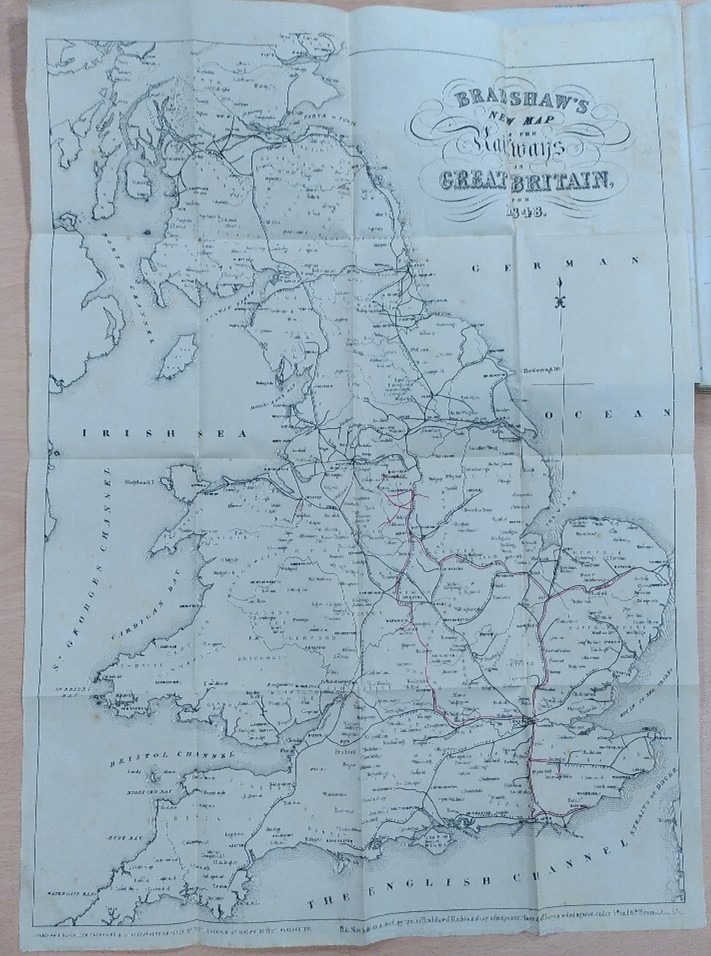
George’s first plant specimens and corresponding travel journal date to summer 1848, when George was 13 years old. His notebook makes it clear that this was the first time he had travelled outside Norfolk. He writes: “Before 1848 my summer [illegible] – had only been to Cromer, Yarmouth, Spixworth, & Cossey. My travels begin with 1848”. In that first year George, accompanied by his mother, Aunt and cousin, travelled first to the Peak District and Derbyshire, then south through Warwickshire and Oxfordshire, to London, Brighton and Hastings, before returning to Norwich. The family made use of the passenger rail network that, by 1848, connected much of the UK and made travel considerably faster, cheaper and more accessible than it had ever been before. At the beginning of George’s first journal is a folded sheet of paper, on which is printed Bradshaw’s New Map of the Railways of Great Britain for 1848, with George’s journey annotated in red ink. Later journals describe trips to the Lake District, Scotland and Wales, among other destinations.
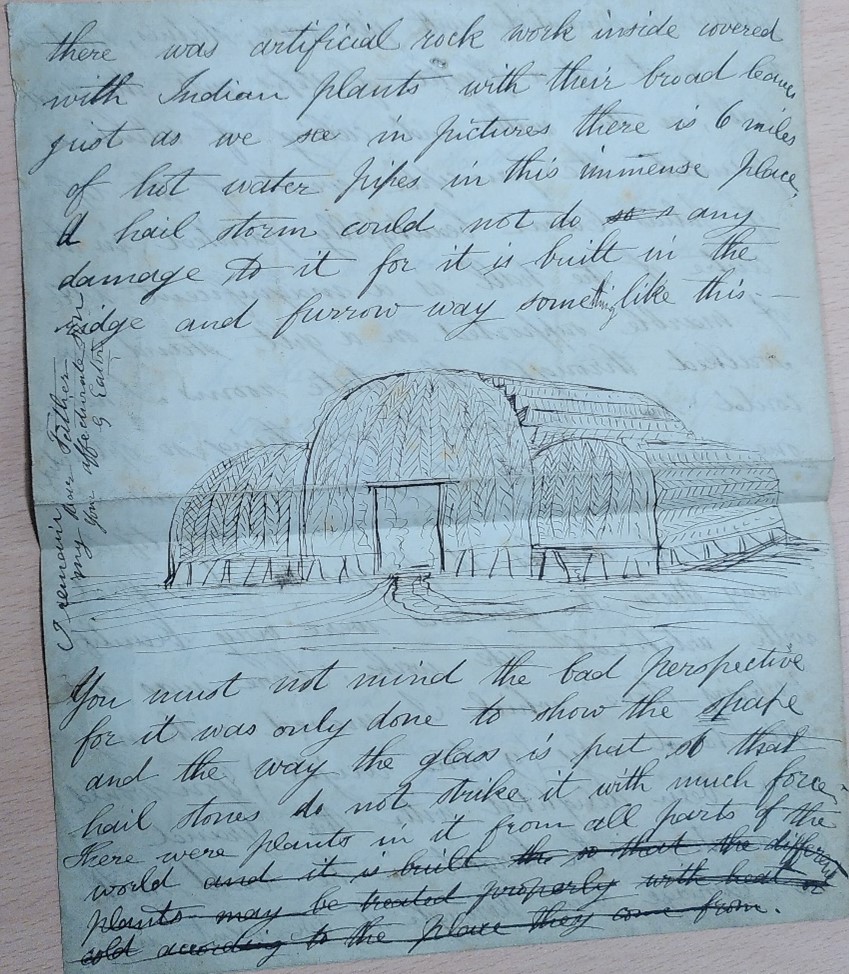
In the journals, George describes his packed itinerary: walks in the countryside, visits to stately homes and cathedrals, exploration of ruins and caverns. His writing encompasses the minute, mundane details of his journey (including the number of times they changed trains and the length of rail tunnels) and more descriptive passages that convey George’s wonder and fascination for both the natural and manmade worlds. He evocatively describes one waterfall as “one mass of foam roaring and splashing over the rocks” and observes while on a walk in Langdale that “some men on the highest peak – which is on the top of a tremendous precipice” looked to him like “black specks”. In a letter to his father, slipped inside one of the notebooks, George marvels at the Great Conservatory at Chatsworth House in Derbyshire: “…there was artificial rock work inside covered with Indian plants with their broad leaves just as we see in pictures there is 6 miles of hot water pipes in this immense place. A hail storm could not do any damage to it”. Peppered throughout the text are little ink sketches, capturing additional visual details and demonstrating George’s burgeoning artistic talent.
George’s plant collecting seems to have served a similar purpose to his journalling – simply another way to capture and remember his travels. It is unlikely that his collecting was scientifically driven, since George almost never labelled his plants with their species name or collection date. Instead, he labelled them with the name of the place they were collected and, occasionally, with related historical facts. For example, one unassuming leaf is labelled “Carisbrooke Castle. Window through which Charles 2nd tried to escape”, while a sprig of grass is labelled “From the Ball Room of Hever Castle, the residence of Anne Boleyn”. Thus, each plant was collected because of its significance to a specific place that George visited, a small, physical piece that he could take home with him.
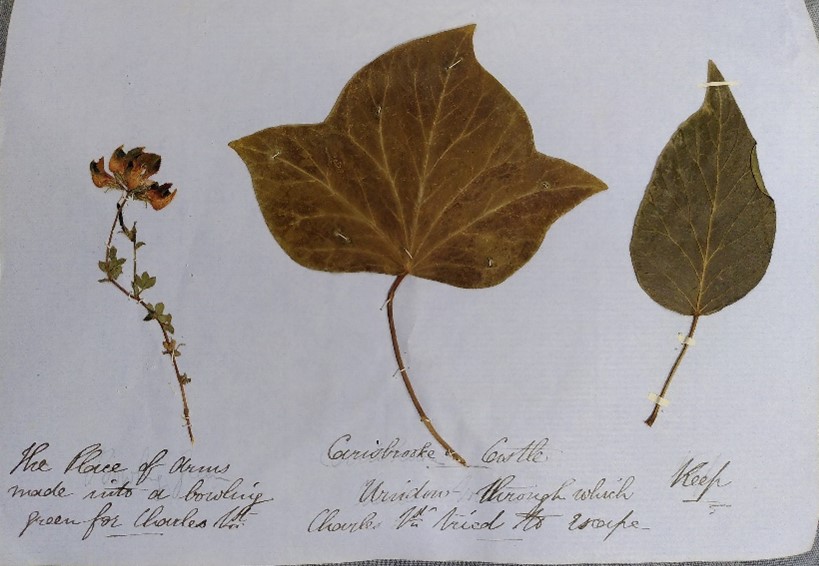
George’s artistic eye is apparent in the selection and arrangement of his plant specimens. One might expect a budding artist to prefer flowers, with their vibrant colours and delicate beauty, but there are actually few flowers in George’s collection. Instead, what stands out is the delightful variation of leaf forms: narrow pine needles, triangular fern fronds, broad, lobed oak leaves are among the many shapes in the collection. The placement of each specimen on the page also implies careful thought, with each specimen neatly and artistically arranged.
Touchingly, George revisited these early travel journals much later in his life. Inserted before the large, looping handwriting of George’s earliest journal entry (May 18th1848), is a passage in a smaller, more cramped hand. Dated May 1896 (four years before George passed away, and almost 50 years after the first entry), George quotes two stanzas of Wordsworth’s “Peter Bell”:
“He, two-and-thirty years or more,
Had been a wild and woodland rover;
Had heard the Atlantic surges roar
On farthest Cornwall’s rocky shore,
And trod the cliffs of Dover.
And he had seen Caernarvon’s towers,
And well he knew the spire of Sarum;
And he had been where Lincoln bell
Flings o’er the fen that ponderous knell—
A far-renowned alarum!
In the modern world we can record every experience with just the tap of a touch-screen – a far-cry from the considerable amount of time, care and effort that George spent preserving his memories. Most of us have many gigabytes of photographs stored on a hard drive somewhere, or up in the Cloud, that haven’t been looked at since the day they were taken. Do they provide as valuable and meaningful a record as physical objects, or our own words on a page? Are they able to evoke the textures, the sounds and smells, our thoughts and feelings at the time, in quite the same way? Perhaps we should all take a leaf out of George’s book – pun intended! Start writing a journal or assembling a scrapbook. Make a sketch or press some plants. And who knows, maybe in 180 years’ time someone might look at it and get to share in your memories too!
Written by Bryony Yates, NRO Research Blogger Volunteer



Very interesting, especially for a descendant. (Is a typo error =1748; should be 1848)
LikeLike
Thanks for letting us know- it’s been corrected!
LikeLike