
‘It being now May 1681 after a dry winter and scorching dry spring’, Thomas Baskerville wrote, ‘We went the banck waie through the depth and levell of the Fenns’. He was heading for Ely. Was the weather the result of the ‘late comet’, he wondered, ‘or else it had hardly bin possible so early, and as dry as it was we could hardly gett over the rotten bridge with our horses, being glad to alight for fear they should brecke through and stick in the rotten boggs under them, but they have another waie to go thether in the winter but some thing farther about’. He and his companion found the heat ‘suffocating hot … I veryly thinke ‘twas possible to have sett the countrey on fire the earth was then so dry.’
Baskerville’s companion was Thomas Baker, a knowledgeable guide to Norfolk, who had friends to whom he could introduce Baskerville. At the Kings Head in Beccles, for example, they ‘were merry with good claret with one Captaine Plater of this towne, and one Mr Watts of Elsingham a towne about 3 miles off, an acquaintance of Mr Baker’s’. The reference to Elsingham may be an example of Baskerville’s uncertainly about many place-names, which he was told but presumably did not see written down, so they are not always easy to understand. Elsingham perhaps was Elmham.
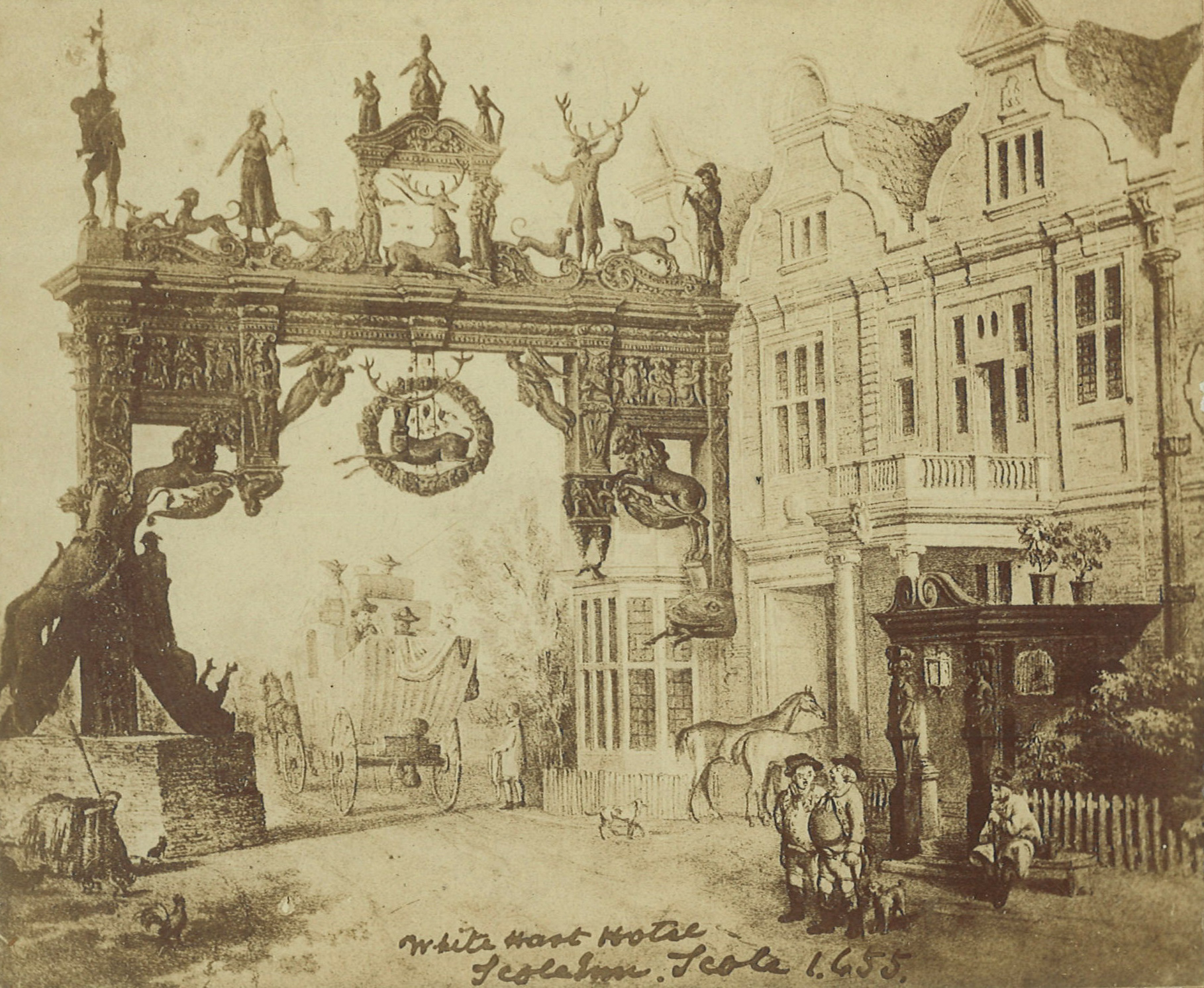
The two men, and probably a servant as well, had travelled on horseback from Oxford. They had spent time in Essex, Suffolk and Cambridgeshire before reaching Norfolk at Scole. Baskerville admired the extraordinary inn sign of the White Hart, which he described in detail, and found good wine and beer, ‘one Mr Patten now lives there’. He was generally appreciative of the refreshment available. Around Beccles and Bungay he said ‘This countrey affords good and well Tasted beer and ale both in Barells and botles’, and in Lowestoft where they dined they had ‘fish incomparably well drest, with excellent good clarett and beer’ but he had to admit he had forgotten the name of the landlord and landlady.
Thomas Baskerville was an observant traveller. His comments on the round towers on churches in the area of Beccles and Bungay are interesting, and on the bell towers being added to them with their variety of designs. One he said was ‘lately built by Norwich workmen’.
‘In the waie between Bungay and Beckles I had first sight of a man att plough with 2 horses, for they seldome goes with more att any time in these parts, he held the plough and drove the horses himselfe, he had but one handle to his plough and had 3 things to do with 2 hands viz: to hold his plough, to hold his whipp, and to reyyne his horses with little cords that reached to the handle of his plough, all this he did with great dexterity, turning very nimbley att the land’s end.’
This is an example of the fascinating details which Baskerville noted in his accounts of his journeys.
Towns naturally provided Baskerville with material, like Beccles and Lowestoft, and in more detail the town of Yarmouth: the herring smoking, the buildings of the town, the ceremonies of the town officials, the many ships (he was told there were 600 sail belonging to the town and he counted 120 as he rode along), and the confluence of the rivers Yare and Waveney. He found the Feathers a very good inn. He observed the danger of flooding if the sea broke through the banks.
Norwich provided Baskerville and Baker with many points of interest. They spent some time in the city, staying at the King’s Head. Baskerville counted 28 church towers ‘for the most part not small but large and well built of Free Stone and Flint’. He briefly indicated the style of the cathedral, but was more interested in the Alms house and the Castle. They took a boat up the river, where he dismissed the Duke of Norfolk’s new house as very poorly sited. But his particular interest and approval was for the market. He noted many details about the goods for sale and the custom of the town in the market. As a recent visitor to Norwich, I could only agree about the splendid market.
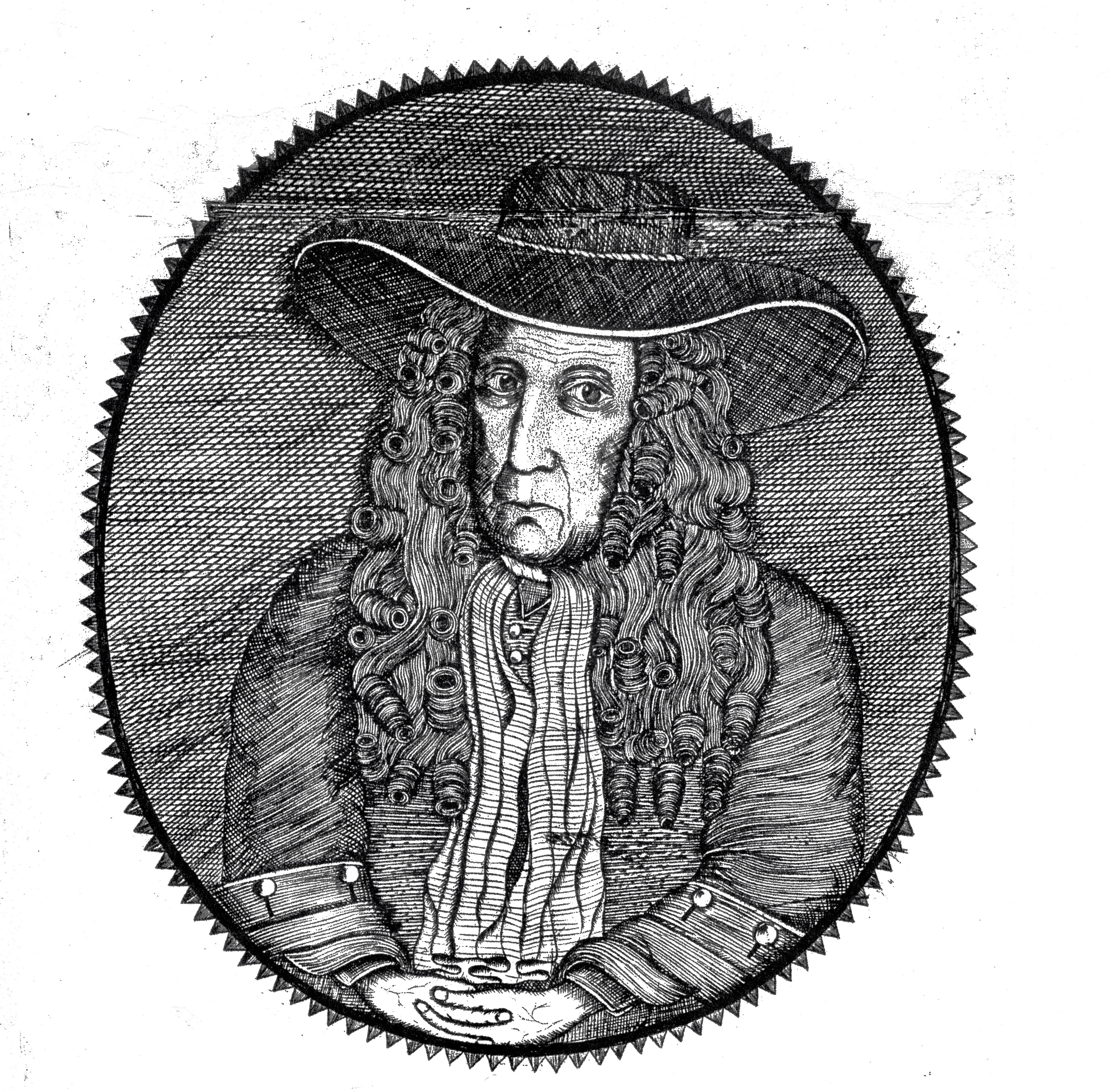
Reproduced by permission of Abingdon School
So then the two men turned for home, going first to Ely. This was the first journey of ten which Thomas Baskerville wrote up. The manuscript is in the British Library. A second manuscript of his writings is also in the British Library, and contains a variety of material including an account in verse tracing rivers near his home, and of bridges over the Thames, together with a list of taverns in London. A third manuscript, in the Bodleian libraries in Oxford, has his detailed account of his extended family and of the colleges in Oxford. With his irrepressible curiosity there are diversions within each, detailing other experiences in his life. A collected edition of his own writings has just been published, in October 2023, in a paperback edition by Hobnob Press, omitting only a small number of items which Baskerville copied down from other writers. Thomas Baskerville: Journeys in Industrious England and writings personal and topographical edited by Anthea Jones contains numerous descriptions of working life and of places in England, with his frank comments and observations.
Researched and written by Anthea Jones



 Norfolk Record Office
I really enjoyed this. Before the British Library’s systems crashed about six weeks ago, I spent a very happy hour or two in the Manuscripts Room reading Baskerville’s account of his journey through East Anglia and was particularly intrigued by his detailed description of Great Yarmouth. My particular interest is in Watton and Baskerville passed through the town on his way back to Ely (via Brandon). He dined at the George Inn and, although he found ‘little remarkable’ in the town, he was impressed by the ‘fine new bowling green att ye George Inn’. The landlady, he noted, was ‘Mrs Jeames’, who was probably Susan James, widow, who died in 1689, one of whose sons by an earlier marriage was Edward Harris of Watton, beer brewer (died 1696), who was recorded in the manor court book as the occupier of the inn in 1679.
LikeLike
Thank you Anthea for a great read. I thoroughly enjoyed it. Best wishes and merry Xmas.
LikeLike