
1893 – 1963
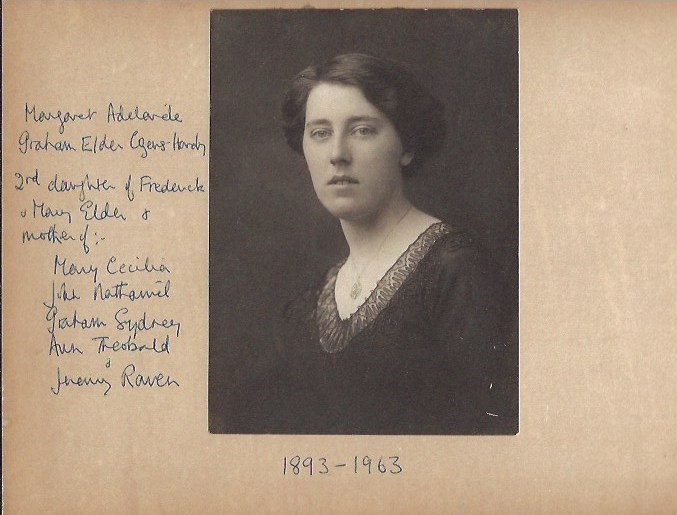
The Norwich Mothers’ Clinic opened in June 1934 in one of the “most remarkable yet inconspicuous voluntary public services” in the County of Norfolk. So reports the Eastern Daily Press in 1960, which paid tribute to Margaret Cozens-Hardy, the clinic’s founder, and Honorary Secretary for 25 years.
Her immense contribution would quite likely be lost in the mists of time were it not for papers at the Norfolk Record Office (NRO, SO 134/1-3) which throw a fascinating light on the challenges she and her committee faced as well as the history and evolution of the clinic.
The pioneering Marie Stopes visited Norwich in 1933 and expressed the hope that a clinic would be started in the city. Until this time, under Ministry of Health regulations, information could only be given to nursing and expectant mothers attending maternity and child welfare centres, and on medical grounds only.
An inaugural meeting of the committee was soon organised, and a formal decision taken to form a birth control clinic for the benefit of married women, affiliated to the Society for Constructive Birth Control, the international association created by Marie Stopes. Margaret was the Honorary Secretary.
A former weaver’s house in Pitt Street became a Mother’s Welfare Clinic. The motive for its inception was for the welfare of women and it met its aims by dispensing information and contraceptive supplies, both badly needed.
In the 21st century, the concept of birth control is well established, it’s hard to imagine a time when opposition was strong and bitter. But so it was. Reading between the lines, undertakings had to be made that unmarried women would not be able to access contraceptive supplies.
The correspondence in the NRO file begins in 1934 with Margaret writing to several organisations trying to get their support. In a letter to the National Council of Women she writes: “There is a clinic (in Norwich) where women can get information on birth control on medical grounds but not on social or economic grounds. This means that even if a woman cannot afford more than two children and has no accommodation for more than two, information will be refused her. Norwich therefore condones the scandal that only those with money can get what should be common knowledge, since no Society has the right to withhold knowledge from any of its members.”
The clinic opened with the support of doctors, JPs and religious leaders in Norwich and was kept afloat by donations. The Society for Constructive Birth Control provided contraceptive supplies, literature and training for the clinic midwife, Nurse Pye.
One early helper at the clinic in Pitt Street quoted in a newspaper clipping recalls women travelling from across Norfolk to attend the clinic – “poor mothers with 11,12 or 13 children born in the space of 14- 15 years – just weighed down and depressed beyond words.”
In the notes of what appears to be an annual report, Margaret recorded that within 11 months, 130 women had been treated, the majority being “just those which the promoters of the clinic hoped would come i.e. women with in many cases, a husband out of work and a family of five or six children which was already bigger than they could adequately cope with. In the majority of cases, the health of the mother was impaired either by having too many children or by having them too quickly.
She also writes: “In view of the things that were said against the clinic at the beginning, I should like to say that no unmarried person has ever applied to us….if the clinic were doing nothing else, it would be justifying its existence by bringing to the notice of health authorities physical ailments which would not otherwise have been discovered. The sum total of evil that the clinic prevents is incalculable and the sum total of happiness that it brings grows larger every week.”
The NRO papers are a testament to a woman who quietly but resolutely made sure that the clinic was established and then operated in the best interests of the women it served.
Margaret had sone difficult dealings with the Marie Stopes organisation, and ultimately the Norwich clinic ended the affiliation; Margaret’s letters were polite and non-confrontational throughout the long and somewhat volatile association.
Nurse Pye, who had worked at the clinic from its inception in 1934, retired at the same time as Margaret in 1960. The clinic had won local authority support many years previously and become affiliated to the Family Planning Association.
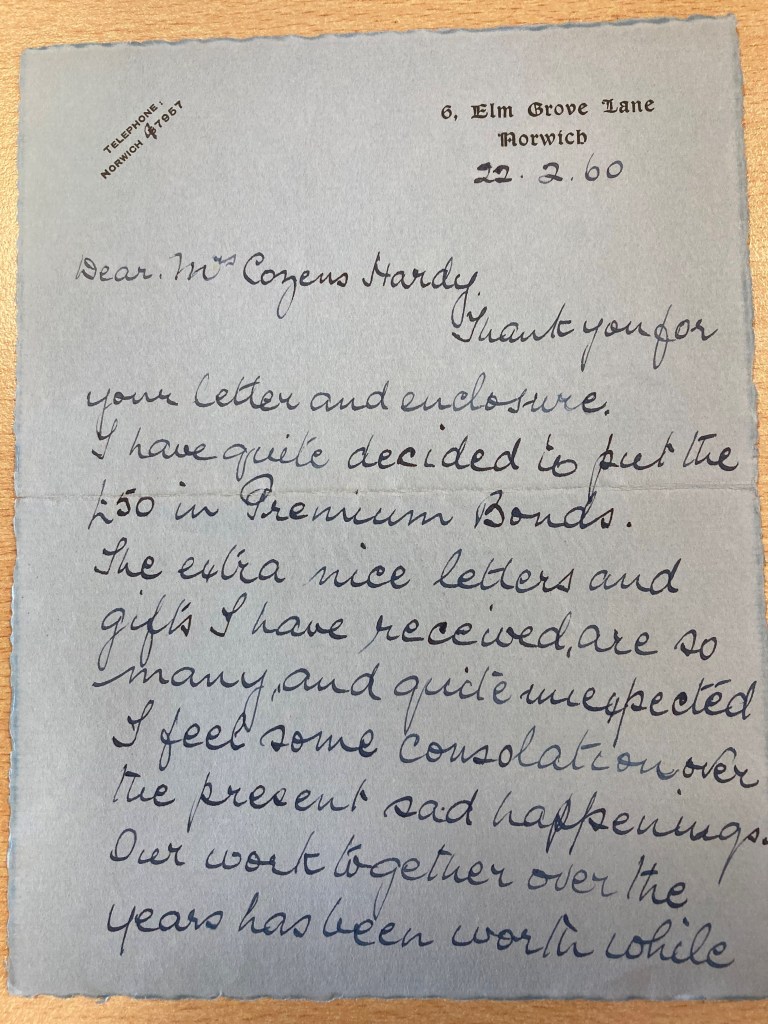
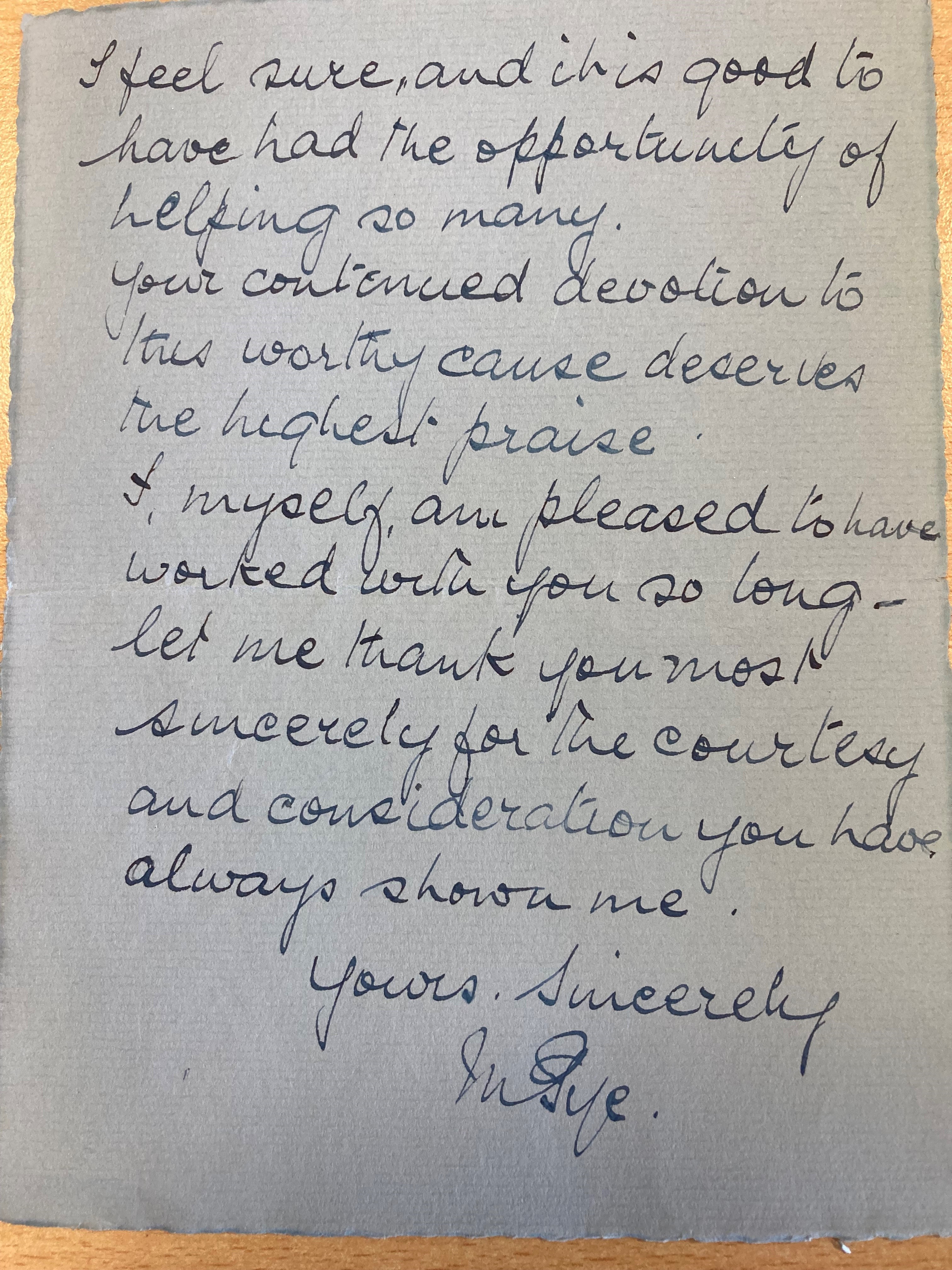
A mother of five, Margaret was married to the Norwich solicitor and respected historian Basil Cozens-Hardy who in 1935 became the Sheriff of Norwich. By this time, she had already helped turn around the lives of many women “suffering the fear and dread of unwanted pregnancies.”
Researched and Written by Caroline Holland



 Norfolk Record Office