
Finding the lives of lesbian and bisexual women brings challenges to historians. In Britain, sex between women was never criminalised in the same way that it was for men. It’s because of legal records that historians have been able to write much of LGBTQ+ history, finding men we may now call gay or bisexual brought to court for sodomy (which carried the death penalty) or—from 1885—the more broadly defined crime of ‘gross indecency’. What do we look for in the archives when we want to find out more about what it was like being a lesbian, bisexual, or queer woman in the past?
In exploring the Norfolk Record Office, we find one possible answer: family collections. These rarely offer the drama and sensation of court records. Family diaries and letters often present us with lives in microscopic detail, showing the routines of work and leisure. Yet these details are selective: we rarely find frank discussions of sexual or romantic interests. The archives reveal friendships and intimacies that can’t be conclusively labelled, but which—when read with a queer eye—show us emotional lives that went against the grain of social expectations.
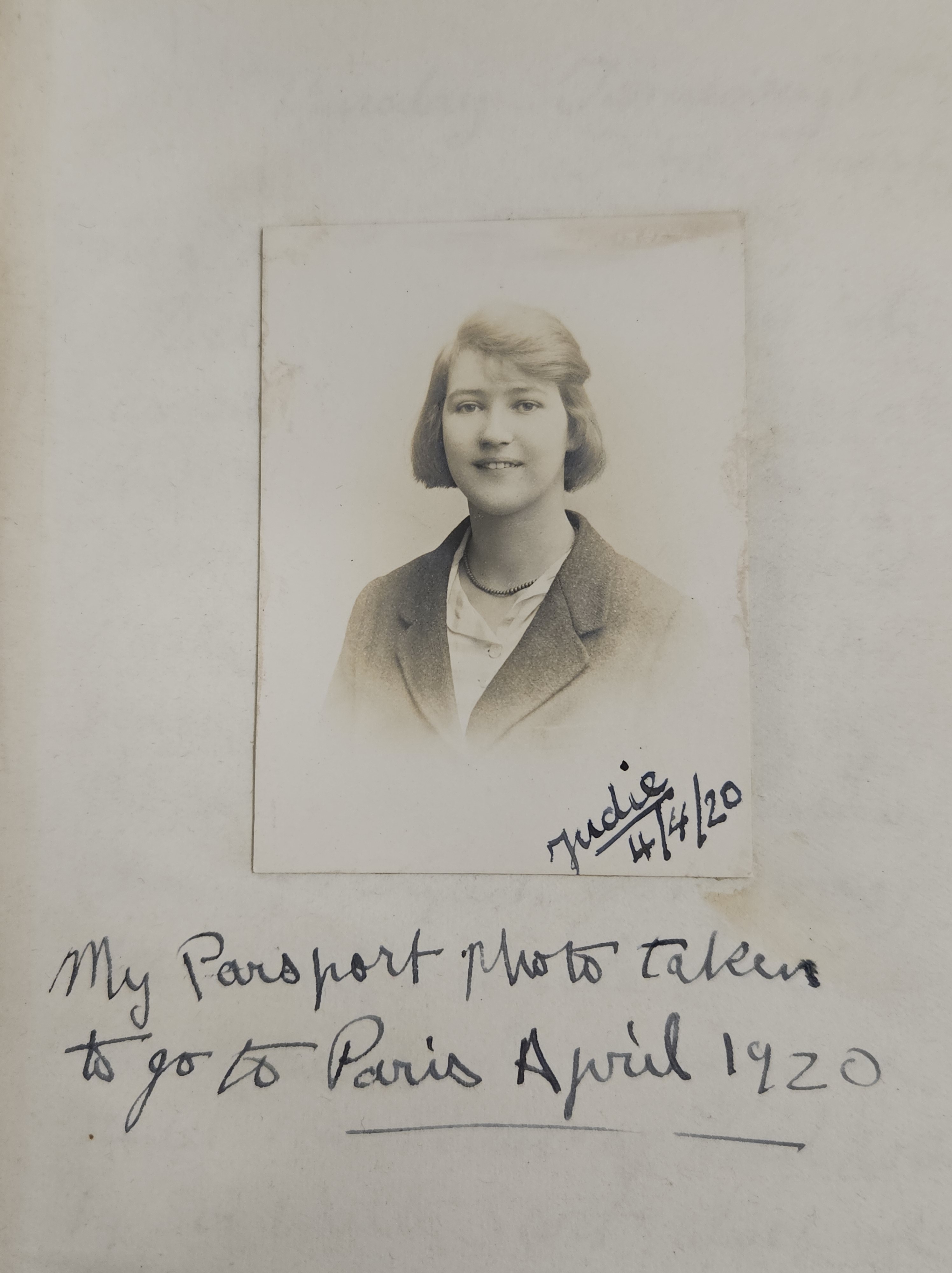
One collection that would provoke anyone interested in lesbian history are the diaries of Judith Madeleine Ferrier: these cover the period between 1917 and 1967 (with many gaps). The Ferriers were an established Great Yarmouth merchant family. Judith’s father, Richard Frederick Ernest Ferrier, was a solicitor and the Mayor of Great Yarmouth in 1923. Judith was born in 1902 and died in 1974, and spent much of her life involved in the Girl Guides movement. She never married. Up to 1920, Judith’s diaries concern her family life and leisure activities. But in April 1920, Judith’s daily life changed dramatically as she embarked on a trip to Paris to take French lessons. These vividly illustrate how a young woman leaving the constraints of family life forged new kinds of relationships. Judith described her early acquaintance with two women whom she later ranked as her best friends.[1]
Of course every one here calls me ‘Judy’ & in consequence call poor Mary who sleeps with [me] ‘Punch’!! but she does’nt mind, being full of fun & rather a tomboy. Nell Joshua the jolly girl from Norfolk calls herself Toby & we have formed a trio[.][2]
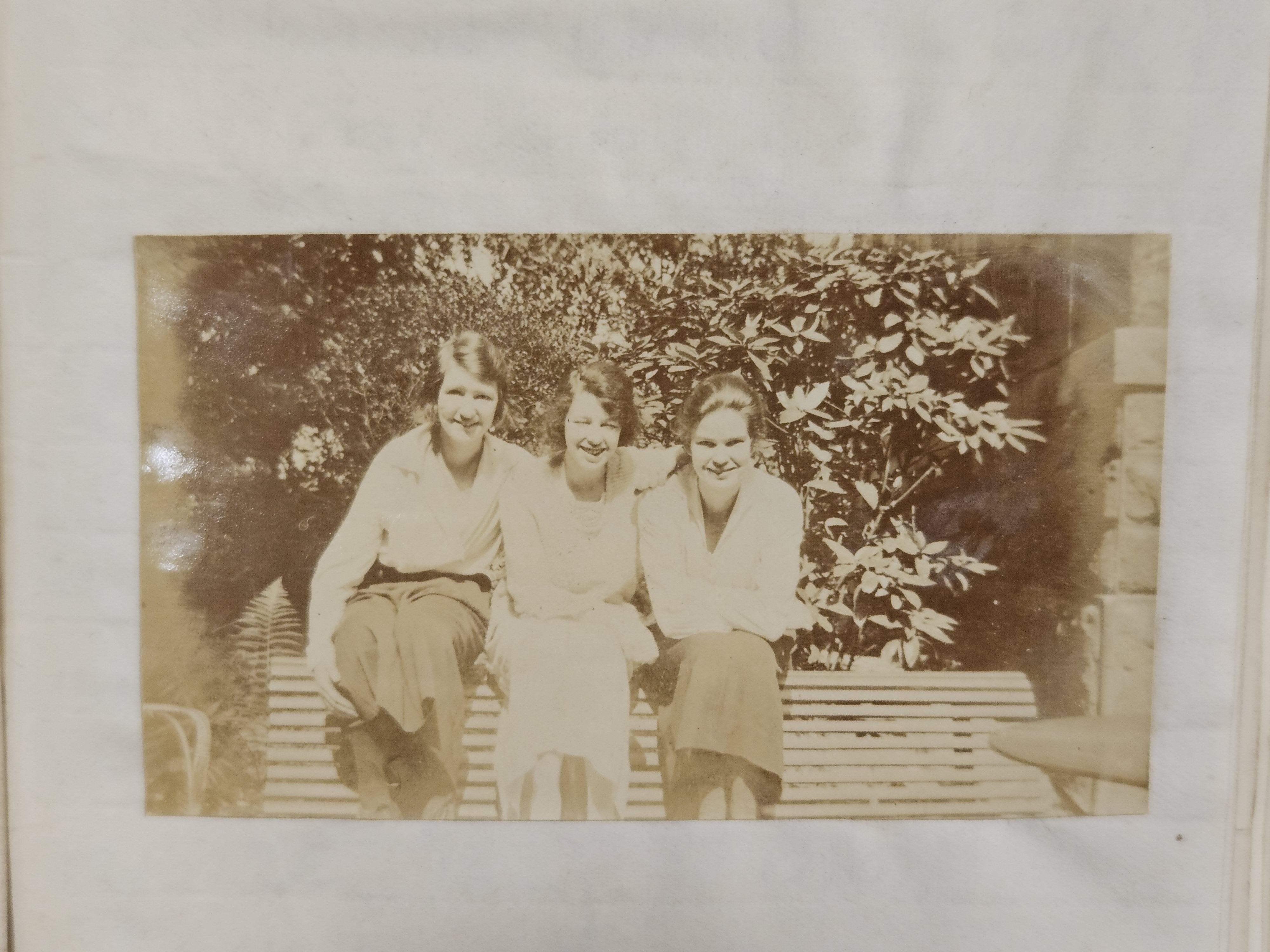
After an evening at the opera on June 24 1920, Judith wrote about her feelings about family and friendship:
I went with Mary Armstrong who sleeps with me & Nell Josua [sic], who I like very much I like them far best of anyone here, I was so very glad they were with me […] The only thing was I did so wish mother was with me, as it was with her that I learned to love the music & it is with her that I must enjoy the opera to be perfect.[3]
To Judith, sleeping arrangements were of great importance. When she arrived back in Paris in 1921 after Christmas, Judith was concerned at not being placed in the same room as Punch/Mary: ‘It gave me rather the pip to find my self in our bed room of last term with out Punch!!!!’[4] These entries exemplify the intimacies to be found in Judith’s diaries, and the adoring terms (and many exclamation marks) Judith used when writing about her friends. During the Easter holidays, Judith stayed in contact with her friends:
[Received] a lovely long [letter] from dear old Toby, which gave me great pleasure & made me feel how lovely it is to have real friends; to whom one can turn to, when one feels down with perfect faith that they will do the same to you.[5]
Another friend from Judith’s Paris days was Julian/Jules, who later married a man named John. Judith wrote admiringly of Julian’s beauty while criticising her husband, perhaps showing the tensions brought about by a friend marrying out of the friendship group:
Pegs & I went up & joined Ciscilia & Margs R in helping Julian to dress[.] She was awfully nice & pleased to see us[:] the other two bridesmaids were green. […] I must say John is decidedly not a beauty […] Jules looking ever so nice in tweeds. […] I do wonder if I shall ever see any more of Jules!![6]
We can’t ‘prove’ that Judith was lesbian, bisexual, or queer. But the demand that we need to do so seems unfair. After all, it’s unlikely a researcher would be expected to prove that someone in the past was heterosexual. But this is a good lesson that we can learn from collections like these. The search for the proof of particular kinds of sexual activity is something of a dead end: it’s a practice that’s in danger of making us miss what makes the diaries of someone like Judith special. There’s so much more to be learnt about LGBTQ+ history by attuning ourselves to subtler ways of reading and researching. In the case of Judith’s diaries, we learn about the queer possibilities of friendship for a young woman in the 1920s.
Researched and written by Piers Haslam
[1] Diary of Judith M. Ferrier, MC 578/14, p. 7.
[2] Diary of Judith M Ferrier, MC 578/10, 27 April 1920.
[3] Diary of Judith M. Ferrier, MC 578/10, 24 June 1920.
[4] Diary of Judith M. Ferrier, MC 578/11, 15 January 1921.
[5] Diary of Judith M. Ferrier, MC 578/11, 29 March 1921.
[6] Diary of Judith M. Ferrier, MC 578/13, 21 October 1924.



 Norfolk Record Office