
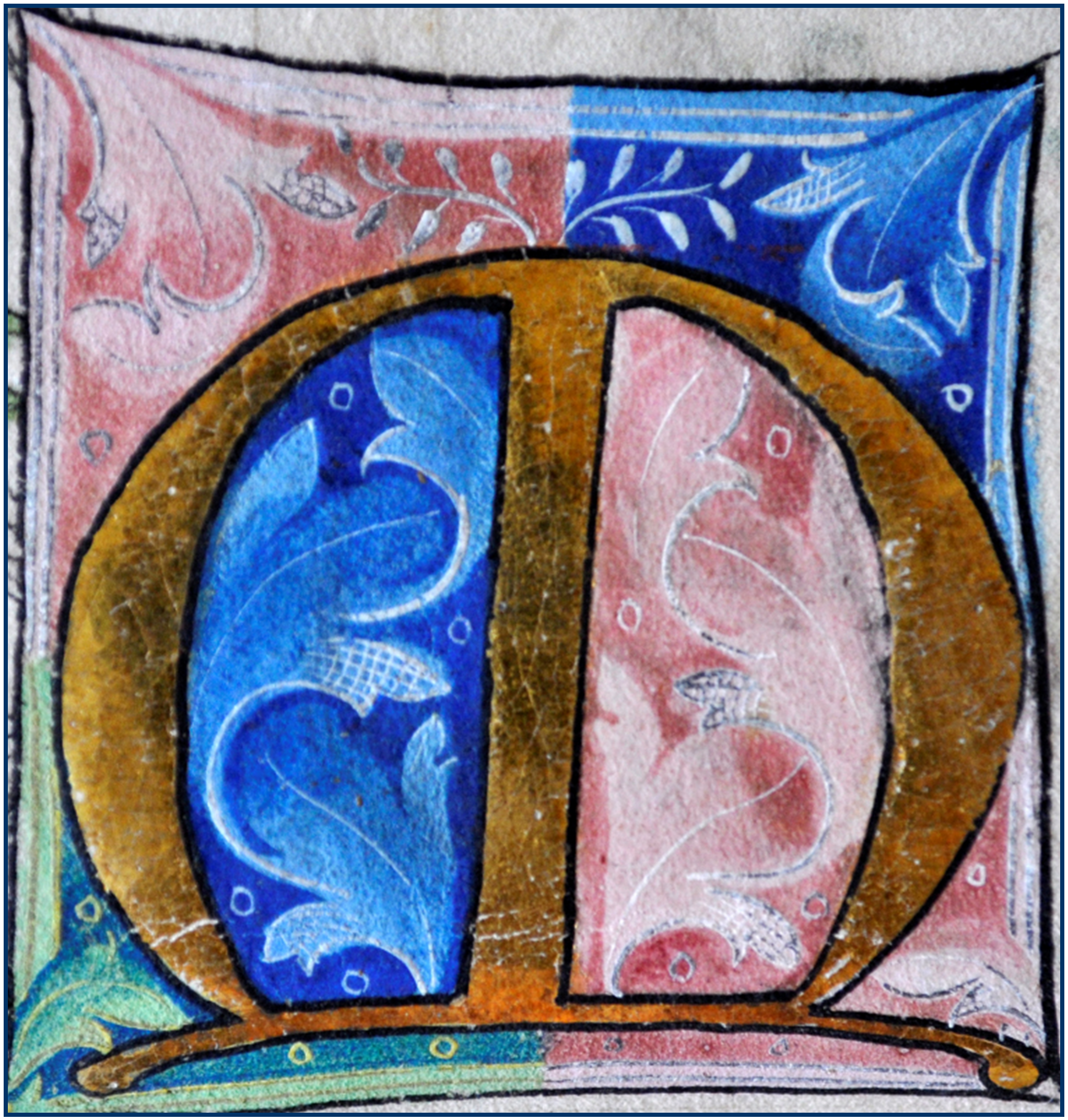
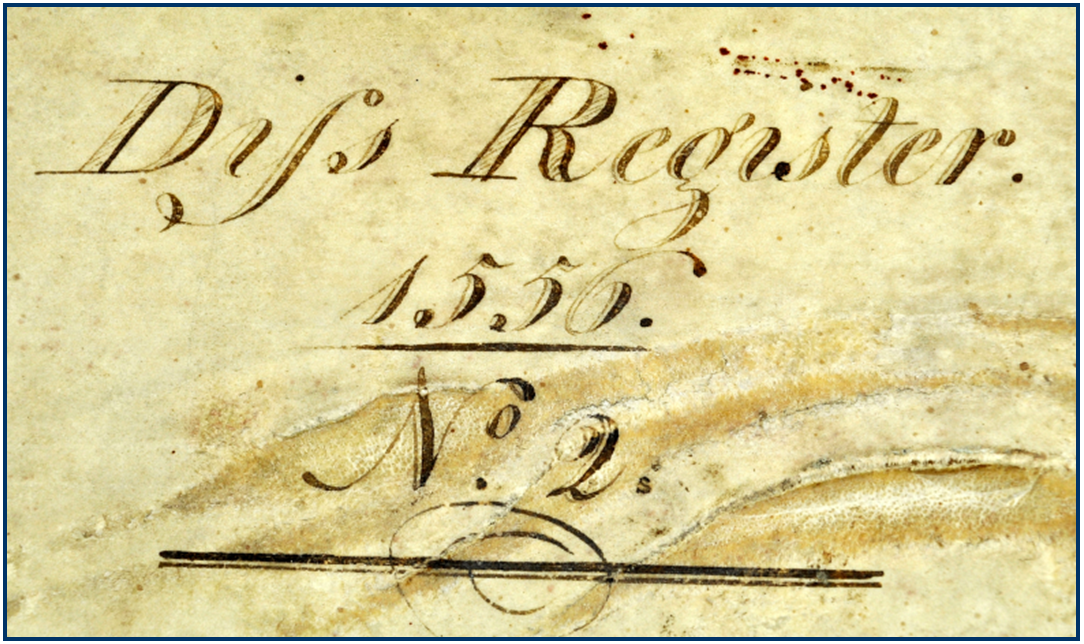
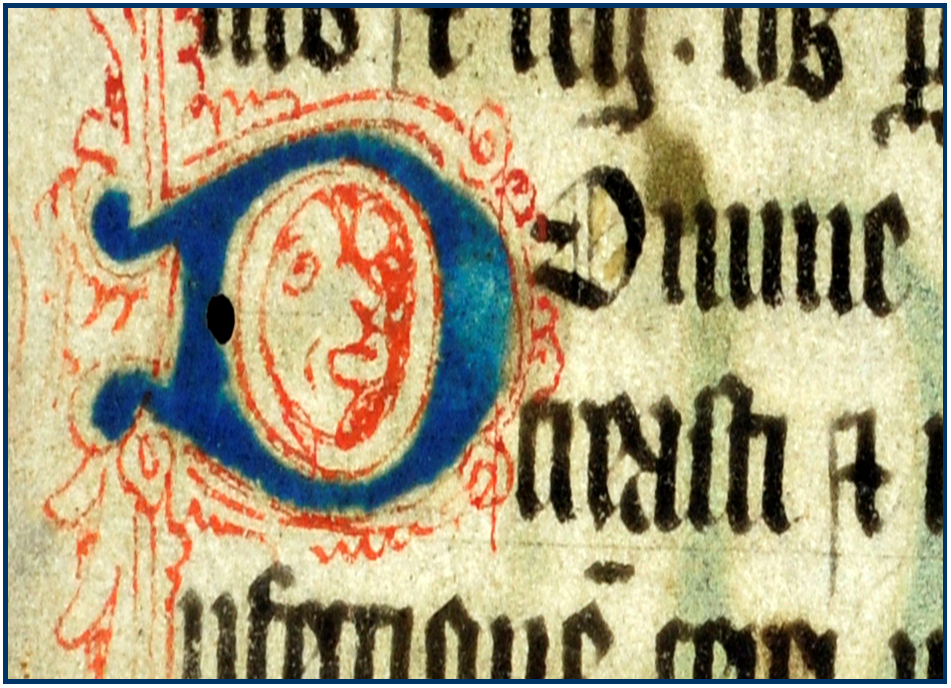
The Reformation, in particular the suppression of the monasteries in the 1530s, resulted in the dispersal of liturgical works and monastic libraries. Many of the new secular owners of the property of the defunct religious houses saw no reason why these redundant liturgical texts should not be put to practical use. These texts were written on hard-wearing parchment which could be cut up and cannibalized for use as covers for paper rolls, or as bindings or end-papers for volumes. Manorial account rolls, field books and parish registers have all benefited from the protection of such a cover.
Reused illuminated texts were probably local in origin. It was unlikely that anyone would have transported spare texts any great distance, except by accident. Indeed, out-of-fashion liturgical texts need not have travelled at all, but would simply have been cut up on the spot by thrifty churchwardens to cover the parish registers newly appearing from the late 1530s onwards.
By the early seventeenth century, those illuminated manuscripts which had survived this process, were being assimilated into antiquarian and learned collections. There they were finally offered some protection from physical abuse. As for the remainder, at least their sacrifice helped ensure the survival of many manorial and parochial records which now lie protected, hopefully for centuries to come, in the strongrooms of the Norfolk Record Office.




 Norfolk Record Office