
By Dr T Richardson
During the late 20th Century, King’s Lynn film screening was provided by two cinemas in the town: the Majestic (1928-present) and the Pilot (1938-1983). The late 20th Century is considered to be part of the peak of cinema with what is known as ‘New Hollywood’ production popularising cinema from the 1960s to the 1980s, followed by a decline in the early 1980s, hence the closing of the Pilot. Opening 10 years apart, these two cinemas are both considered to be of an Art Deco[1] style despite the fact they look very different.
This blog will examine the pertinent recurring style features (known as leitmotifs) associated with Art Deco and will discuss both the similarities and differences of these two cinemas. But before that, we will introduce both cinemas and include some archived photographs and architectural images from the plans.
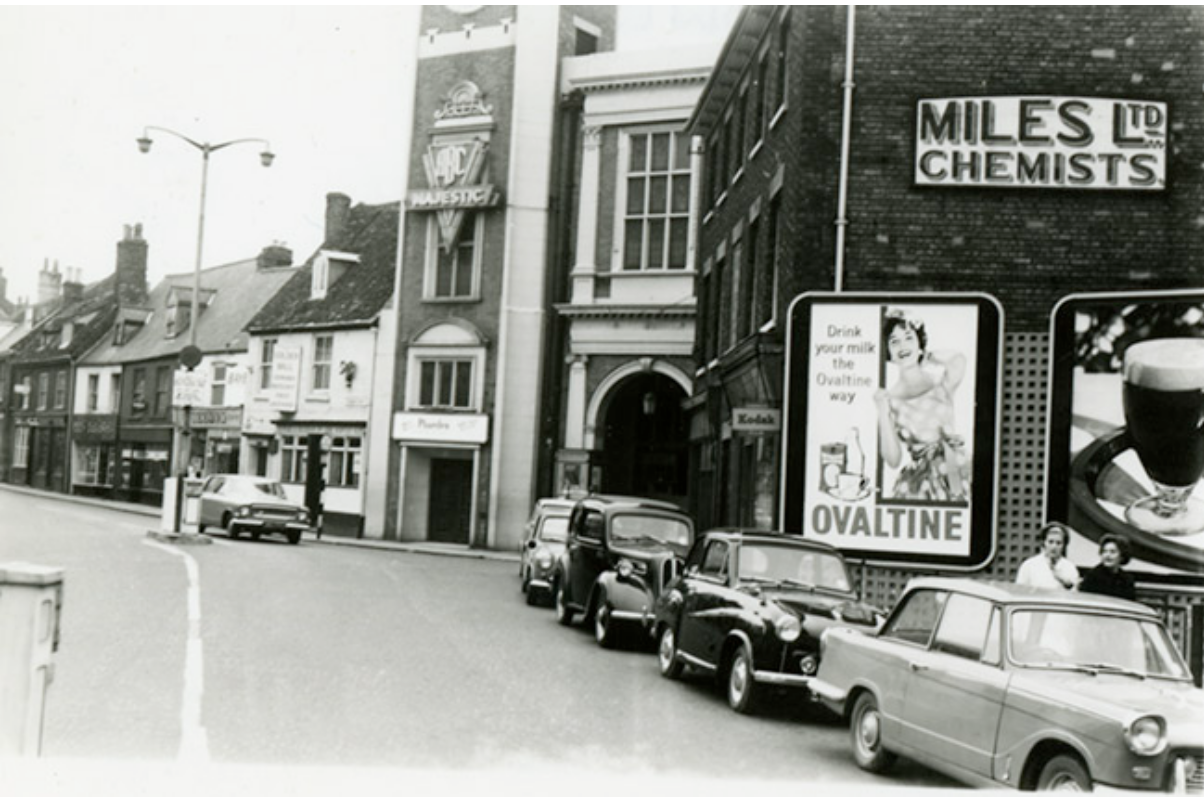
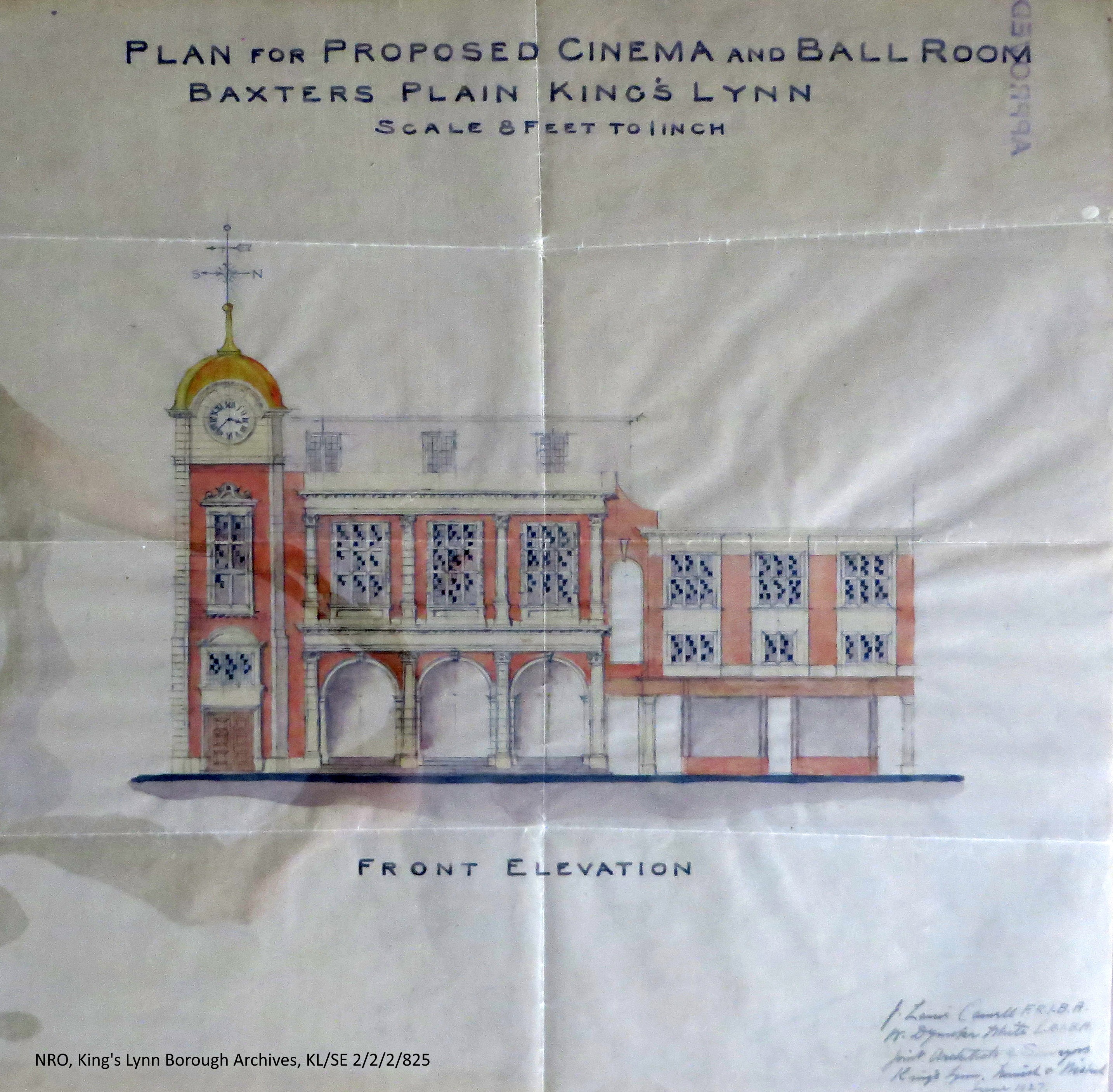
The Majestic Cinema was designed by the Norfolk-based architects Carnell and White. The plans (available in the King’s Lynn Borough Archives) are dated 1927, the year before it opened. Some of the key features of the design include neo-classical columns (as you can see in the section to the right of the clock tower) and semi-circular arches. Both of these architectural motifs are a nod to either Greek or Roman architecture, which was having a resurgence in the early part of the 20th Century and is apparent on many public buildings built at that time.
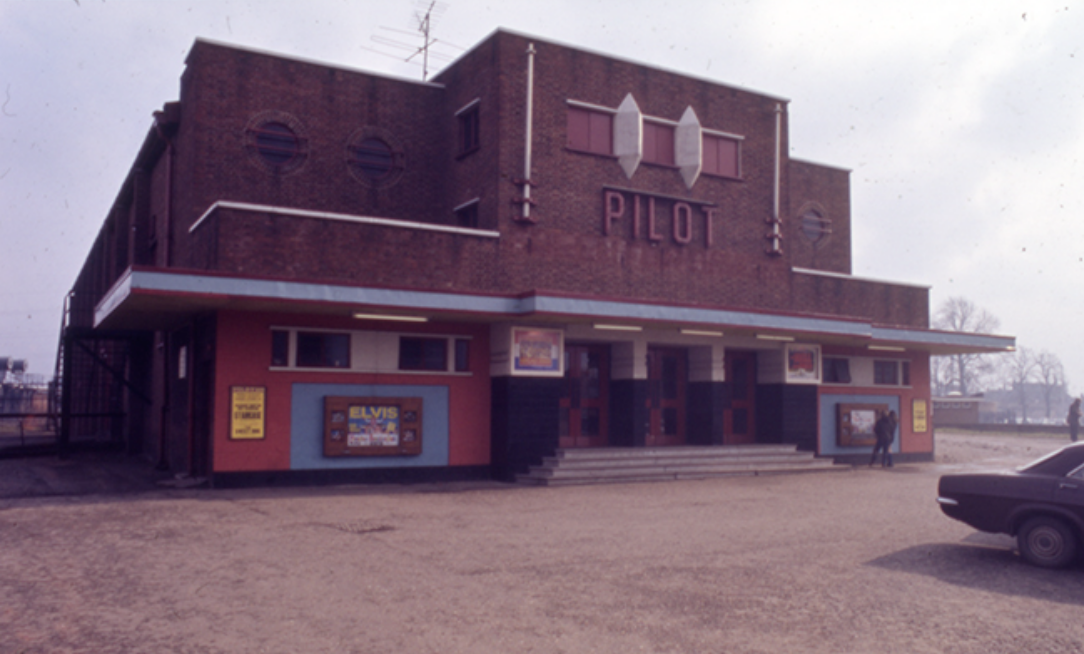
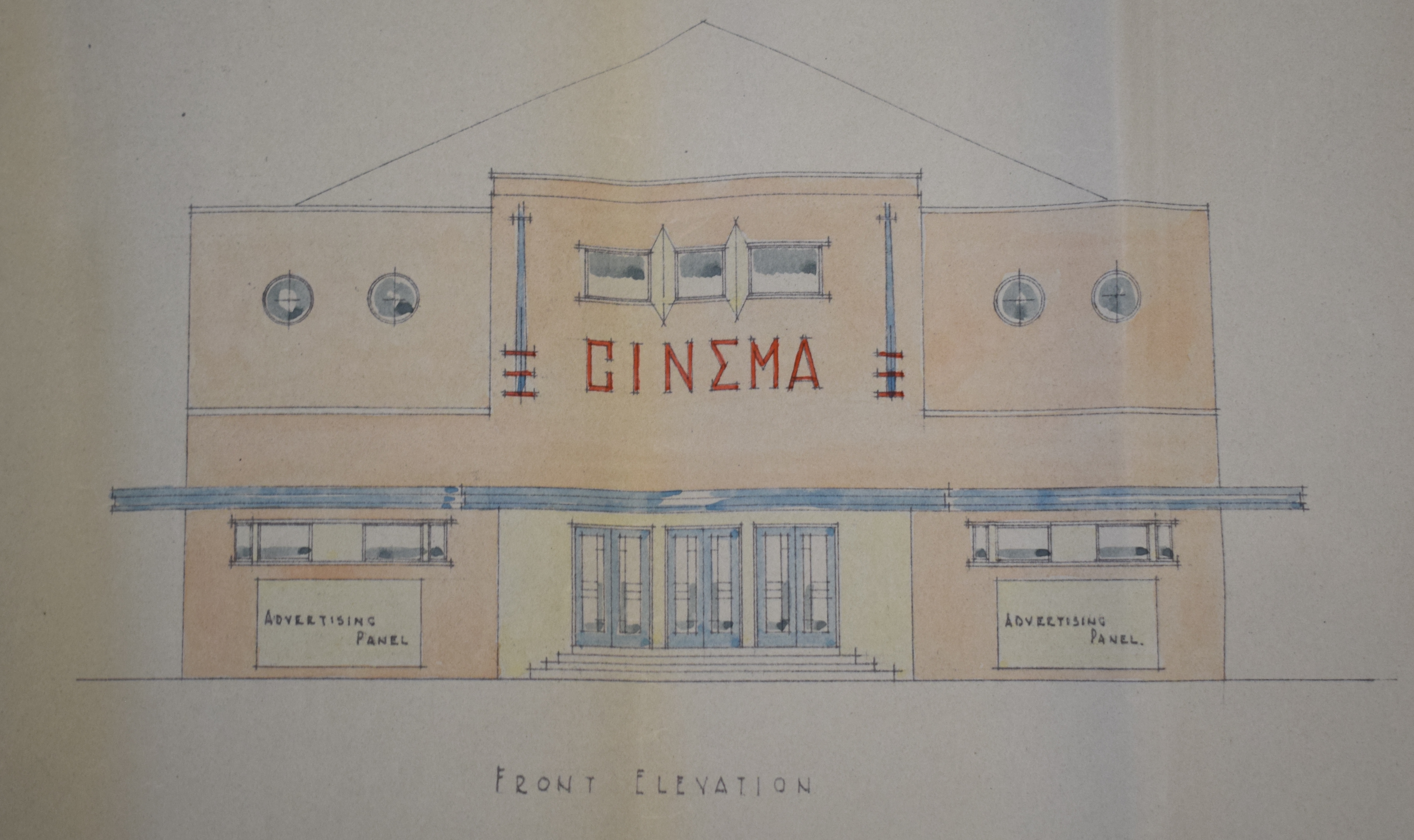
The Pilot Cinema was designed by Keeble Allflatt (son of builder and councillor Charles Drake Allflatt whose firm still exists today as Chas D Allflatt Ltd). The 1938 plans are also available in the archive. As you can see from the design, it is rectilinear (formed by straight lines) and has symmetry, unlike the Majestic. You will also notice the geometric shapes featured in the upper window of the plan above. These are leitmotifs of a particular style of Art Deco that often feature in larger buildings and was influenced by the resurgence of an interest in ancient Egyptian design due to the discovery of Tutankhamun’s tomb in 1922. A very exceptional example of this is based in London: The Carreras Cigarette Factory.
Art Deco, as it pertains to the arts in general, takes its name from the Exposition Internationale des Arts Décoratifs et Industriels Modernes (International Exhibition of Modern Decorative and Industrial Arts) which was held in Paris in 1925. In relation to architecture, the style is quite broad in terms of what it consists of. It can range across “richly embellished [buildings] with hard-edged, low-relief designs: geometric shapes, including chevrons and ziggurats [a stepped pyramid style]; and stylized floral and sunrise patterns” (Kalid M. Dewidar).[2] Despite its breadth of design characteristics, Art Deco is a familiar style to us and one can usually spot an Art Deco building even without having any formal knowledge of the subject. The style has been around for over 100 years and is very recognisable in European towns and cities.
If you look at the 1963 image of the Majestic Cinema (first image) you will see the sign on the clock tower section (it reads ‘ABC’ above ‘Majestic). This design, and the inverted triangle shape, are classically of an Art Deco style, as is the font used. While the outside of the building is considered to have been borrowed from both Baroque and Jacobean styles.[3] In contrast, the outside of the Pilot is a quintessential Art Deco design, with its horizontal, rather than a vertical accent. This horizontal design is more characteristic of what is known as Streamline Moderne Art Deco, which emerged in the 1930s and has elements that show long horizontal lines, for example, in window design or lines of coloured tiling. Streamline Moderne dropped the overtly ornamental style of earlier Art Deco, for instance the borrowing of past styles which we can see in the Majestic.
Another difference in terms of the exterior of both buildings, and is clear from the architect’s drawings alone, is the difference between embellishment on the façade. The Majestic has many more details, just in terms of the number of windows alone. It even sports a clock tower and weathervane (now missing). This is redolent of the Jacobean period (late 16th to early 17th centuries). You can observe this if you look at the extant English architecture from this time, for example, Stanway House in the Cotswolds. The Pilot has much smaller, symmetrical windows in-keeping with its balanced style. In terms of the Pilot, this allows the building costs to be kept lower, by cutting down on embellishments and by putting more energy into using the functional design to tell its own story.
Since the Pilot no longer exists today – and the plans do not really show any inside décor (other than the mention of a specific type of tile in the foyer – possibly terracotta) – comparing the two interiors is not easy. However, the lack of interior decorative detail in the Pilot plans may be indicative of its functional style. Art Deco was also associated with ‘The Machine Age’, and the Pilot’s architect may have focused on function over form (although it may also be related to cost). The Majestic plans, however, do include images of interior ornamental details (see example below).
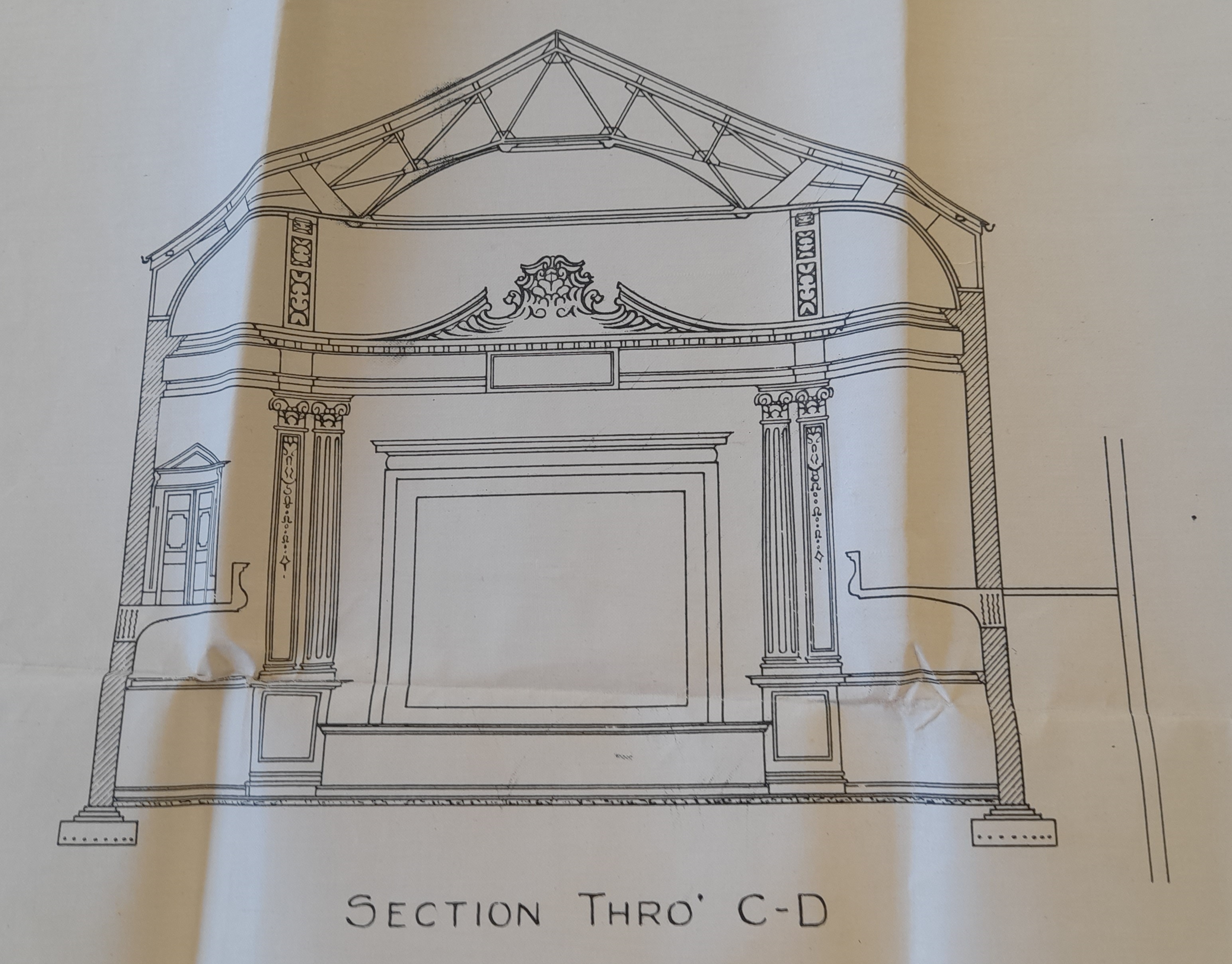
A number of the interior Art Deco features still exist in the Majestic today, and are available for anyone to see (either in the foyer, or in one of a number of cinemas within the building). Two, in particular, we will introduce here due to their distinctive style. Firstly, the two very differing types of lighting features. In the foyer there is, what many would recognise as, a ‘classical’ Art Deco style of lighting.
You can see these very large pendant ceiling lights in many Art Deco buildings. A superb example is in The Brotherton Library at the University of Leeds. However, in the Majestic the lighting in the screen rooms is very different to that in the foyer. While the light fitting itself is likely a modern addition, the original square ceiling rose is very elaborate and could be either Jacobean or Baroque influenced.
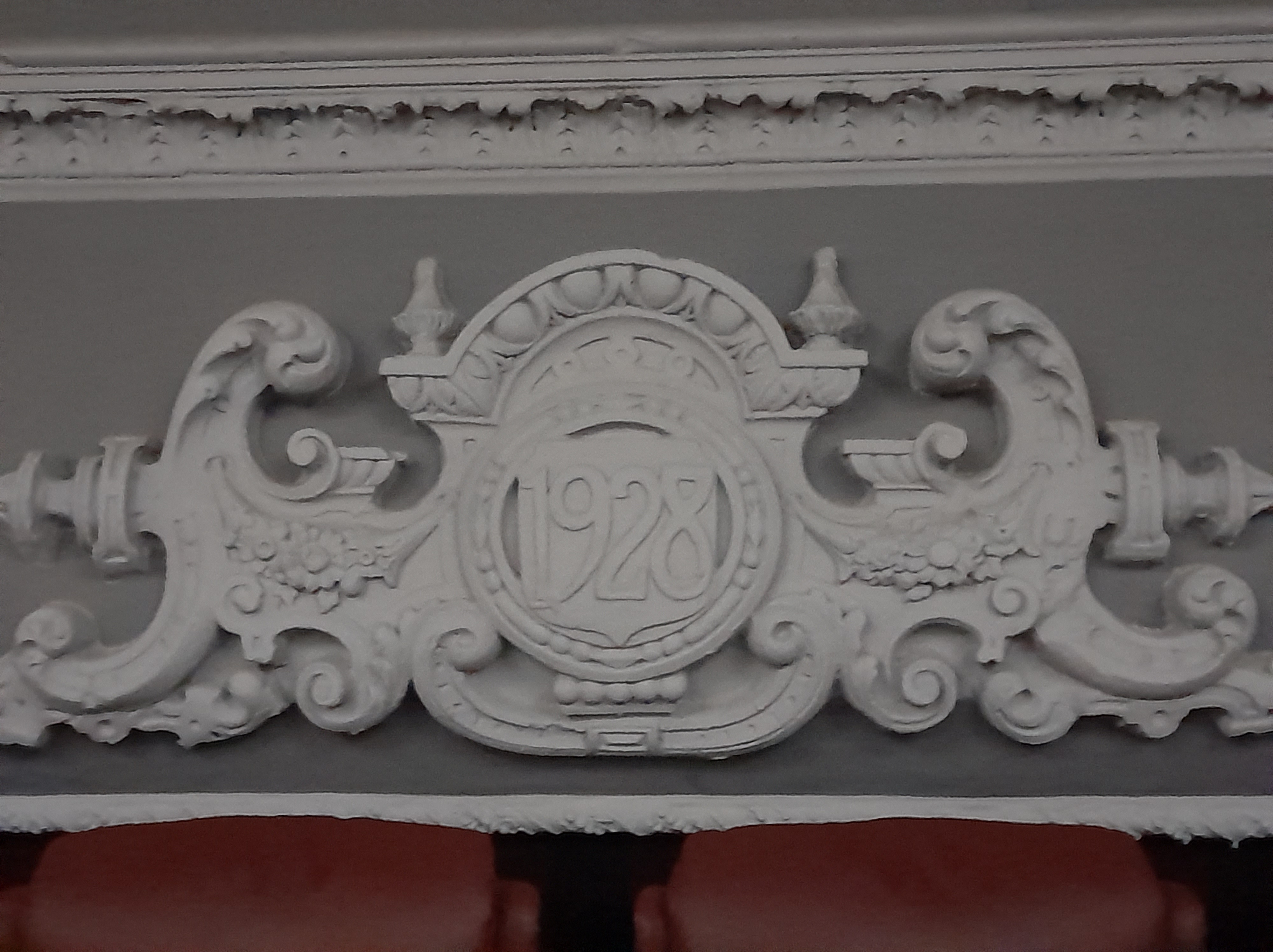
The Baroque style is associated with the early 17th Century and does overlap with what is considered a Jacobean style, but it is more flamboyant and evolved in Rome before spreading around Western Europe. Motifs often included flowers and fruit. Flowers can be seen on the plaster relief, below, which is on the back wall in one of the cinemas.
These two Cinemas – the Pilot and the Majestic – represent the breadth of Art Deco design. The Majestic demonstrates how ornate and diverse Art Deco design can be, while the Pilot shows us that a functional linear design can still incorporate Art Deco’s distinct style. These two cinemas were not the only 20th Century ones that existed in King’s Lynn, nor are they the only plans that exist in the archives. You can see more information on them here in a previous blog.[4]
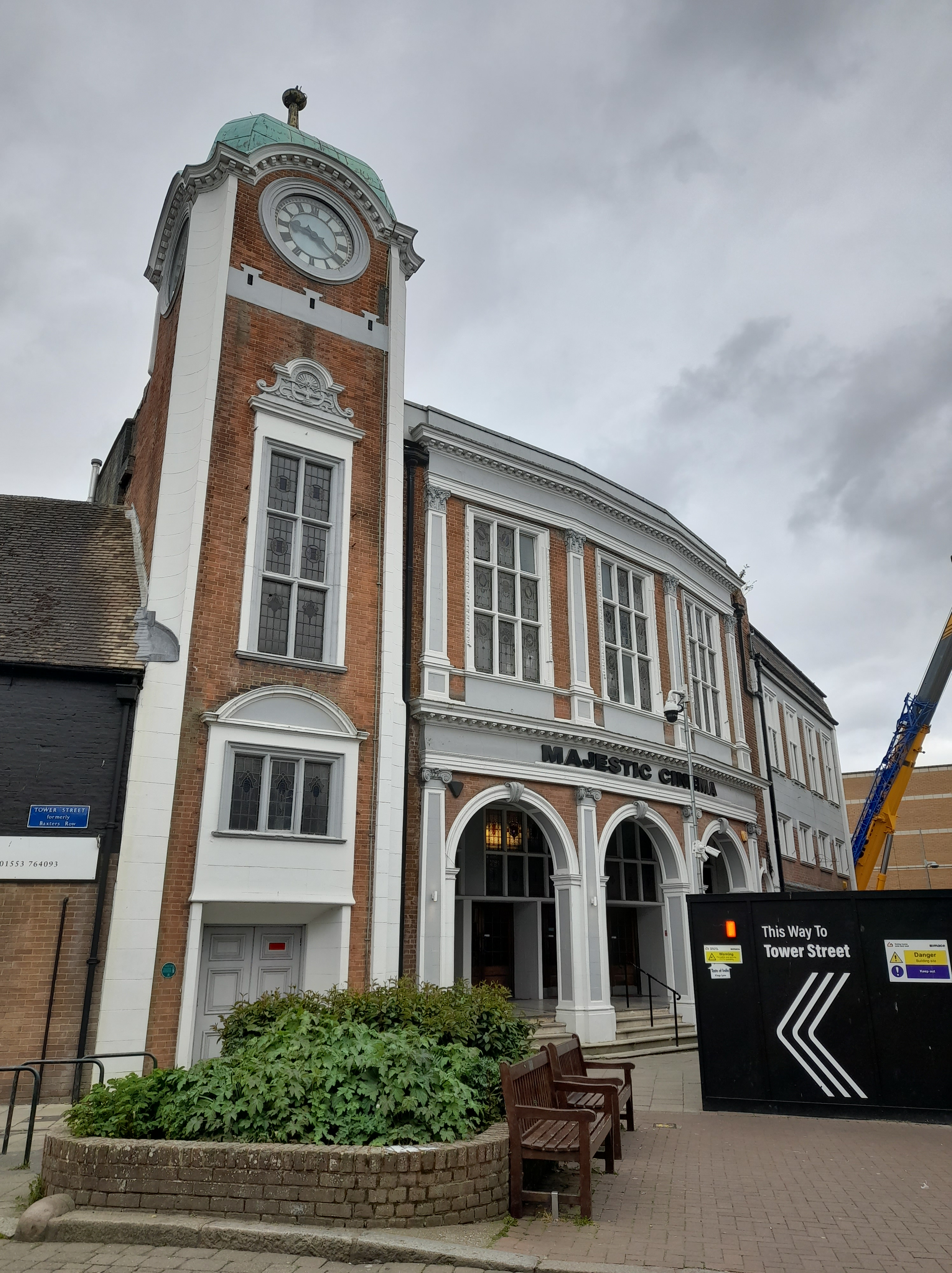
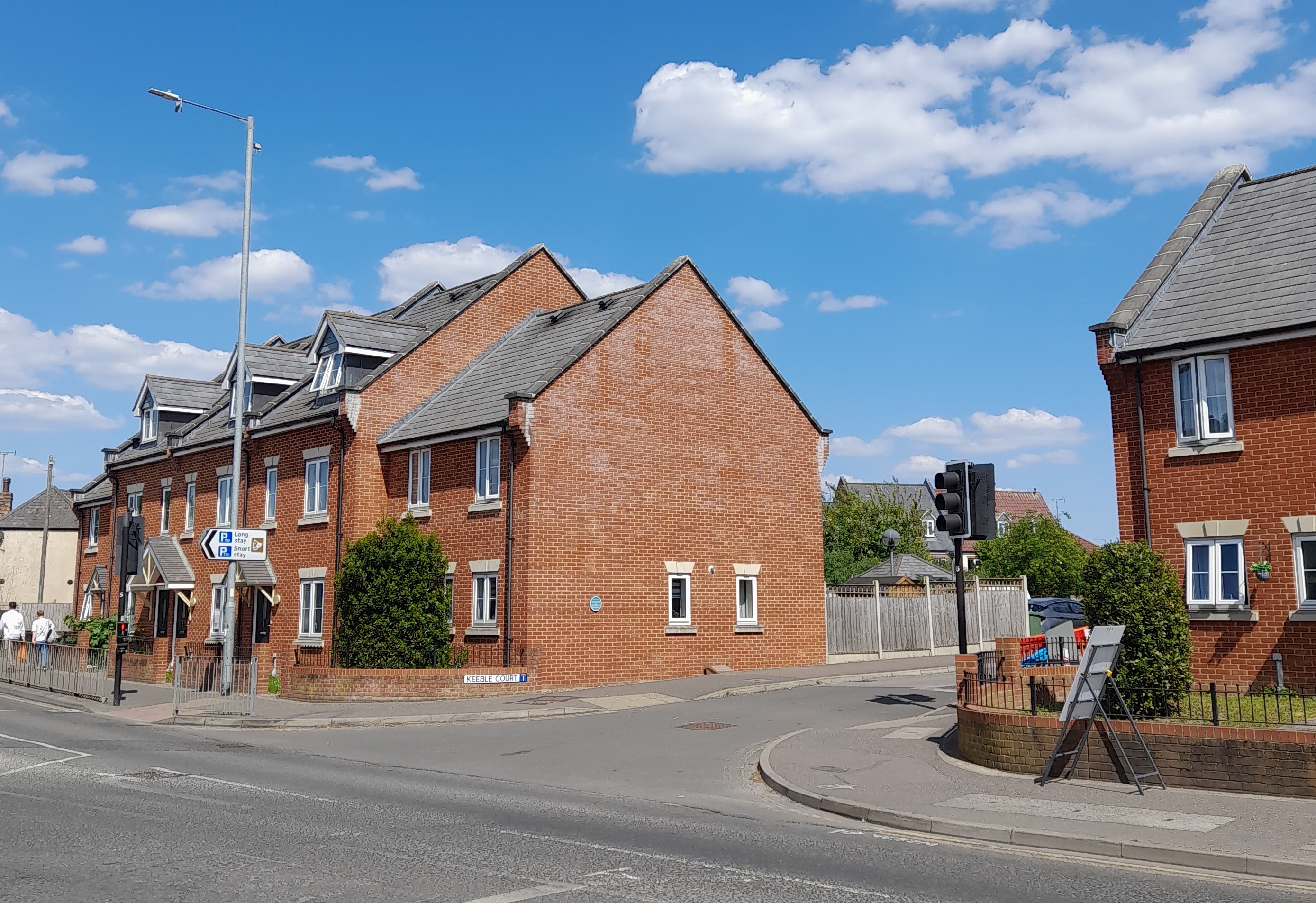
The above and the following photo are current ones taken by the author. The Majestic is still used as a cinema and has a number of screens. The above photo was taken in 2025, showing building work in the adjoining area which will become the new town library later in 2025. However, the Pilot was demolished in 2014 and the following housing was built in its stead. Interestingly, the same architectural firm who designed the Pilot also designed and built these houses. A nod to the Pilot, and the architect who designed it, appears in the name Keeble Court: “By naming the new estate road ‘Keeble Court’ after Keeble Allflatt, Kings Lynn Council have literally written into the landscape a small but significant piece of information about the history of King’s Lynn that will last for decades to come” (Chass D Allflat).[5]
[1] I am using the term ‘Art Deco’ in the broadest sense of the term in this blog, and will not be looking at the difference in regards to what retrospectively became ‘Art Moderne’, the later iteration of Art Deco within that period.
[2] From Art Deco Style (1920-1940).
[3] Historic England.
[4] https://norfolkrecordofficeblog.org/2020/09/25/the-cinemas-of-kings-lynn-from-the-building-control-plans/
[5] http://www.chasdallflatt.co.uk/road-named-after-keeble-allflatt/



 Norfolk Record Office