
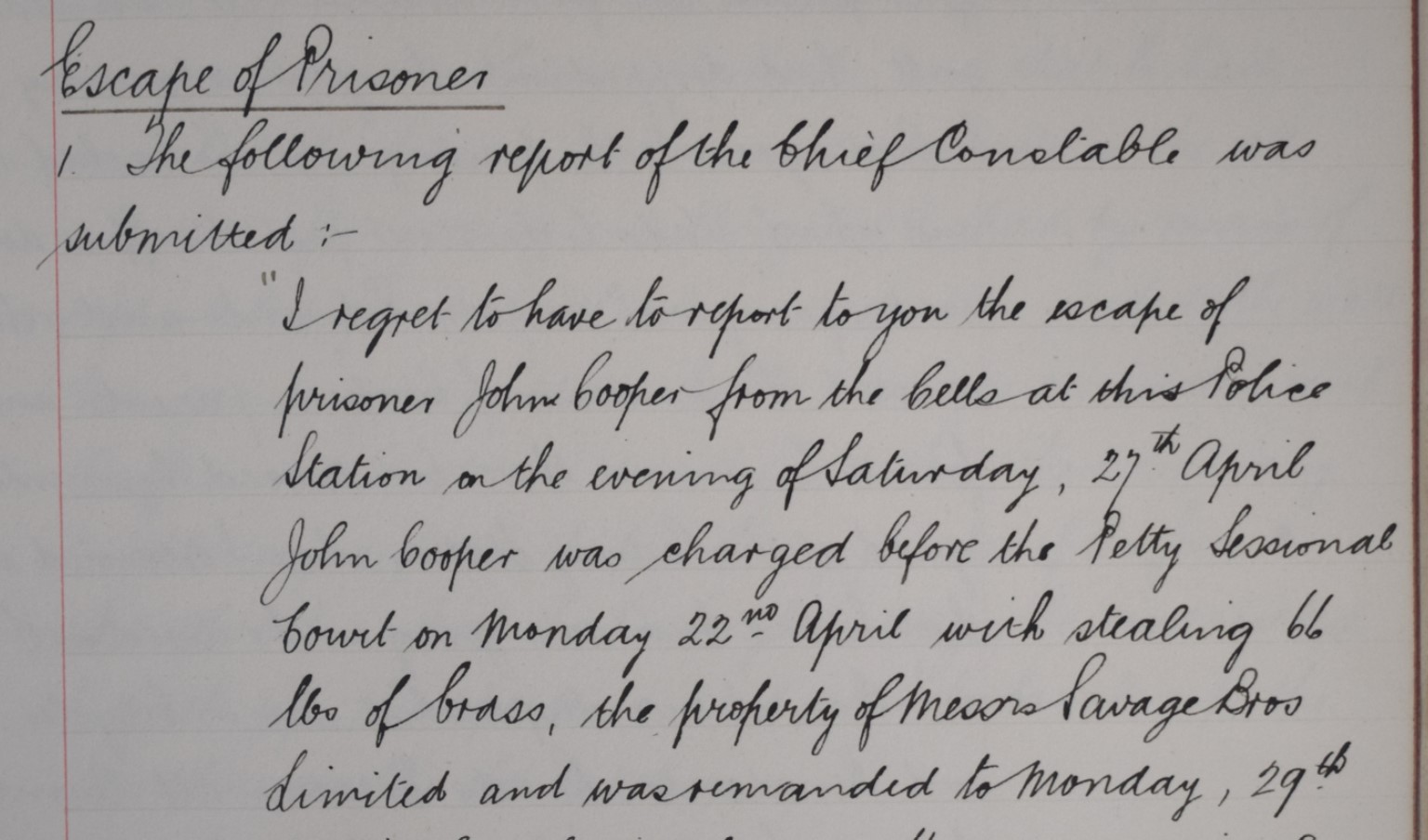
This is the story of John Cooper escaping from Kings Lynn goal and the events leading up to it. The information comes from the report by the Chief Constable of Kings Lynn’s police to the Borough’s Watch Committee and a write up of the trial in the Lynn News.
John Cooper was your average blacksmith’s labourer back in 1901. His job was to break down old machinery for Savage’s Ironworks in King’s Lynn. He was a lodger in Atto’s yard with his Landlady Elizabeth Rose, according to the census she was married but her and John are down as the only people living there. Atto’s yard was demolished in the 1930s and is now the site of a Lidl’s.
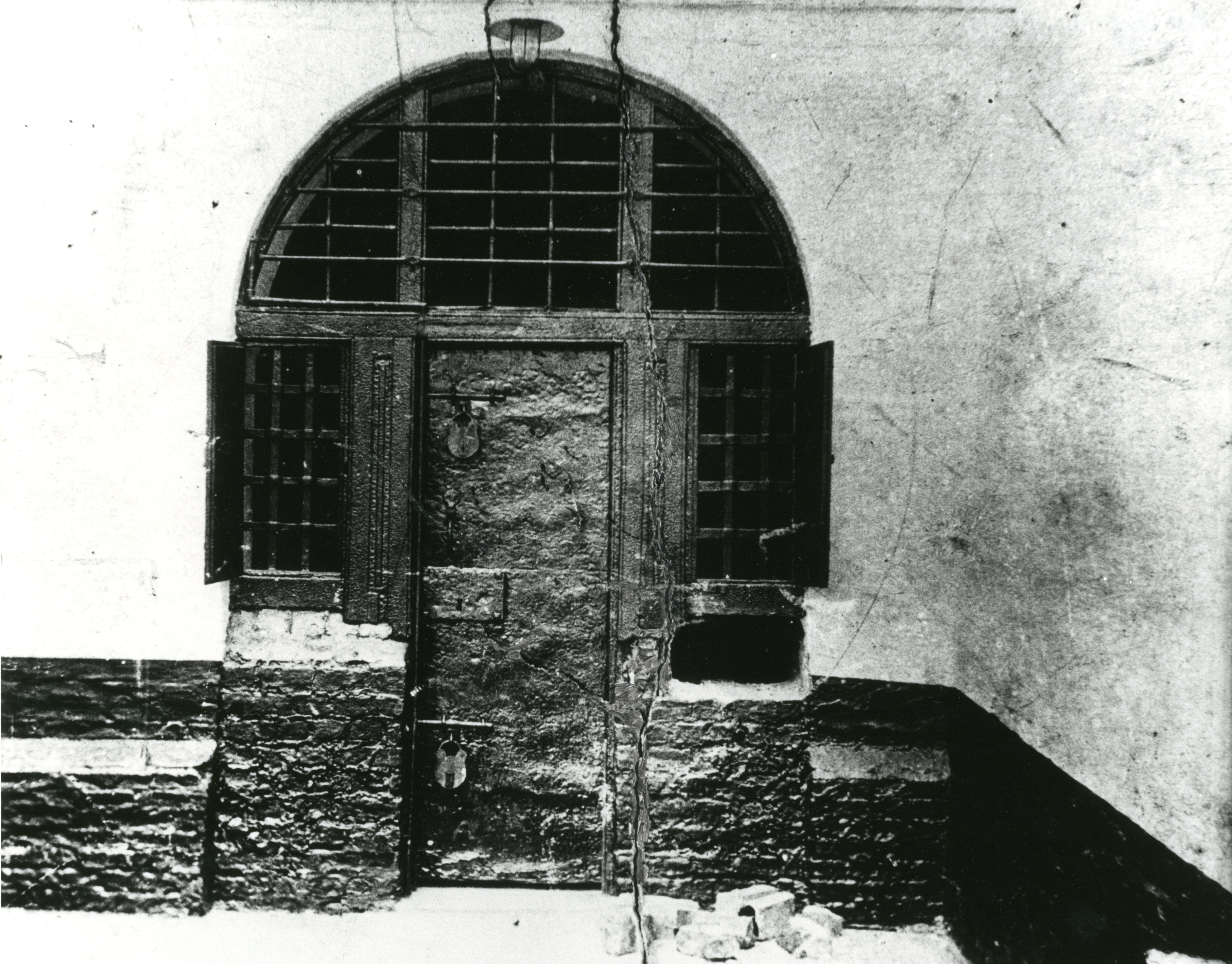
John was accused of stealing a hammer and 66lbs of brass from Savage’s. He was charged before the Petty Sessions on April 22nd 1901, where he pleaded not guilty, and was ordered to be held in King’s Lynn Gaol as bail was refused. John escaped on April 27th during the time in between being caught and going to trial. He did this by perforating an 18-inch brick wall by breaking the handles of the iron sanitary pan in his cell and used them to remove the mortar between the bricks, hiding the debris in an unused receptacle so the officer bringing him food and drink didn’t get suspicious. With the help of plank bed from an unused cell had scaled the 10-foot wall and made it to the street. His escape was noticed by someone in the streets who informed Sergent Laws who was out on patrol. On his return to the gaol, it was found that the cell was indeed empty.
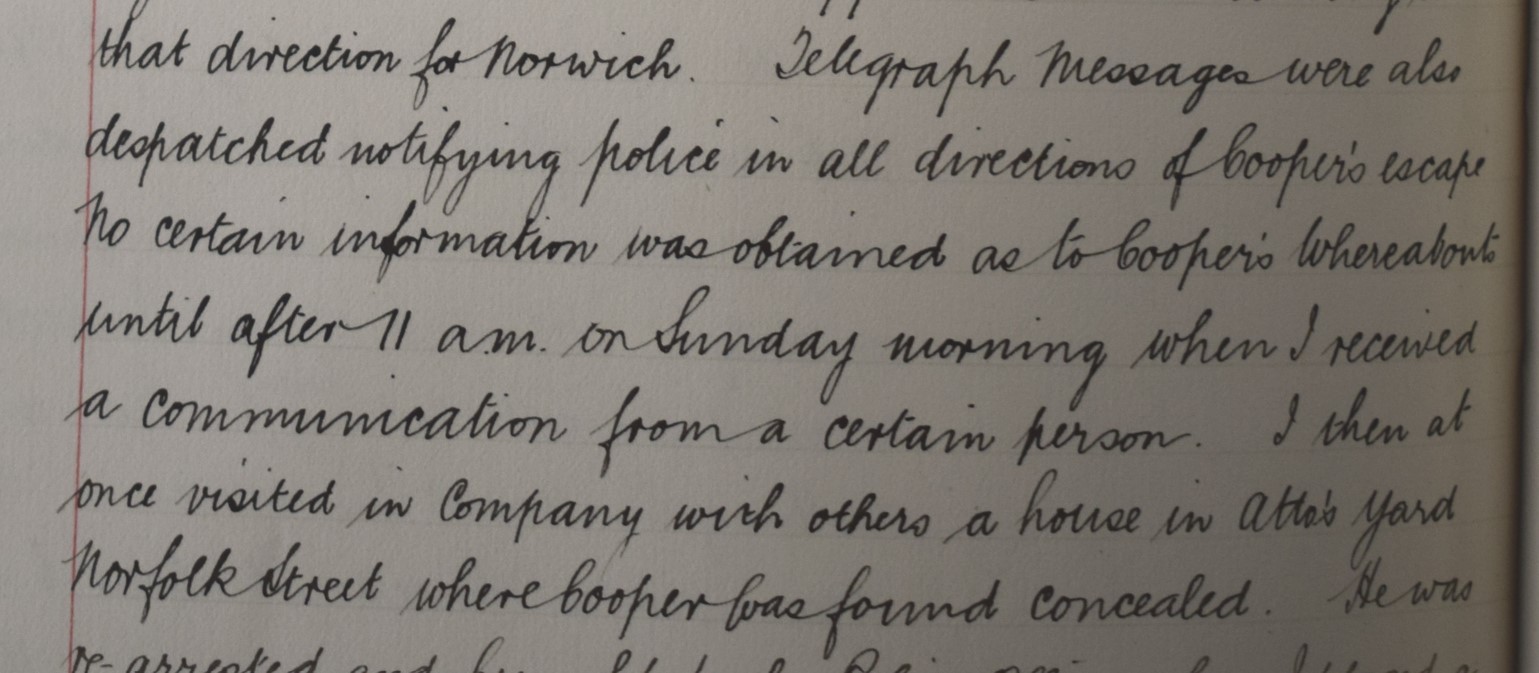
After John escaped from the small hole in the cell wall he made a quick getaway, but to no special or safe place from anyone looking for him. When the authorities found out he had escaped the Chief Constable sent police on bicycles in every direction and were searching high and low for him, including his parents’ house. Telegraph messages were sent to neighbouring forces to be on the lookout for him. However, John was found at 11am the next day hiding under a bed in Atto’s yard. The police were tipped off to his whereabouts/hiding space by a “certain” person and was caught quickly thereafter. He was returned to gaol, charged the following day with gaol breaking as well as theft, and then sent to be held at Norwich Gaol after he made repeated comments about escaping again. The whole incident had to be reported to the Borough’s Watch Committee and recommendations made to avoid a repeat incident.
The newspaper reports of the trials tell up that the jury for this case were to have said to, “have no difficulty in coming to the conclusion that these articles were actually taken from the works of the prosecutors”, and that he had no right to take them. It was said that there was plenty of brass sitting around so if he very well could’ve taken it if he wanted to. John Cooper wasn’t defended by a lawyer for this case and spoke for himself. He didn’t do a very good job and chose to use many contradictions and at times was accused of, “abusing the witnesses”. John said that he was not the thief and that he simply placed the brass in a place where anyone, especially one of the people testifying with evidence against him, could’ve taken it.
He was found guilty and was imprisoned for fifteen months. It was the seventh time he has been imprisoned at thirty-one years old. It’s unclear if his breaking out of prison was brought as a separate charge or included in his final sentence.
John escaping to his house begs the question, did he plan his escape? Obviously, he must’ve planned or at least put some thought into getting through the bricks, but did he plan anything beyond that point, or did he get out and panic so goes to the only place he thinks is safe (which if his landlady did tell on him is pretty ironic).
Hiding under the bed of his known address doesn’t seem the smartest move, but if you were in the same situation you’d do whatever thought came into your head and hope it pans out in the end. In his defence he couldn’t go back to his workplace, and you wouldn’t want to go somewhere new and unknown whilst on the run so if it worked it would’ve been genius. It didn’t work out that way, but on the positive side of things at least there’s a funny story to tell all these years later.
Researched and written by Brooke Bocking



 Norfolk Record Office