
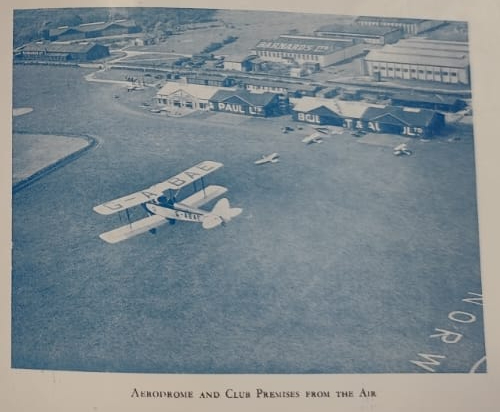
Mousehold Heath, to the North-East of Norwich, is known for its many trails through its valleys, its beautiful viewing spots of the city and its good picnic locations! However, not much is known about its aviation history and airminded citizens1. Below, we will explore the history of the aerodrome, later airport, and pay close attention to the Norfolk and Norwich Aero Club (NNAC), founded in the spring of 1927, some 98 years ago!
Mousehold Airfield
Mousehold Heath’s aviation history begins in 1915, when the Royal Flying Corps (RFC) took over the military training ground situated in a roughly rectangular shape between Salhouse Road, Thunder Lane, Plumstead Road and Heartsease Lane. There, they established a training ground for new RFC pilots and built several aeroplane manufacturing factories and hangers, still in place and shown on the 1928 map below (image 2). Norwich based company, Boulton and Paul Ltd, established themselves at the airfield and built a number of the famous Sopwith Camels that later saw action during the First World War. Flying Ace and Victoria Cross winner, Albert Ball was perhaps one of the most notable pilots to have trained with the RFC at Mousehold Airfield. Sadly, Ball was killed in a dogfight in 1917 aged just 20. However, his legacy, to quote the notorious Red Baron, as “by far the best English flying man,” lives on.2 Perhaps his skills can be attributed to his time spent at Mousehold Heath.
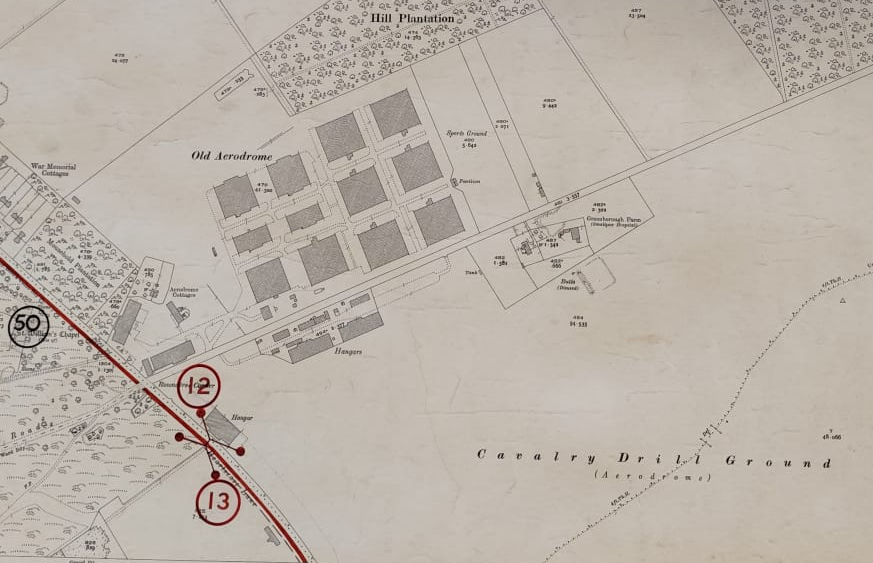
Mousehold Aerodrome
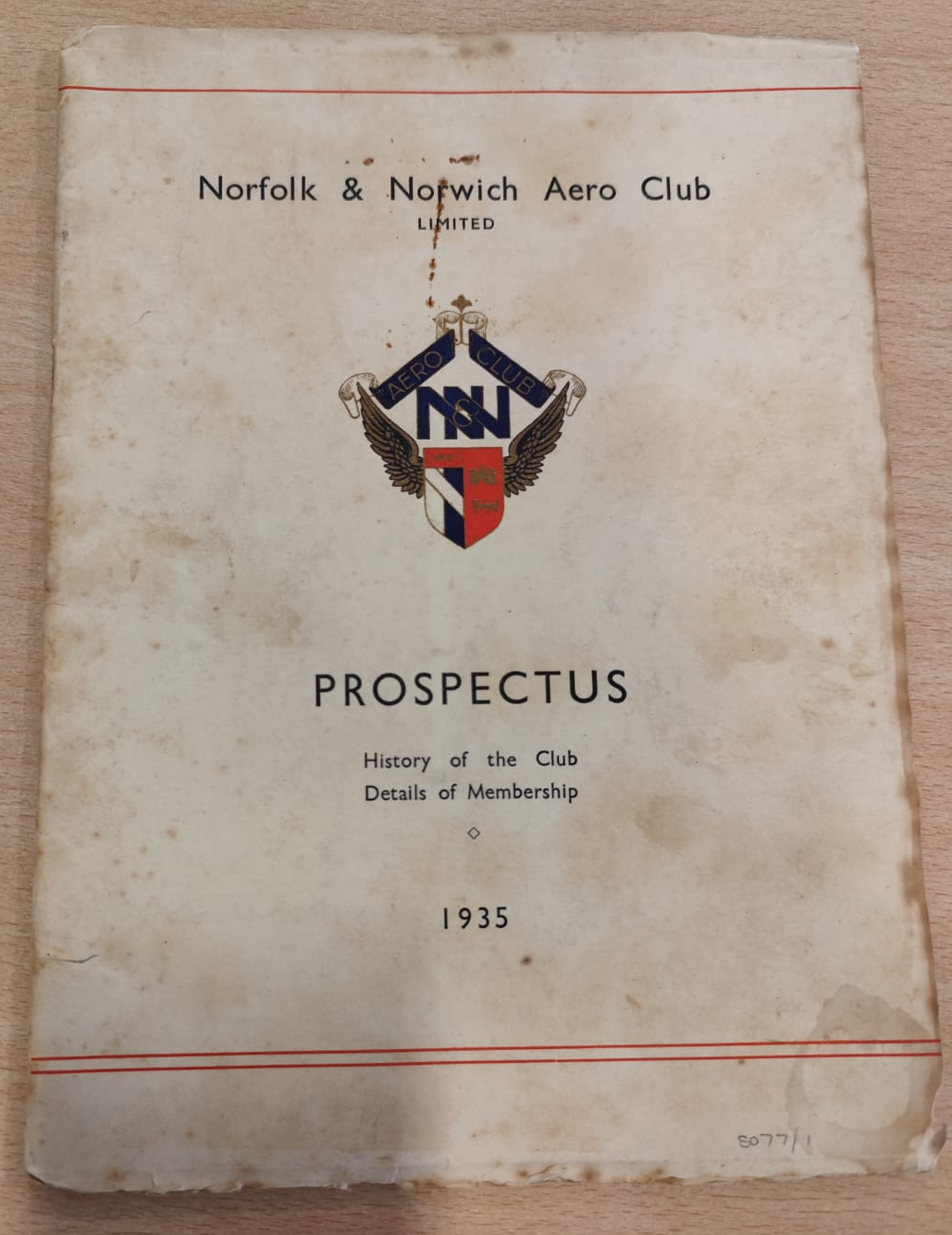
In the decade after the end of the Great War, the Aerodrome was renamed RAF Mousehold Heath and was used for training pilots of the newly established Royal Air Force (RAF). Although the airfield experienced declining military use in the 1920s, it became increasingly popular for civil aviation instead, as people had more time and money for new and exciting leisure activities. Although its popularity was slow at first, it really took off after 1927 (pun intended) with the creation of the Norfolk and Norwich Aero Club. The NNAC Prospectus (image 3), gives us a better understanding of the functioning and history of the club…
Norfolk and Norwich Aero Club
After securing a lease from the War Office in 1927, the NNAC firmly took over the aerodrome. Although the club struggled financially at first, it soon racked up public support. It was also gifted a Moth aeroplane and was loaned a hanger, offices and ground crew from Boulton and Paul (NRO, SO 77/1). Taking on 300 acres of land, the NNAC Prospectus promoted a range of services the club offered to paying members of the public, including:
1. Pilot training and practical flying exams
2. Taxi service to any part of Norfolk
3. Longer flights to Leicester and Bristol via Crilly Air Lines
4. Aerial Photography
5. Social activities in the Members Club including the bar, billiards, snooker, garden parties, lectures, dances and dinners
6. 4-week long Aviation Camp for public school boys
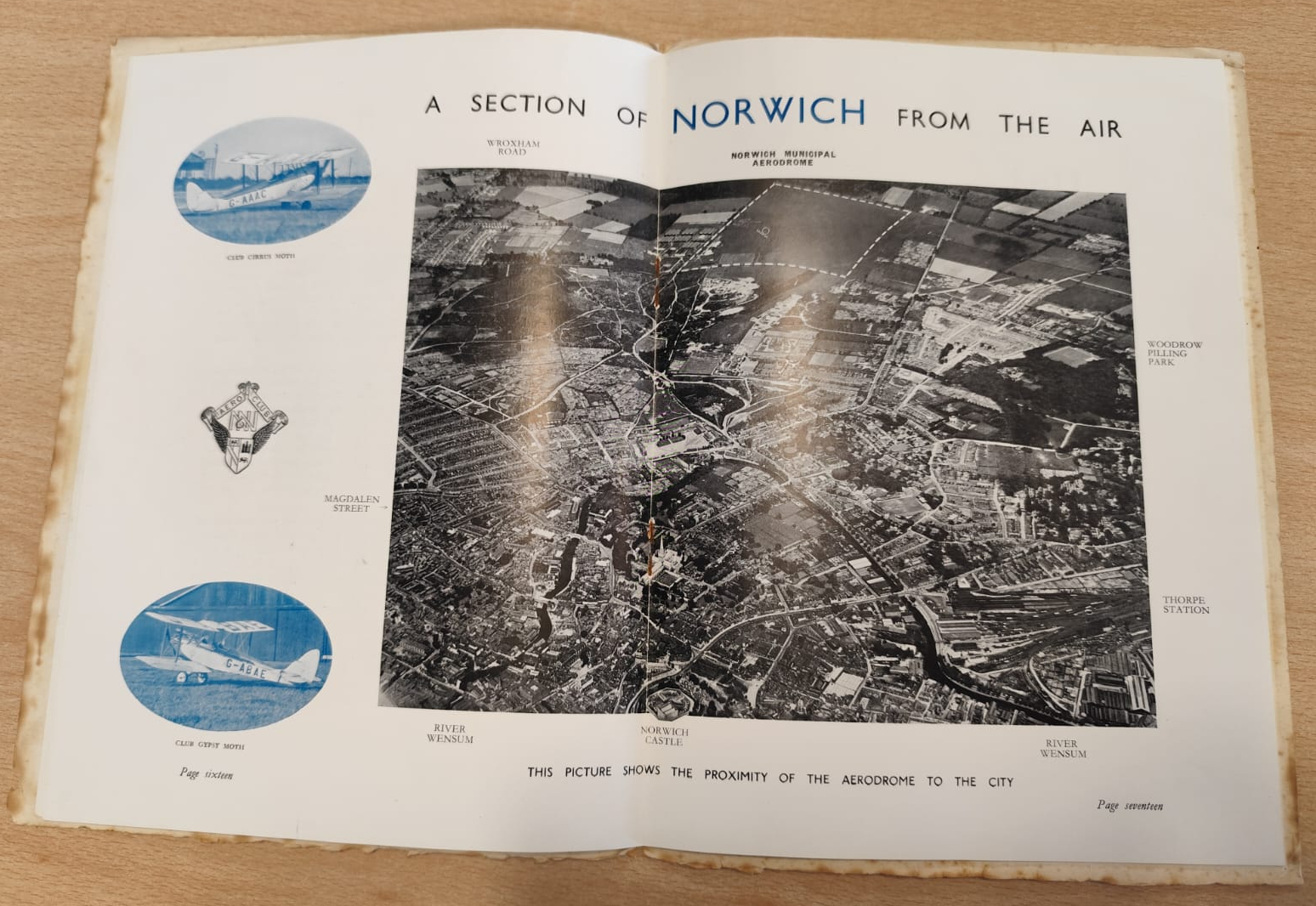
7. Joy-Rides for the public over the city of Norwich (enjoying sights such as the one shown in image 4.)
The NNAC was hugely successful and attracted many members and public interest. In its first year, the club’s List of Members named 40 board and honorary members, 140 active members and 250 associate members (NRO, BR 372/4/4/10). After just three years in operation, the Prospectus proudly claims that by 1930 the club was one of the biggest and best conducted Aero Clubs in Britain (NRO, SO 77/1).
The papers of Hector Mack
One of the club’s earliest members mentioned in the Prospectus is Hector Cornelius Mack, whose pilot’s logbook and certificate are kept at the Norfolk Record Office. While it is unfortunate that Mack’s papers are currently the only ‘known’ logbook and certificate issued by the NNAC at Mousehold Aerodrome (image 6), they offer a lot. His papers are a fascinating insight into the history of the club and an example of the airminded nature of civilians and the experience of a trainee pilot in civil aviation in the 1920s.
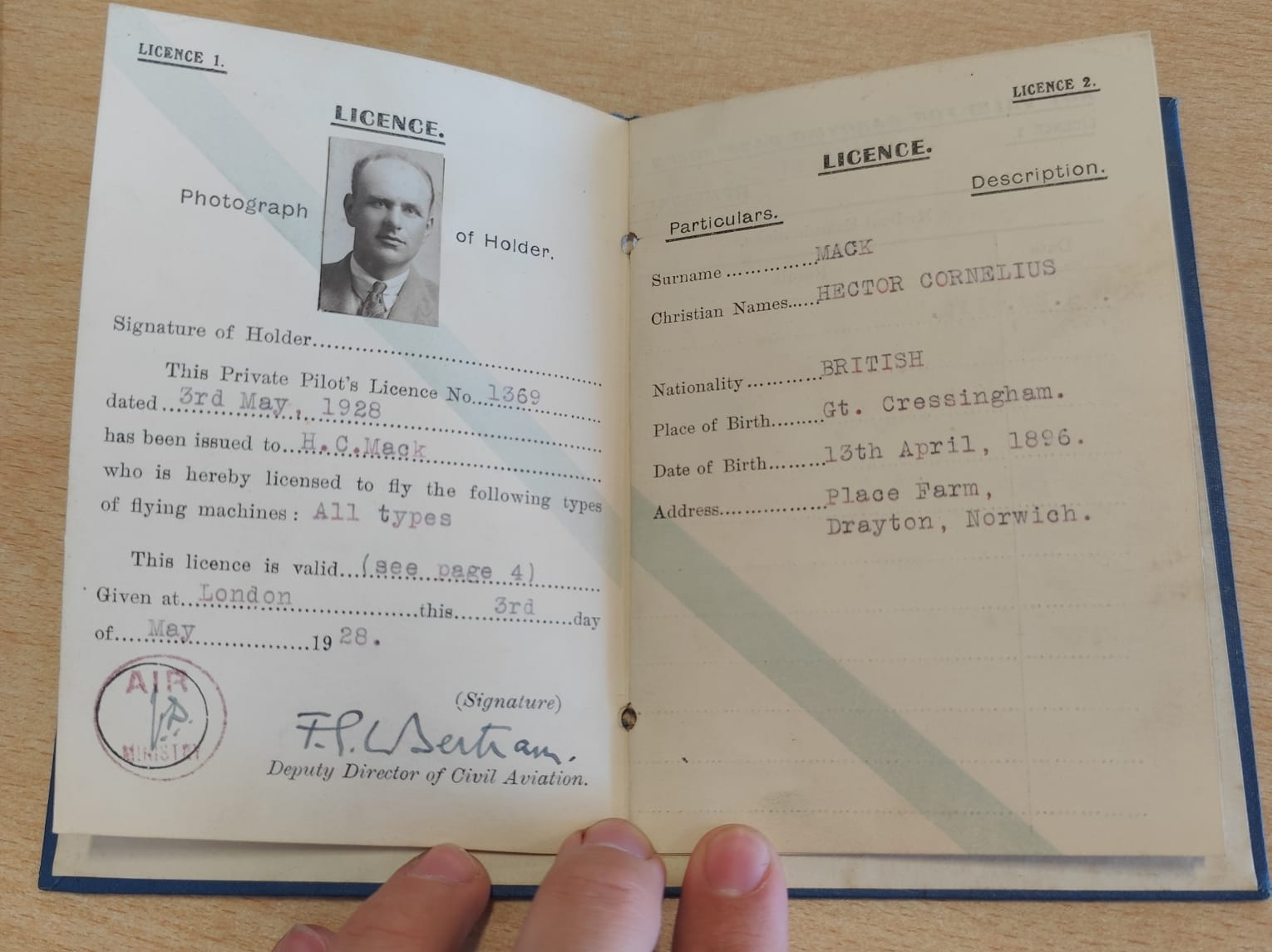
Hector Mack was born in 1896 in Great Cressingham, spending many of his younger years as an apprentice grocer and hand at his father’s farm in Drayton. In 1914, he joined the Army Service Corps and served for the entirety of the First Word War. Following the war and for the rest of his life, Mack spent his time firmly on the soil as a full-time farmer.3 However, unlike other farmers in Norfolk, he spent his spare time in the air. In June 1927, Mack expressed an interest in the newly established NNAC, signing up to train as a pilot. As his logbook details, Mack spends approximately 26 hours in the air over an eleven-month period. In May 1928, he eventually gains his pilot’s license and as his license suggests, is qualified for all flying machines (image 5). For comparison, trainee pilots today are expected to have 45 hours of flight time and between 16- and 18-months experience before they can even take a test. Indeed, Mack must have been very skilled and brave to undertake flying lessons in an era when planes were still relatively new and rather dangerous.
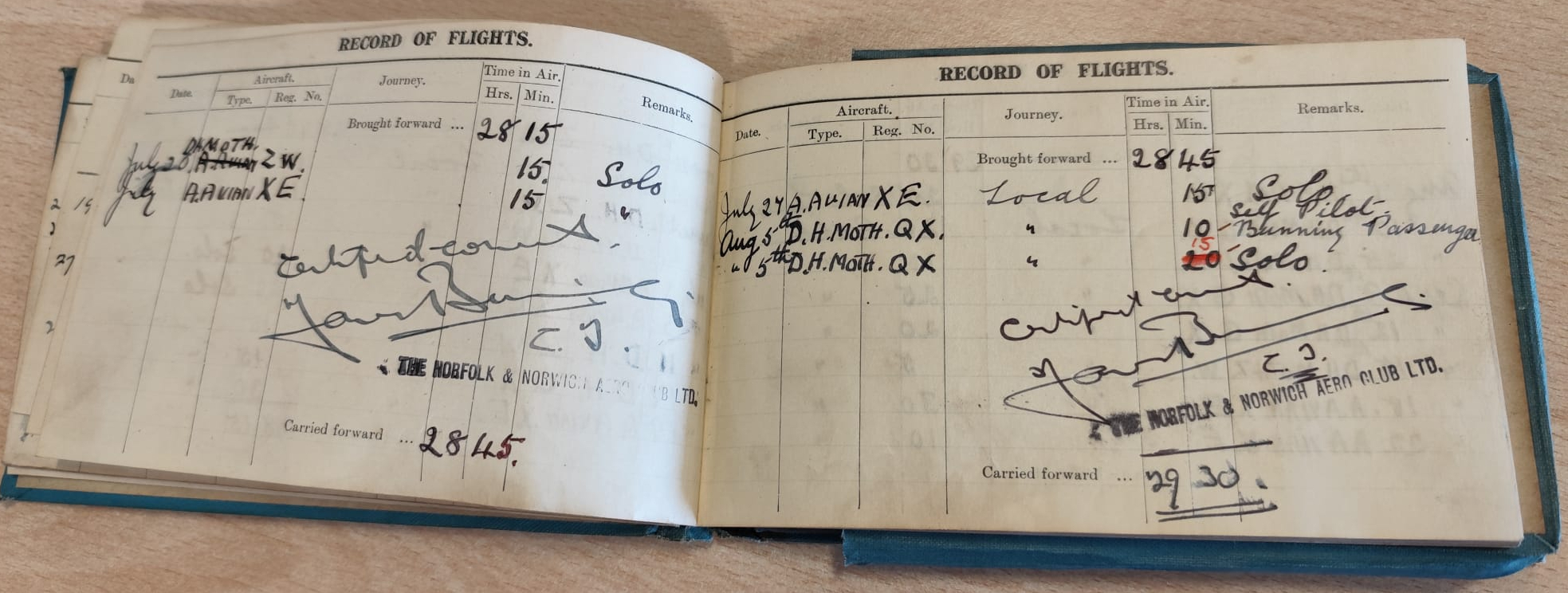
It is hard to say where Mack’s qualification took him (besides to the clouds). From the available records, it appears he remained a farmer until his death in 1967 perhaps taking the occasional flight over the city or to the coast. I wonder if he ever owned a plane or put aside some land on his farm to build a runway? Mack is just one of many club members but his story as a farmer-pilot is certainly an interesting one. Although it was an expensive hobby and encouraged as an upper-class sport, especially for public school boys, it remained open to all with no social or political restrictions. Mack’s interest in civil aviation is a great example of how an ordinary, working-class person in the 1920s and 1930s might have spent their leisure time on an extraordinary pursuit.
Mousehold Airport
In 1933, the City’s authorities established Norwich’s first Municipal Airport at Mousehold Heath while allowing the NNAC to continue its operations. In an opening ceremony, thousands of citizens attended to celebrate the aeroplane industry and arrival of international travel and tourism to Norwich. The ceremony was opened by HRH Prince of Wales, later to become King Edward VIII, who arrived via his private plane (NRO, SO 77/1).
In 1939, Norwich Airport was closed and relocated to a new site at Horsham St Faiths due to the outbreak of the Second World War. The former Mousehold aerodrome was converted to a decoy airfield with fake landing strips and wooden aircraft. It was hoped that this would confuse enemy bomber planes and direct them away from the ‘real’ RAF base at Horsham St Faith. The site then fell into the hands of Norwich City Council in 1945 who later converted the former Mousehold Airfield into the Heartsease Estate.4
End remarks…
Mousehold Airfield survived for 30 years. Established because of war in 1915, it ironically phased out due to war after 1945. The Norfolk and Norwich Aero Club exists on the site between 1927 and 1939, proving to be a large success for local Norwich aviation and national civil aviation. Records for the NNAC are scarce but it’s thanks to the papers of Hector Mack that we can explore the forgotten Mousehold Aerodrome and its Aero Club.
Researched and written by Reuben Harvey
NRO sources used
- Letter concerning private pilot’s licence and associated material, July 1930. Norfolk Record Office, BR 372/4/4/10.
- Norfolk and Norwich Aero Club Prospectus. Norwich: A. E. Soman & Co. Ltd, 1935. Norfolk Record Office, SO 77/1.
- A.R.P. maps: O.S. maps coloured to show detailed plans of roads and drainage for new development areas under Norwich Town Planning Scheme (Mousehold Heath; Tuckswood; Eaton and Heigham). Norfolk Record Office, N/EN 20/177.
- Pilot’s log book and associated material, 1927-1931. Norfolk Record Office, BR 372/4/4/8.
External sources used
- British Army World War I Medal Rolls Index Cards, 1914-1920
- England and Wales Register, 1939
- Norfolk Heritage Explorer, https://www.heritage.norfolk.gov.uk/
- Royal British Legion, https://www.britishlegion.org.uk/
Footnotes
- According to various sources, to be airminded was to accept aeroplanes, aerodromes and aviation as a sign of modernity, civilisation or progress. Airmindedness was also the interaction with aviation, either directly as pilots or groundcrew, or indirectly by watching airshows, engaging with literature of aviation culture, or just having knowledge that aeroplanes exist as a sign of modernity. ↩︎
- Dorothy Norcross, “WW1 Heroes: Albert Ball”, Royal British Legion, accessed April 20, 2025, https://counties.britishlegion.org.uk/branches/brittany/past-glories/ww1-heroes/albert-ball ↩︎
- For example, see, England and Wales Register, 1939. Hector C Mack, born: 13 April 1896, residence: Place Farm, St Faiths and Aylsham, Norfolk, England; Army Medal Office, London. Hector Mack, Royal Army Service Corps, Ms/4846. ↩︎
- “NHER Number: 12415”, Norfolk Heritage Explorer, accessed April 20, 2025, https://www.heritage.norfolk.gov.uk/record-details?MNF12415-Site-of-Mousehold-Heath-Aerodrome-and-World-War-Two-heavy-anti-aircraft-battery ↩︎



 Norfolk Record Office