
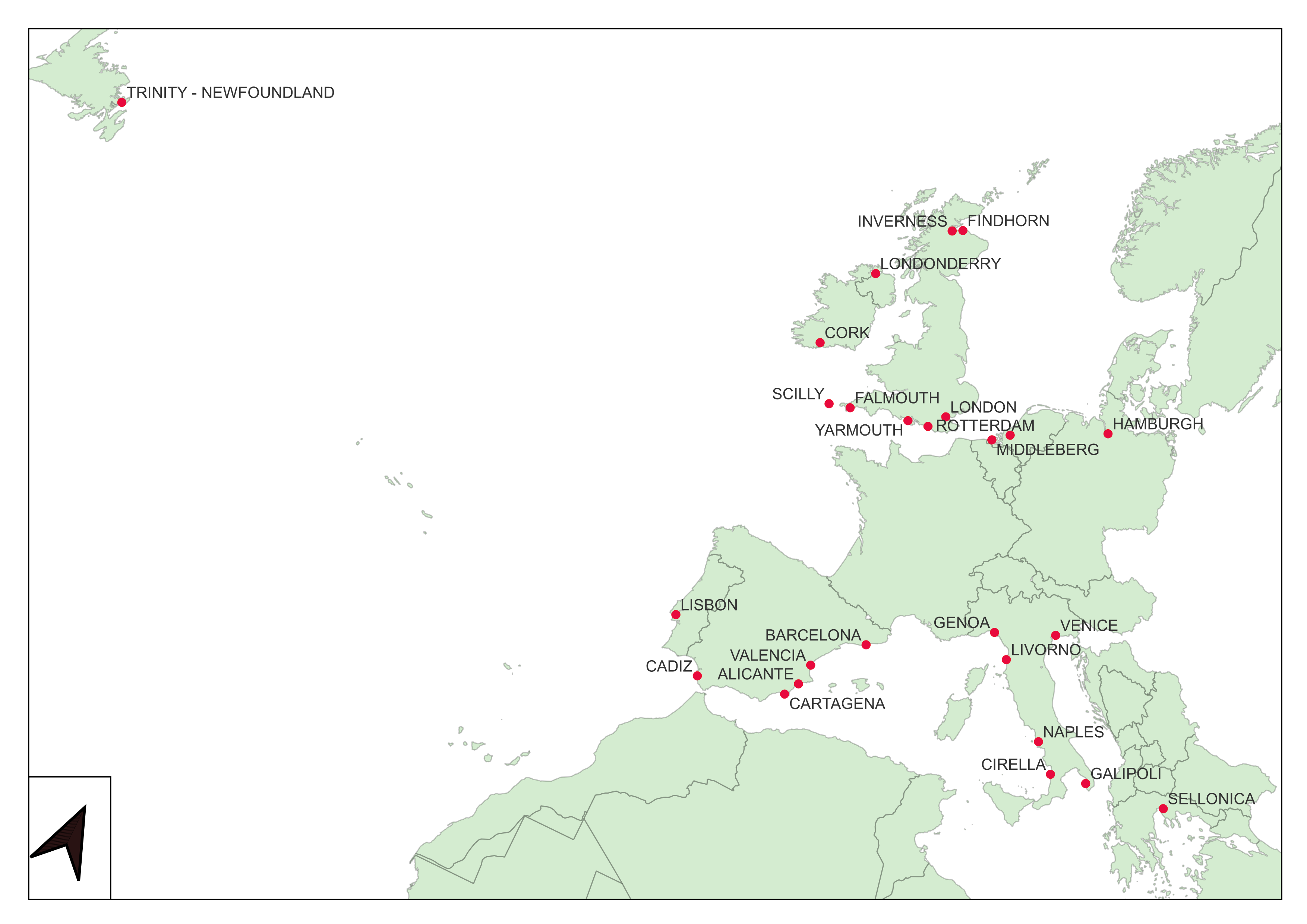
My first independent foray into archival research at the Norfolk Record Office gave me a real headache in trying to understand the text but it was a fascinating and rewarding journey which lead to researching topics in many ways. Norfolk Record Office, BEA 278 – A Day Book of George Proctor, 1728-1739, records his financial transactions as a City of London merchant. George, originally of London created his wealth as a merchant and from inheritances which enabled him to take over Langley Hall, Norfolk from the Trustees of the Berney Estate in 1739 at a modern-day cost of £3.75million. George was 26 in 1765, when his father William died and he inherited Bank of England, South Sea Company and other Stock which amounted to £7.6m. George was already a merchant in the City of London and had numerous contacts in the City, various European and Mediterranean cities as well as Newfoundland.
George recorded his trades and noted the commodities such as tea, pepper, tin, lead, herring, salmon from Scotland, raisins from Italy and the delightfully named Poorjack from Trinity, Newfoundland. Poor Jack is a local name for dried and salted cod processed in Trinity Bay, from Shakespeare’s time. He notes the ships, such as the Tower Galley, their Captains, the ports, the merchants and the purchase cost or sale values. One little gem is a note on a voyage from London to Shoreham, Cadiz, Scilly, Cadiz, London, Newfoundland, Livorno and back to London which includes a receipt of 1/8th part of money from the King of Spain £10 2s 6d.
On 29 Mar 1729 George notes.

This is typical of many trades recorded and which led to extensive research. Cooper & Lefroy were George’s agents for many years in Livorno, known by the British as Leghorn. This was an important free port in Florence from the 16th Century. Anthony Lefroy is buried in the English Cemetery in Livorno (see Livo above). The currency was of particular interest. The £ is clear but the £21 1s 11d is subject to a conversion which turns $ (Pieces of Eight or the Spanish Dollar) evidently used in Florence into £ at a rate of 52d (old Pence) per $ . Approximately $97 x 52d / 240 (Old Pence in a £) = £21. The trade is for 50 Piggs of lead sent to Livorno on the Tower Galley under Captain Benjamin Greenwood.
A different currency was used for trades in Venice namely “Beo” at a rate of 49 5/8d (Venice should have been using Ducat so this needs further research.)
In Genoa George records a trade in Livres BK 5557:8:3 at a exchange rate of 54d for 20 Bales of tanned hides. What does this all mean?
My investigations led me to a Professor at Pisa University who gave a reference to this, although it did not answer all the questions!
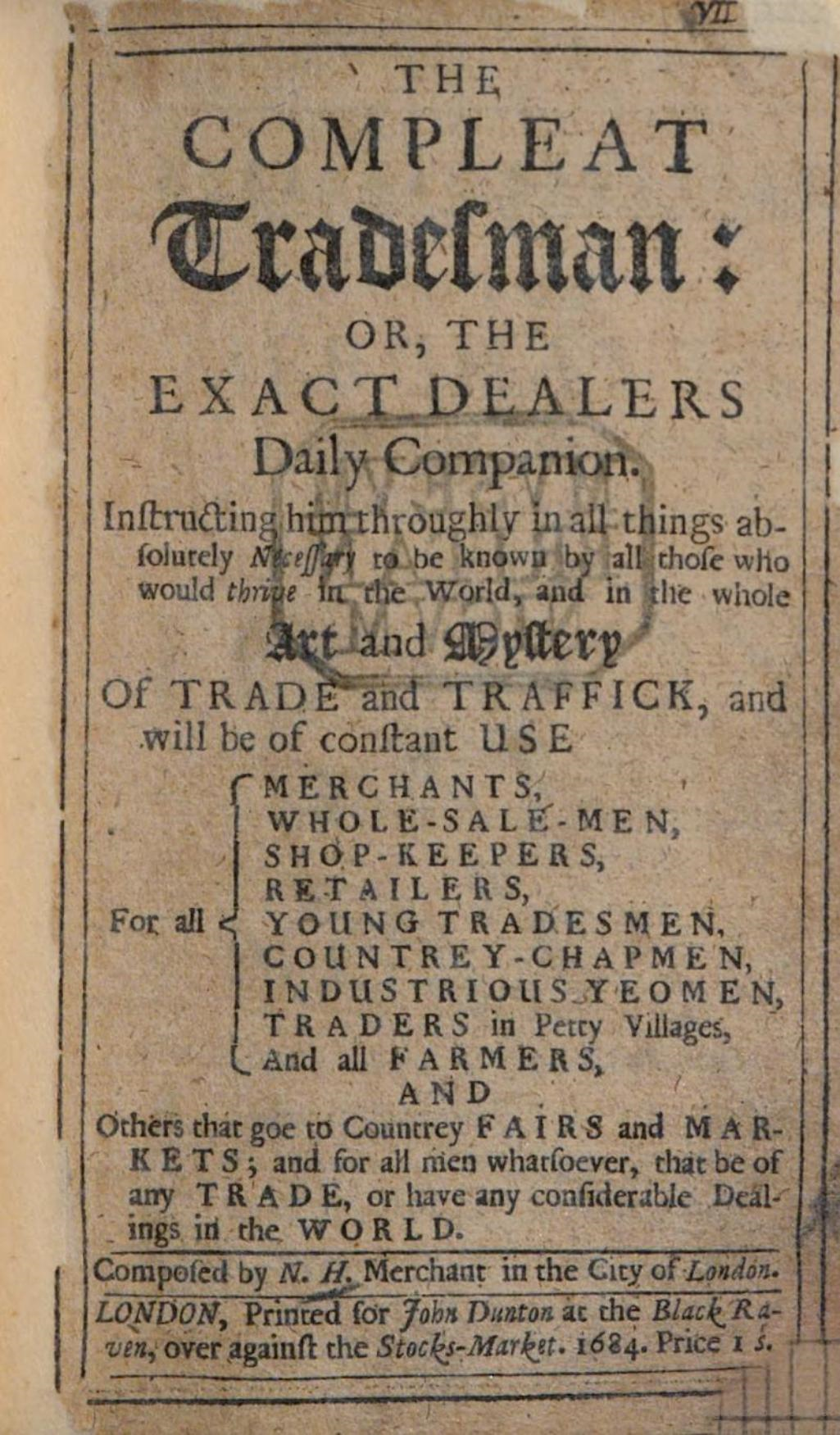
Around April 1730 George is receiving dividends from the stock he has inherited. Around £352 for the previous 6 months, and he begins to buy additional stock and starts to lend people money secured on their bonds and then their estates. For example a half share of an £11,000 loan to Sir Wm. Middleton Bart. at Belsay in ye County of Northumberland (£27.6m. in todays money).
In 1736 George no longer records that he is in London. He cites very few further trades but notes his assets and income from bonds and loans. For example a loan of £1000 to the Estate of Henry Cocksedge Esq. at Weeting in ye County of Norfolk. and Sr. Jno. Redmond Freke a loan of £4000.
He writes
Estate at Epsom in ye County of Surrey, for
a Dwelling house & lands there wch I value.
Annuities of £14 pr Annu for £274: pr Annum of
19 { sd Annuitys @ 23 year’s purchase }6,302:0:-
Estate of Sr. Wm. Middleton at Bolsay in ye
36 {County of Northumberland for a Mortgage of }5,891:18:7
{£5891:18:7 lent him on said Estate }
Estate of Sr. Jno. Redmond Freke for a Mortge
35 {lent him on ye security of sd Estate }4,500:0:-
Estate of Jhn. Reed Esqr. at Chipchase &c in ye
39 {County of Northumberland for so much lent him }1,500:0:-
{on ye security of sd Estate }
Messrs Elliot & Partridge lent them on thier 1,000:0:-
40 {bond }
Isaac & Abram Sperin for ½ pt of a bond
33 {of £1000 lent them } 500:0:-
Stock in ye Bk of Engld for £14600 of sd
17 {Stock @ 130 pct }18,980:0:-
20 Stock on ye Million Bank for 6,500:0:-
18 Stock on ye So. Sea Compa 500:0:-
17 South Sea Annuities 164:16:4 48,388:14:11
Equivalent to £13.430m
The ship “Tower Galley” is recorded extensively and was probably owned by the Tower family. Christopher Tower II (1692-1771), had married Jane Proctor (1699-1761) – George’s sister, in 1719. The Tower family must surely have had an interest in the Tower Galley. The term Galley seems misleading as it suggests a ship propelled by oars as the Roman galleys of old, but the HMS Charles Galley of similar date to the Tower gives an indication of the vessels used.
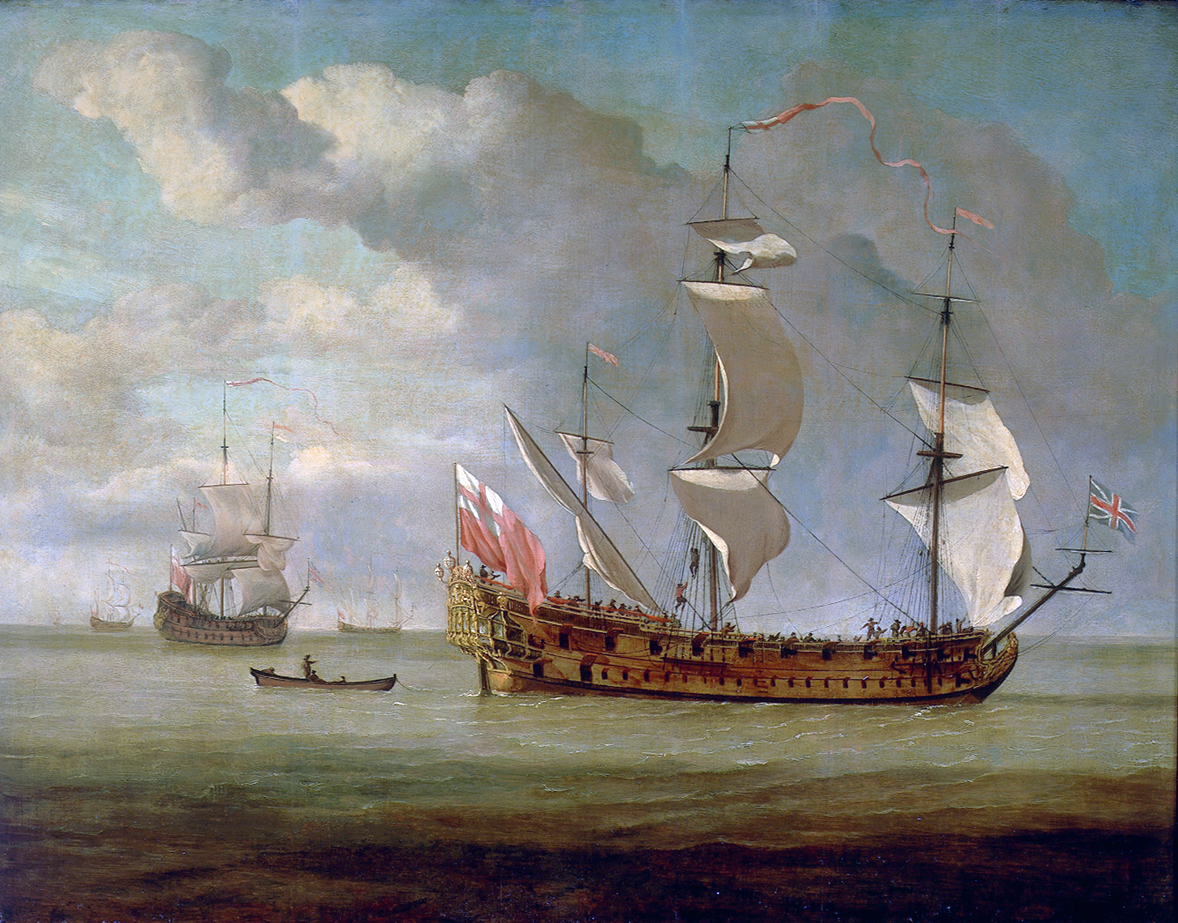
George records voyages of The Tower Galley from September 1728 to November 1736 under Captain John Wingfield with extensive journeys between Newfoundland, London and European and Mediterranean ports. Further research shows in August 1739 the Tower Galley is given a letter of Marque – a government license that authorized a private person, known as a privateer or corsair, to attack and capture vessels of a nation at war with the issuer. In this case the French. After capturing a vessel, the privateers could bring the case of that prize before their own admiralty court for condemnation and transfer of ownership to the privateer. Wingfield was Captain of Tower Galley until 13 May 1743, when the French captured the ship.
Wingfield then takes command of the Southwell, a ship of 24 guns 400 tons and 200 men but he is discharged dead in October 1744.
The full transcription of Georges book can be read here
Researched and written by Peter Webster
Acknowledgements
Details of warships https://threedecks.org/
Information on Charles Galley https://en.wikipedia.org/
Information of trades- Norfolk Record Office



 Norfolk Record Office
Excellent article and it
is realy helpful in my research into Norfolk country estaes.
The link to the transcript of the book is particularly useful.
LikeLike
Really interesting blog.
LikeLike