
The Norfolk Record Office holds the Great Yarmouth Borough court rolls (NRO, Y/C 4), which, between the 1260s and the 1670s, are the main, and, during the medieval period, the only surviving administrative records of the borough. They record the borough’s principal administrative functions, including records of the borough and leet courts, enrolled deeds, enrolments of freemen, inquests, chamberlains’ accounts, and local customs accounts.
The Yarmouth customs accounts are of particular significance. The National Archives at Kew may hold the extensive records of the medieval royal customs system (E 122), but surviving local customs accounts are few and far between, and the Yarmouth court rolls contain the largest and most complete series of medieval customs accounts still held locally.
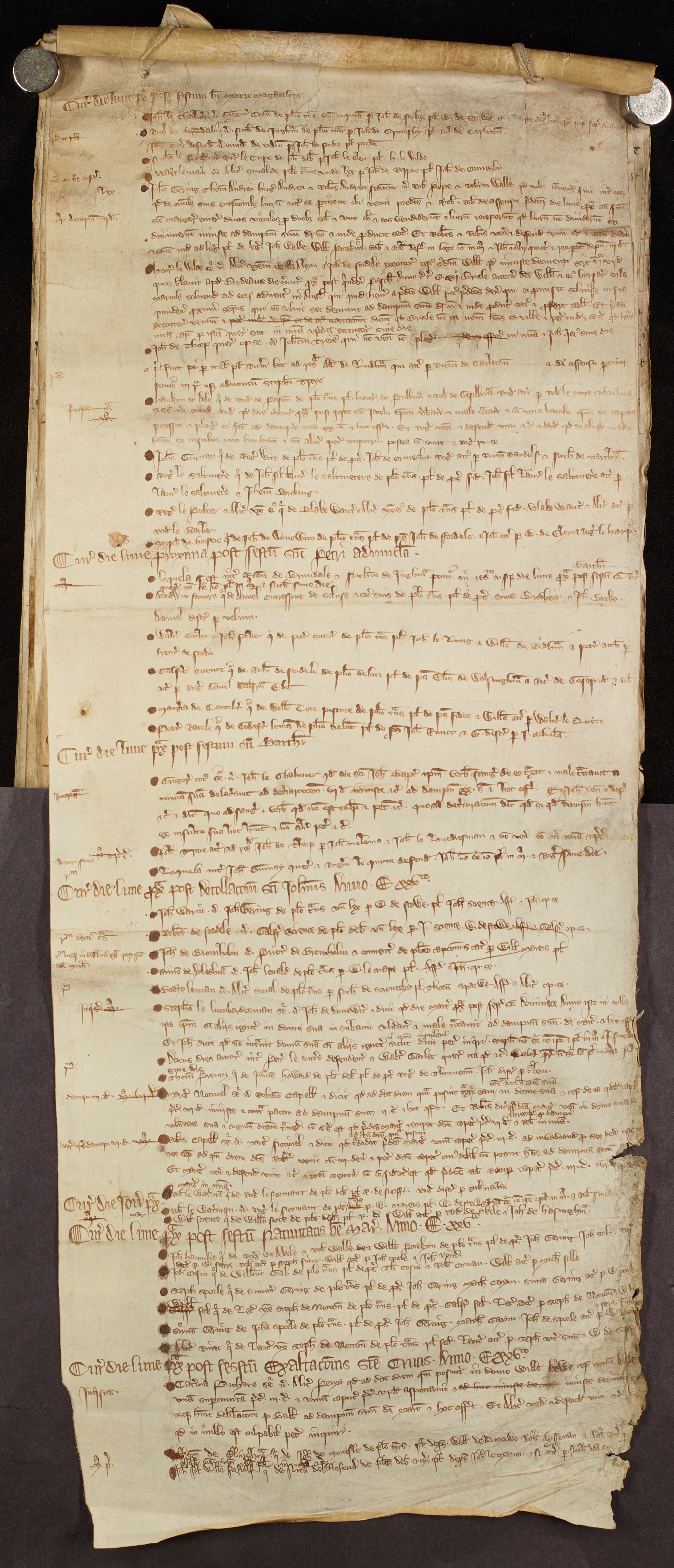
The right to take tolls or local customs in Yarmouth derived from king John’s charter of 1208. These custuma ville were levied on all goods brought into or taken out of the town, irrespective of provenance or destination.
The customs accounts are especially informative about Yarmouth’s trade with the towns of the Hanseatic League in the later middle ages. The Hanseatic League, or Hanse, was an alliance of trading cities which set up and maintained a trade monopoly along the coast of Northern Europe, from the Baltic to the North Sea and inland during the 13th to 17th centuries. King’s Lynn was also one of the significant ports which, in the middle ages, attracted Hanseatic merchants.
The accounts show that vessels from Hanseatic ports were frequent visitors to Yarmouth in the fourteenth century, especially during the reign of Richard II. Many of these ships came from Hamburg, thus, the accounts for Michaelmas (29 September) 1379 to Michaelmas 1380 include the Godeffrend de Hamburgh (master, Henry Skerynbek), la Mariekog de Hamburgh (master, Henry fan Haghed), la Palmedagh de Hamburgh (master, Tydeman Dott), the Marieknyght de Hamburgh (master, Tideman Wette) and the Bruehnberg de Hamboigh (master, John fan Worden), which came in twice. (Interestingly, the spelling of Hamburg in this last entry may reflect the pronunciation of the name by natives of Hamburg!) The accounts for this year also show vessels from the Baltic Hanse ports of Lübeck and Gdańsk (Danzig), including the Marieship de Lubyk (Master, John Sasse), the Mariekog de Dansk (master, Mathew Haghemaystre) and the Christopher de Danske (master, Jacobus Paye).
In other years, ships also came regularly from Bremen, the Baltic ports of Elbląg (Elbing), Rostock and Stralsund, and with Hanse towns in the Low Countries, such as Kampen and Staveren on the Zuiderzee (the modern IJsselmeer). The customs levied included payments of duties on goods such as iron, barrels of oil, pitch, tar, wire, tow or twine, bundles of woollen cloth, herrings, and also on harbour dues.
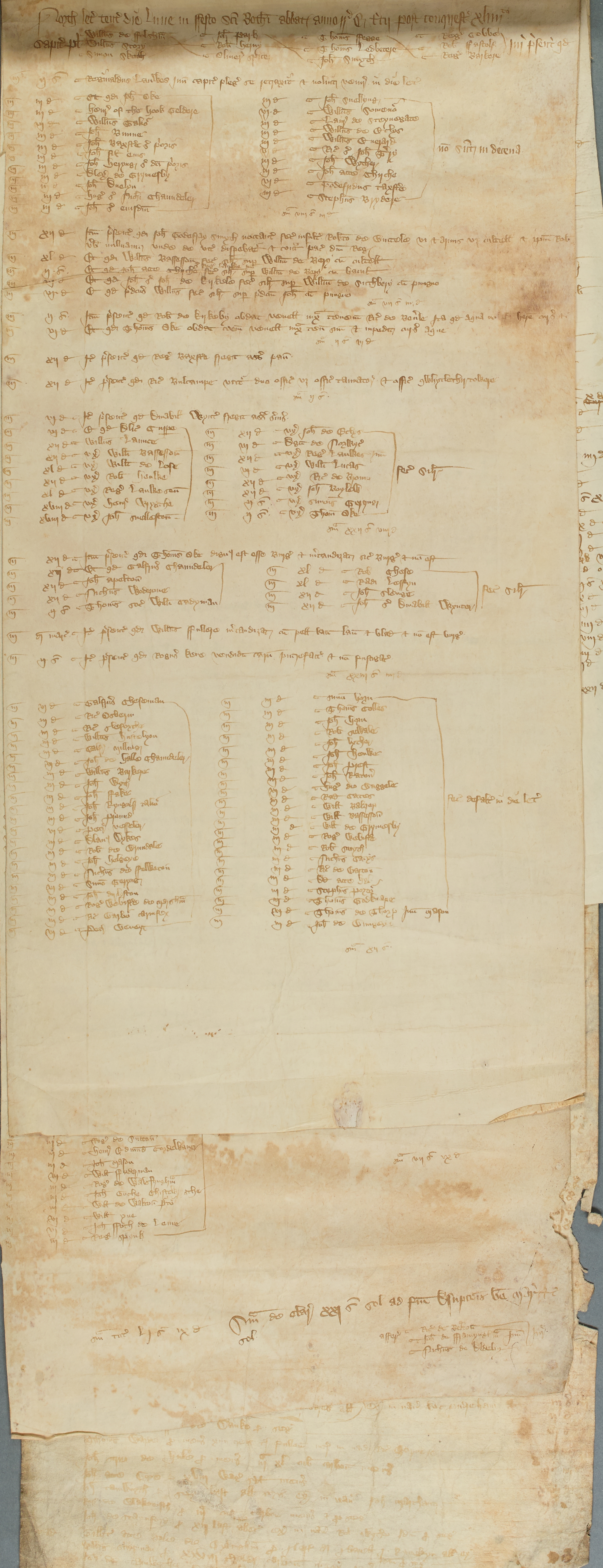
Interestingly, cases in the borough courts, recorded in the same rolls, show that Hanse merchants were frequently involved in suits with local merchants, so relations were not always cordial. Thus, for example, in 1370, John fan Rode, a merchant of Hamburg, brought a plea of debt against John de Earlham, a Norwich merchant, while in 1376, Hamburg merchant, Ludekgh Bekenthorp, sued Edmund Slary, a merchant of Great Yarmouth, for non-payment of a debt.
War and shifting trade patterns meant that, by the mid fifteenth century, Hanse ships had disappeared from the Yarmouth records. Nevertheless, the borough court rolls for the late thirteenth and fourteenth century provide detailed evidence of significant earlier trading relations between the town and the German Hanse.



 Norfolk Record Office